
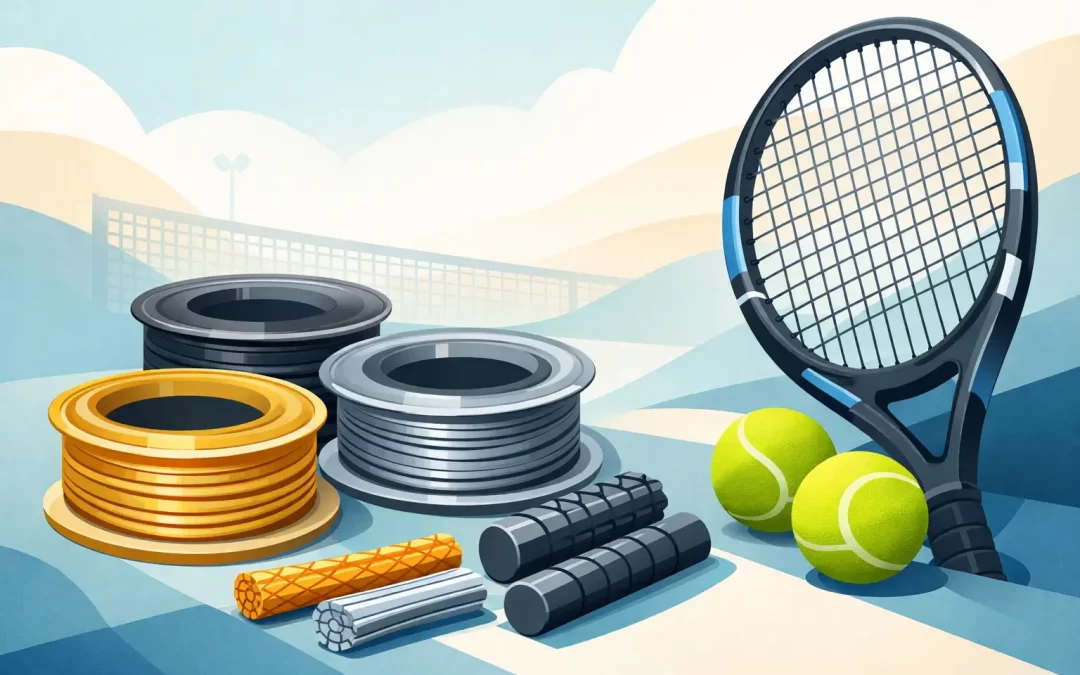
You can hand two players the same racquet and get two completely different results just by changing the string. That is why popular tennis strings keep showing up in serious gear conversations – not because they are trendy, but because they solve specific performance problems. Some help big hitters control pace. Some add comfort for sore arms. Some give all-court players a cleaner blend of touch, spin, and durability.
At our level of the sport, string choice is not a small detail. It is one of the fastest ways to define your style of play without buying a new frame. If you want heavier topspin, a firmer response on big cuts, or a softer feel on volleys and serves, the right string setup can move the needle immediately.
Why popular tennis strings become popular
The best-selling strings usually earn that status for one reason – they perform clearly in a specific lane. Players do not keep coming back to a string unless it gives them something repeatable. That might be reliable control under pressure, better tension maintenance over time, or enough comfort to keep playing pain-free.
There is also a practical side to popularity. A string becomes trusted when coaches, racquet technicians, and competitive players see the same result across different racquets and skill levels. That does not mean every popular string is right for every player. It means those strings have a proven identity.
Polyester strings, for example, dominate the modern game because they help aggressive players swing faster and still keep the ball inside the lines. Multifilaments remain popular because they offer easy power and comfort. Natural gut still has a loyal following because nothing matches its pocketing, feel, and tension stability. Synthetic gut stays relevant because it gives players a balanced, affordable option.
The main string categories that players actually choose
Co-polyester for spin and control
If you hit with pace, generate your own power, or break softer strings too quickly, co-poly is usually where the conversation starts. This category includes many of the most popular tennis strings on the market because it matches how the modern game is played. Co-poly strings are typically firmer, lower powered, and built to reward full swings.
That firmer response helps competitive players swing aggressively while keeping trajectories under control. Many shaped polys also improve bite on the ball, which can translate to heavier topspin and more action on kick serves. The trade-off is comfort. If your arm is sensitive or your stroke speed is moderate, a full bed of poly can feel too stiff.
Strings like Luxilon ALU Power, Solinco Hyper-G, Babolat RPM Blast, and Yonex Poly Tour Pro remain popular because each offers a slightly different version of that control-spin formula. Some feel crisp and lively, some feel muted and stable, and some hold playability longer than others.
Multifilament for comfort and easy depth
Multifilament strings are built for players who want a softer response, more forgiveness, and easier power. They are a smart fit for recreational players, doubles players, juniors still developing strength, and anyone managing arm discomfort.
What makes multis attractive is how easy they are to play with. You do not have to swing out of your shoes to create depth. Touch shots feel more connected, and off-center contact is usually less punishing. Tecnifibre X-One Biphase, Wilson NXT, and Head Velocity MLT are popular because they deliver comfort without turning the racquet into a trampoline.
The trade-off is durability and control under heavy pace. Hard hitters can shred multis quickly, and players with fast swings may find them too powerful unless tension is adjusted carefully.
Natural gut for premium feel and tension maintenance
Natural gut still sets the standard for comfort, elasticity, and tension hold. If you care about feel, pocketing, and all-around playability, it is still one of the best performance choices in tennis. Babolat VS Touch remains a reference point for a reason.
Gut works especially well for players who want power without harshness. It also shines in hybrids, where it can soften up a poly setup and keep the string bed more playable for longer. The downside is obvious – price. It is also less practical for some players in wet conditions or for those who break strings frequently.
Synthetic gut for value and balance
Synthetic gut does not get as much hype, but it still earns court time because it is simple, balanced, and cost-effective. It offers a middle ground between comfort, control, and durability, which makes it a strong choice for new players, high school competitors, and anyone restringing often on a budget.
Prince Synthetic Gut Duraflex is one of the classic examples. It is not the most specialized option, but that is exactly why it works for so many players.
Popular tennis strings by performance type
Best for control-first players
Players who hit hard and want the ball to stay on a tighter window usually lean toward firmer polys. Luxilon ALU Power has been a benchmark for years because it delivers a crisp, connected response that advanced players trust on aggressive swings. Solinco Confidential and Hyper-G also sit in this lane, with Hyper-G adding strong spin potential and a slightly different feel profile.
If your game is built around taking the ball early, flattening out backhands, and attacking short balls, control-oriented polys make sense. Just remember that control strings work best when the player creates the pace.
Best for spin-heavy baseliners
Not every poly produces spin the same way. Some rely on shape, some on slick surface movement, and some on overall snapback behavior. Babolat RPM Blast became a standout for heavy topspin hitters because it helps aggressive players create net clearance without losing too much directional control. Solinco Hyper-G, shaped Profilex Performance Co-Poly options, and several newer generation polys also appeal to players who want a more explosive upward path through contact.
Spin strings are most effective when technique supports them. They do not create RPM out of nowhere. What they do is reward a faster, more vertical swing path with more bite and a more predictable launch.
Best for comfort-focused players
Comfort is not just for beginners or injured players. Plenty of experienced competitors choose softer strings because they want to protect the arm over a long season. Tecnifibre X-One Biphase, Wilson NXT, and Head Velocity MLT all stay relevant because they give players a livelier, easier response without the harshness of a stiff poly bed.
For some players, the best answer is not a full bed of a soft string but a hybrid. Pairing a softer cross with a poly main, or gut with poly, can create a better balance of comfort and control.
Best for all-around players
A lot of players are not chasing maximum spin or maximum comfort. They want a setup that does a little bit of everything well. Yonex Poly Tour Pro has earned a strong following because it feels more playable than many firmer polys while still giving solid control. Synthetic gut and softer co-polys also fit this category, depending on swing speed and racquet type.
This is where good string selection becomes more personal than brand-driven. The right all-around string depends on whether your game leans more toward baseline grinding, transition tennis, or touch and placement.
How to choose the right string for your game
Start with how you actually win points, not with what a tour player uses. If you generate your own pace and break strings often, a co-poly is usually the logical place to begin. If you need help with depth and want better comfort, start with a multifilament or synthetic gut. If your arm is talking back to you, do not ignore it. A softer string or hybrid may help more than another racquet change.
Then consider racquet type. A powerful frame often pairs better with a control-oriented string. A lower-powered players racquet may benefit from a livelier setup. Tension matters too. A popular string at the wrong tension can feel completely wrong.
Gauge is another decision that matters more than most players think. Thinner strings usually offer more feel and spin potential, while thicker gauges improve durability and can slightly lower power. There is no universal best option – only the best fit for your swing, frequency of play, and physical tolerance.
What matters more than popularity
A string does not become the right choice just because it is widely used. Popularity is a signal, not a verdict. The best string for your game is the one that helps you swing with confidence, manage your contact quality, and stay comfortable enough to train consistently.
That is why expert curation matters. A junior competing three times a month, a club player trying to protect an elbow, and a heavy topspin baseliner all need different answers, even if they shop the same wall of strings. Choosing smarter gear is how you train harder and compete better.
If you are looking at popular tennis strings, use that list as a starting point, not a shortcut. Match the string to your game, your racquet, and your goals – then let your results decide what stays in the bag.