
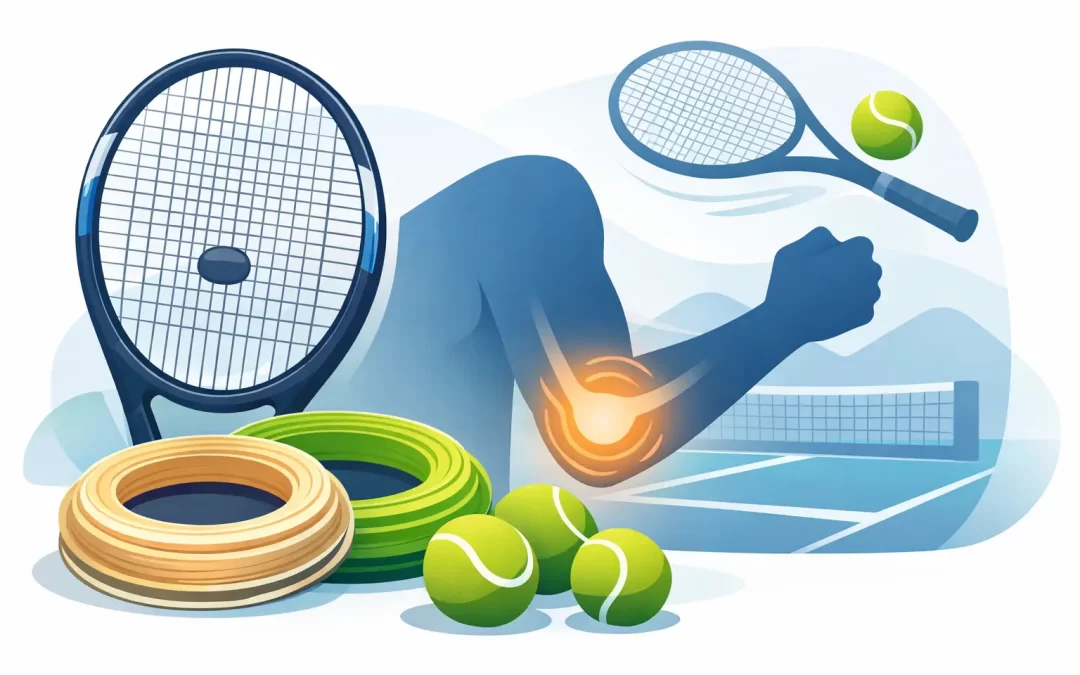
A sore elbow changes everything. You stop accelerating through contact, start guiding the ball, and before long your whole game feels smaller. If you’re searching for the best arm friendly tennis string, the goal is not just softer feel. The goal is to keep comfort high without losing the control and confidence you need to swing freely.
That matters because strings are often the first place players make the wrong fix. Many assume the racquet is the problem, when the bigger issue is a harsh string setup, excessive tension, or a mismatch between string type and swing speed. As racquet technicians and players know from years on court, comfort is never just about one product. It is about the full setup working with your game instead of against your arm.
What makes the best arm friendly tennis string?
The most arm-friendly strings share one trait: they reduce impact shock and vibration better than stiffer options. In practical terms, that usually means natural gut, multifilament, or soft synthetic gut constructions. These materials stretch more at impact, return energy efficiently, and feel easier on the elbow, wrist, and shoulder.
Polyester is where most players run into trouble. A firm co-poly can deliver excellent spin and control, but it also transmits more shock and loses playability faster. For advanced players with fast swings, poly can still make sense. For anyone dealing with tennis elbow or general arm sensitivity, a full bed of stiff poly is usually the first thing to question.
There is also a difference between soft and arm-friendly. Some strings are marketed as soft but still play firmer than true comfort strings. Others start comfortable, then go dead quickly and become harsher over time. The best choice depends on how often you restring, how hard you swing, and whether your top priority is pain relief, playable control, or a balance of both.
Best arm friendly tennis string types for real players
If your arm needs the most protection possible, natural gut is still the gold standard. It has unmatched elasticity, pocketing, and tension maintenance. That combination gives players power without a jarring response, and it stays playable longer than most alternatives. The trade-off is cost, and for heavy topspin players, durability can be an issue unless the setup is dialed in carefully.
Multifilament strings are the most practical comfort option for many players. They are designed to mimic some of the feel of natural gut, usually with excellent shock absorption and easy depth. For club players, juniors, doubles specialists, and anyone returning from elbow pain, a quality multifilament often delivers the best balance of comfort, performance, and value.
Synthetic gut sits in the middle. It is usually firmer and less plush than a premium multifilament, but still much friendlier than polyester. For players who want a clean, predictable response without spending natural gut or multifilament money, synthetic gut remains a smart option.
Soft co-polys deserve a more careful conversation. They are not the first recommendation for a player with active arm pain, but they can work for strong intermediates and advanced players who need spin and control and are willing to keep tension lower. The key is choosing a genuinely softer poly and restringing before it turns overly dead and harsh.
Top string recommendations by need
For pure comfort, natural gut is hard to beat. Babolat VS Touch and Wilson Natural Gut remain top-tier options for players who want the most arm protection with premium feel. These strings reward full strokes, help on off-center contact, and hold tension exceptionally well. If your elbow has been barking for weeks, this is where the serious fix starts.
For all-around comfort and control, Tecnifibre X-One Biphase, Wilson NXT, and Head Velocity MLT are strong multifilament choices. X-One Biphase offers a lively, premium response that appeals to players who still want performance, not just softness. Wilson NXT has long been a go-to for comfort-focused players. Head Velocity MLT gives you excellent value with a more controlled response than some livelier multis.
For budget-friendly relief, Prince Synthetic Gut with Duraflex and Gosen OG-Sheep Micro are reliable options. They will not feel as plush as the best multis, but they are easier on the arm than most polys and give a crisp, familiar response many players still prefer.
For hybrid users who need some spin, combining natural gut or multifilament in the mains with a smooth, softer co-poly in the crosses can be a strong compromise. This setup keeps more comfort and feel where it matters most while adding some control. It is not as arm-friendly as a full bed of gut or multi, but for competitive players it can be the right middle ground.
Tension matters almost as much as string choice
A comfortable string can still feel rough if it is strung too tight. This is one of the biggest mistakes players make when trying to solve arm pain. Higher tension usually gives a firmer, lower-powered response, but it also reduces string movement and increases impact harshness.
For most comfort-oriented setups, dropping tension a few pounds is a smart move. A multifilament or natural gut in the low-to-mid range of your racquet’s recommendation often feels significantly better than the same string at the top end. If you use a hybrid with poly, keeping the poly side lower can help preserve some comfort.
There is no single number that fits everyone. A flatter hitter with a compact swing may need a little more tension to keep the ball in check. A topspin player who creates heavy racquet-head speed can usually afford to go lower and let the string do more work.
When polyester still makes sense
Some players read about comfort and assume they have to abandon poly completely. That is not always true. If you are a tournament player with fast mechanics and you break softer strings quickly, a soft co-poly at sensible tension may still be playable. The key is being honest about your arm and disciplined about restringing.
Dead poly is one of the biggest contributors to arm trouble. Even when it does not break, it can lose elasticity and become boardy. If you like the controlled response of co-poly but want to protect your arm, look for softer formulations, thinner gauges, and lower tensions. And if pain is already present, start with a softer category first rather than trying to force a poly setup to behave like a multifilament.
Profilex’s own performance background is a reminder that string choice should support your style of play, not fight it. Comfort does not mean giving up on performance. It means building a setup that lets you swing aggressively without paying for it later.
How to choose the best arm friendly tennis string for your game
If you are dealing with active elbow pain, start with a full bed of natural gut or multifilament. That gives you the clearest read on whether the stringbed is helping your arm recover. It is the safest place to begin, especially for recreational players, juniors, and adults returning after time off.
If you are mostly pain-free but feel occasional tightness after long matches, a softer multifilament or synthetic gut may be enough. These players usually want comfort without a dramatic change in control, and that is where balanced strings shine.
If you are an advanced baseline player who relies on spin and directional precision, hybrids are often the best next step. Put the more comfortable string in the mains if arm protection is the priority. Put the poly in the mains only if your arm is healthy and you understand the trade-off.
Gauge matters too. Thinner strings generally feel softer and more responsive, while thicker gauges add durability at the cost of some feel. If your arm is the concern, leaning thinner can help, assuming you are not breaking strings constantly.
The setup is bigger than the string
Even the best arm friendly tennis string cannot fully fix a harsh racquet, poor technique, or bad restringing habits. Stiff racquets, worn-out grip size, late contact, and overhitting all add stress to the arm. That is why the best equipment decisions come from looking at the full picture rather than chasing one miracle product.
Still, strings are one of the fastest changes you can make with the biggest payoff. A player who moves from a stiff full-poly job at high tension into a quality multifilament or natural gut setup often feels the difference immediately. Better pocketing, less shock, and a freer swing can bring your game back much faster than trying to tough it out.
If your arm is talking to you, listen early. The right string setup can protect your body, restore your confidence, and keep you training with intent instead of managing pain every session. Choose comfort with purpose, and you give yourself a better chance to play like a champion for the long run.