
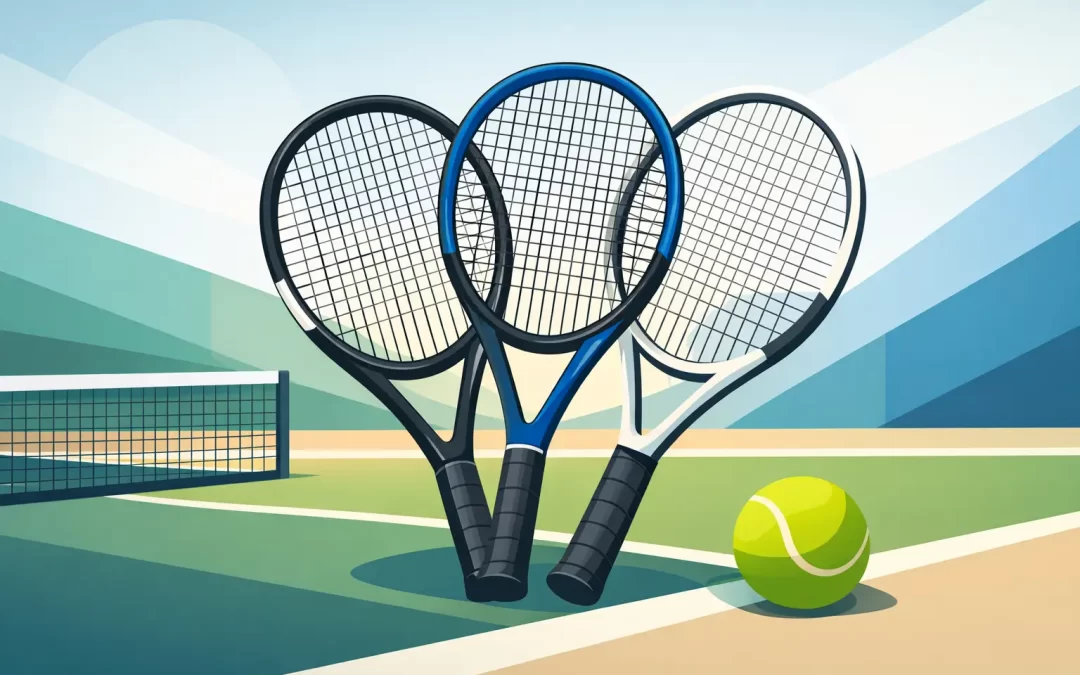
Miss by two feet and it feels like your timing is off. Miss by two inches all match long and your racquet choice starts to matter. If you are searching for the best tennis racquet for control, you are not looking for freebies. You want a frame that rewards clean mechanics, tightens your patterns, and gives you the confidence to swing with intent on pressure points.
Control racquets are not magic, and they are not for everyone. They usually ask more from the player – better footwork, cleaner contact, and a full swing path. What they give back is precision. You can drive through a backhand, flatten out a serve, or roll a heavy crosscourt ball without feeling like the frame is launching the ball long.
What makes the best tennis racquet for control?
Control starts with predictability. The ball needs to come off the strings on a line you can trust, not with extra trampoline effect that changes from shot to shot. That is why most control-oriented racquets share a few traits: a smaller or midsize head, a thinner beam, more flexible construction, and enough weight to stay stable through contact.
Head size matters more than most players think. A 97 to 98 square inch racquet is a common sweet spot for control because it gives you a more precise response than a 100 square inch tweener frame, but still offers enough forgiveness for real match play. True mids around 95 square inches can feel outstanding in the hands of advanced players, but they punish late contact.
Weight is another big factor. A control frame often has more mass than a beginner or game-improvement racquet. That extra weight helps the racquet resist twisting when pace comes at you, which keeps volleys, returns, and defensive shots more stable. The trade-off is simple: more stability and plow-through, less easy racquet-head speed if your technique or strength is not there yet.
String pattern changes the feel too. An 18×20 pattern usually gives a tighter, lower launch angle and a more connected response. A 16×19 pattern can still be a control setup, especially in a 97 or 98 square inch head, but it adds a little easier spin and a touch more net clearance. For many modern players, that blend is the better match.
Control is not just about the racquet head
Players often shop by marketing category and miss the full setup. The best tennis racquet for control can still feel too lively if it is strung with a soft, powerful multifilament at low tension. On the other hand, a slightly more forgiving frame can become a precision tool with the right string and tension.
If you hit big and break strings, a shaped or firm co-poly often helps control the ball with a more predictable response. If comfort is a concern, a hybrid or softer poly at a sensible tension can preserve command without making the racquet feel harsh. This is where experienced racquet and string guidance matters. Frame, string, and tension work as a system.
The main racquet types that deliver control
There is no single answer for every player, because control means different things depending on your level and style. A tournament junior who swings fast from both wings needs something different from a 4.0 doubles player who values first-volley stability.
Classic player frames
These are the traditional control racquets. Think 97 to 98 square inches, thinner beams, and weights that favor advanced players. They tend to offer excellent directional accuracy, a more connected feel, and strong performance on flatter drives and one-handed backhands.
This category is ideal for high-level juniors, college players, teaching pros, and experienced competitors who generate their own pace. The downside is that these racquets can feel demanding over a long match if your preparation slips.
Modern control racquets
This is the category many competitive club players should start with. You still get a more controlled response, but with slightly easier access to spin and a little more forgiveness across the string bed. These racquets often sit around 98 to 100 square inches with balanced specs that suit the modern baseline game.
They are popular for a reason. You can attack with shape, defend with more margin, and still redirect pace accurately. For many players, this is the most realistic path to better control without giving up too much free depth.
Control-leaning comfort frames
Not every player chasing precision wants a stiff, demanding setup. Some want better placement but also need arm-friendly feel. Certain flexible 98 to 100 square inch racquets fit here well, especially when paired with the right string. They may not feel as surgical as a classic player frame, but they help a wider group of players hit a heavier, more repeatable ball.
How to choose the best tennis racquet for control for your game
Start with your swing speed. If you take full cuts and regularly overhit with your current racquet, moving toward a lower-powered frame makes sense. If your strokes are compact and you rely on the racquet for easy depth, a strict control racquet may leave you short.
Then look at your contact quality. Strong players who hit the center consistently can benefit from a 97 square inch frame and denser pattern. If you are a solid intermediate who competes often but still wants help on stretch shots and returns, a 98 or 100 with a controlled response is usually the smarter play.
Your court position matters too. Baseliners who use heavy spin often prefer a modern control frame with a more open pattern. All-court players and flatter ball strikers may love the cleaner response of a denser string bed. Doubles specialists should pay close attention to maneuverability and volley stability, not just groundstroke feel.
Finally, be honest about match endurance. A racquet that feels perfect for twenty minutes can become work in the third set. Static weight, swingweight, and balance all affect whether a frame helps your control or slowly takes it away as fatigue builds.
Brand families players usually trust for control
Several major brands consistently build strong control-focused lines. Wilson player frames have long appealed to aggressive shot-makers who like connected feel and precision. Head offers control models that blend directional confidence with modern stability. Yonex stands out for its forgiving sweet spot and clean response, which is why many serious players find it easier to use than a traditional midsize frame. Babolat, known for power and spin, also has options that give stronger ball strikers a more controlled launch. Tecnifibre continues to earn attention from advanced players who want a crisp, modern response with real shot-making upside.
The point is not the logo. It is how the frame’s spec package matches your swing. Two racquets can both be called control frames and still play very differently.
Common mistakes when shopping for control
One mistake is choosing the lowest-powered racquet in the store because you are tired of hitting long. Balls usually fly when technique, timing, tension, or string choice is off. A more controlled racquet helps, but going too demanding too quickly can cost you depth, spin, and confidence.
Another mistake is ignoring strings. Players buy a control frame and keep a string setup that is too powerful, too dead, or too loose. Then they blame the racquet. If you want precision, your setup needs to be built with that goal in mind.
A third mistake is copying a tour player’s spec without the tour player’s swing speed. Heavy, dense-patterned racquets can feel amazing when you are fresh and striking cleanly. They can also become late, sluggish, and unforgiving in real match conditions. Smart gear selection beats aspirational gear selection every time.
A practical fit by player level
If you are a 3.0 to 3.5 player, the best control option is usually not an ultra-demanding player frame. Look for a more forgiving 100 square inch racquet with a controlled response and manageable weight. You will get accuracy without sacrificing depth.
If you are a 4.0 to 4.5 player, this is where modern 98 square inch control racquets often shine. They give you enough precision to swing aggressively, enough spin to play the modern game, and enough forgiveness to hold up under match pressure.
If you are 5.0 and above, or a high-level junior, you can likely benefit from a true player frame if your mechanics support it. This is where tighter patterns, higher swingweights, and thinner beams can really separate your shot quality. At that level, fine-tuning the string setup becomes just as important as the racquet itself.
The setup that wins more points
The best tennis racquet for control is the one that lets you commit to your swing on big points. That does not always mean the most demanding frame. It means the racquet that keeps your launch angle predictable, holds steady on contact, and matches the pace and shape you actually produce.
At Profilex, that is how experienced players should shop – not by hype, but by fit. Choose the frame that sharpens your patterns, then build the string setup around it. When your equipment matches your game, control stops feeling tentative and starts feeling like authority.
The right racquet should make you more decisive, not more careful. Pick the one that lets you swing with purpose and trust the ball will land where you intended.