
A racquet can feel fast in your hand and still drag through contact. It can also look demanding on paper and end up feeling easy to swing. That disconnect is exactly why a solid tennis racquet balance guide matters. Balance changes how a racquet moves, how stable it feels at impact, and how much work your arm does over two sets or three.
Most players shop by head size, weight, and string pattern first. Those matter, but balance is often the spec that explains why two racquets with the same static weight can play completely differently. If you want to choose smarter gear and define your style of play with more precision, balance deserves your attention.
What racquet balance actually means
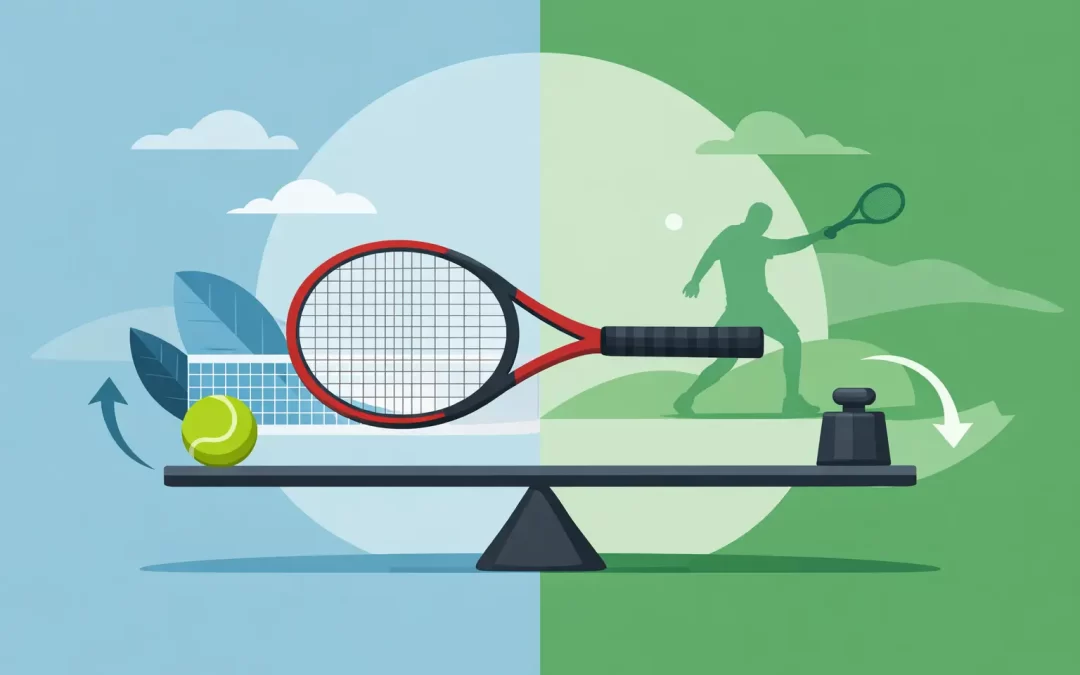
Balance describes how a racquet’s weight is distributed from handle to tip. A head light racquet keeps more mass closer to your hand. A head heavy racquet places more mass toward the hoop. Even balance sits in the middle.
This is usually measured in points or in centimeters. On standard adult racquets, players often hear terms like 4 points head light or 2 points head heavy. Each point represents a small shift in where the racquet balances, but those small shifts can produce a noticeable difference in timing, maneuverability, and feel.
The key point is simple: balance is not the same as total weight. A 11.2-ounce racquet can feel quicker than a 10.8-ounce racquet if more of its mass sits in the handle. On the other hand, a lighter racquet can feel sluggish if too much weight is concentrated in the head.
Tennis racquet balance guide: head light, even, or head heavy?
For most intermediate and advanced tennis players, head light balance is the safest starting point. It helps the racquet accelerate more easily, supports quicker changes of direction, and usually feels better on volleys, returns, and fast exchanges at net. It also tends to pair well with modern topspin mechanics, where racquet head speed is a major part of the equation.
Head light does not automatically mean low power. In fact, many player’s racquets and modern control frames are head light because that setup lets strong swingers generate speed without feeling late. If you take full cuts and value precision, this is often where your best options live.
Even balance sits between stability and speed. It can be a smart fit for all-court players, improving intermediates, and players who want a racquet that does a little of everything without leaning too far in one direction. Even-balanced racquets can feel intuitive from the baseline and still hold up reasonably well at net.
Head heavy balance is more common in lighter, game-improvement racquets. Shifting mass toward the tip can help players get easier depth and a more solid feel on slower swings. That can be useful for beginners, doubles players who prefer short compact strokes, or anyone who wants help producing pace without overswinging.
The trade-off is maneuverability. A head heavy frame can feel less responsive on reaction volleys, tougher to whip on topspin-heavy forehands, and more tiring over long matches, especially if your technique is still developing.
Head light balance and who it helps
Head light racquets usually benefit aggressive baseliners, all-court players, strong juniors moving into adult frames, and competitors who rely on racquet head speed. If you like to swing fast, change direction late, hit a heavy kick serve, or handle pace on returns, head light balance often supports those demands.
It can also be a smart comfort move. Because the racquet feels easier to move, some players experience less strain during long sessions. That said, comfort depends on more than balance alone. Stiffness, string choice, swingweight, and overall technique still matter.
Even balance and who it helps
Even-balanced racquets make sense for players who do not want an extreme feel. If your game is balanced, your racquet can be too. This setup often works well for recreational adults, high school players, and developing juniors who are still figuring out whether their long-term identity is power-first, control-first, or all-court.
It is also a useful category if you are switching from a beginner frame to something more performance-oriented. You get a more complete response without jumping straight into a demanding player’s spec.
Head heavy balance and who it helps
Head heavy setups can help players with shorter strokes or less developed swing speed create easier depth. They may also appeal to those who want help on groundstrokes without having to accelerate the racquet as aggressively.
But there is an important caveat. More mass in the head can increase the effort required to control the racquet through fast contact points. For players who already swing big or play a lot of singles, that can become a liability rather than a benefit.
Why balance matters more than many players realize
Balance shapes the feel of every shot. On serves, it influences whether the racquet whips naturally or feels delayed. On volleys, it affects how quickly you can position the string bed. On groundstrokes, it changes your sense of timing through the slot and into contact.
It also affects confidence. A racquet that matches your swing profile tends to let you commit to the shot. A racquet with the wrong balance often creates hesitation. You may guide the ball, arrive late, or overcompensate with your arm when the frame is not moving the way you expect.
That is why experienced players and racquet technicians look beyond marketing categories. Power, control, and comfort are real outcomes, but balance is one of the specs behind those outcomes.
How to choose the right balance for your game
Start with your stroke length and swing speed. If you take full, aggressive cuts and create your own pace, head light is usually the better direction. If your strokes are compact and you want the racquet to supply more of the work, a more even or slightly head heavy setup may fit better.
Next, think about where you win points. Baseline grinders and topspin players often appreciate maneuverability and acceleration. Doubles specialists may want quick handling at net but enough stability on returns. Flat hitters who like redirecting pace might prefer a more planted feel, though not necessarily a head heavy one.
Physical strength and endurance matter too. A balance that feels great for 20 minutes can become demanding after two sets. Junior players moving up in racquet size, adults returning to the game, and players managing elbow or shoulder sensitivity should pay close attention to how the racquet feels late in a session, not just during the first few swings.
Tennis racquet balance guide and swingweight
If balance tells you where the mass sits, swingweight tells you how heavy the racquet feels in motion. The two work together, and you should never judge one without considering the other.
For example, a racquet can be head light but still have a high swingweight if the frame is heavy overall or carries enough mass through the hoop. That can produce excellent plow-through and stability, but it may still feel demanding for some players. On the other side, a lighter racquet can be slightly head heavy and still have a manageable swingweight for beginners.
This is where many players get confused. They hear head light and assume easy. They hear head heavy and assume powerful. Sometimes that is true. Sometimes the full spec sheet tells a different story.
Can you change balance after you buy?
Yes, within limits. Overgrips, replacement grips, vibration dampeners, and lead tape all influence balance. Adding weight to the handle makes a racquet more head light. Adding weight at 12 o’clock increases power potential and swingweight while shifting the balance toward the head. Weight at 3 and 9 o’clock can improve torsional stability and also affect feel through contact.
Customization can be effective, but it works best when the starting racquet is already close to what you need. Trying to turn a very light, head heavy beginner frame into a tour-level control racquet usually creates more problems than it solves.
If you plan to customize, make small adjustments and test carefully. A few grams can change timing more than players expect.
Common balance mistakes players make
The first mistake is buying for power without thinking about swing style. Extra help from the racquet is useful only if you can still control the contact point and recover for the next shot.
The second is ignoring doubles and return performance. A frame that feels great on rally balls may struggle in quick exchanges if the balance is too sluggish.
The third is judging a racquet only on static weight. Two frames can weigh almost the same and play nothing alike because the balance and swingweight are doing very different things.
The smartest approach is to match the racquet to your actual game, not the game you imagine you should have. At Profilex, that equipment-first mindset is what helps players find setups that perform under real match pressure, not just in a product description.
The best racquet balance is the one that lets you swing with conviction, manage pace, and hold your level when the match gets physical. Choose the frame that supports your timing, not just your ego, and your tennis will usually tell you pretty quickly that you got it right.