
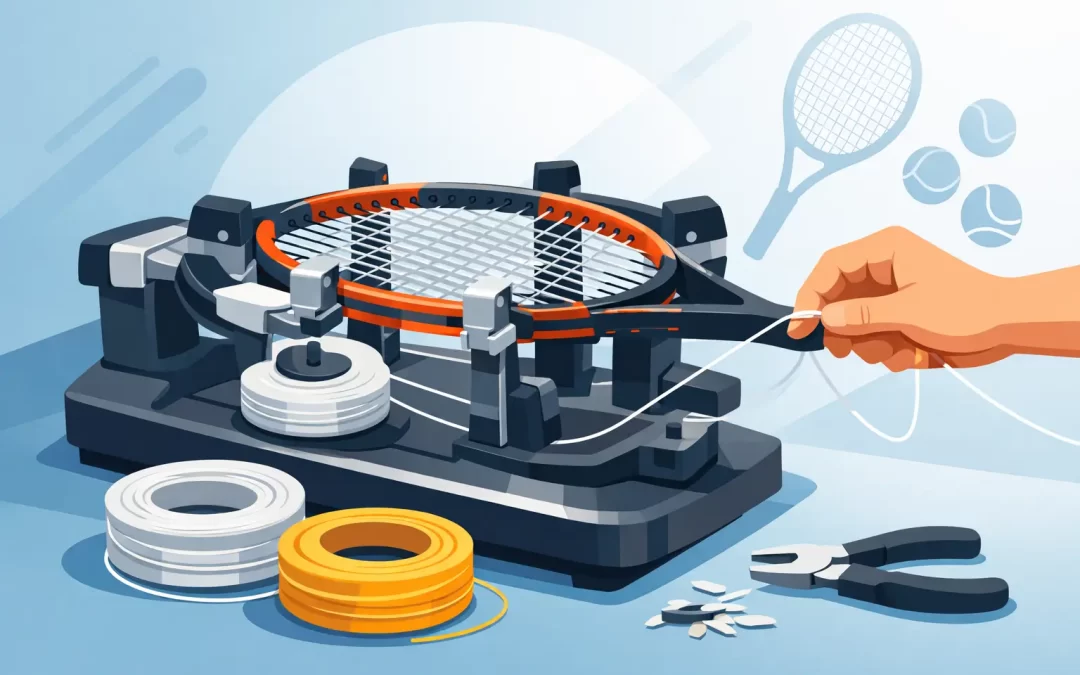
A racquet with the wrong string setup can feel dead, harsh, or unpredictable before you ever settle into a match. That is why free stringing tennis racquets get so much attention. On paper, it sounds simple – buy the frame, get the labor included, save money. In practice, the value depends on what strings are offered, how the racquet is matched to your game, and whether the job is done by people who understand performance, not just process.
What free stringing tennis racquets really mean
Free stringing usually means the stringing labor is included when you buy a new racquet. Sometimes the string itself is also included from a selected group. Other times, the labor is free but you pay for the string upgrade if you choose a premium option. That difference matters.
For a player buying a new frame, this can be a smart value. A quality string job is not a cosmetic extra. It is part of the racquet’s performance system. Tension, string type, gauge, and construction all change how the frame delivers power, control, spin, and comfort. If free stringing gets you on court with a setup that actually fits your game, it is a meaningful advantage. If it pushes you into a generic setup that does not match your swing speed or physical needs, the savings can disappear fast.
The best way to think about it is this: free stringing is only as good as the string choice behind it.
Why stringing matters as much as the racquet
Players often spend hours comparing racquet weights, head sizes, beam widths, and stiffness ratings, then treat strings like an afterthought. That is a mistake. Strings are the part of the racquet that directly contacts the ball, and they influence feel more immediately than most players realize.
A control-oriented frame can become more comfortable and forgiving with the right multifilament. A powerful tweener can feel more controlled with a firmer co-poly at the proper tension. A junior moving into a full-size performance frame may need a setup that protects the arm while still giving enough response to develop clean mechanics.
That is why expert retailers treat stringing as a performance decision, not a checkout add-on. The right recommendation should consider your level, swing path, frequency of play, injury history, and what you want the ball to do off the strings. Players who hit heavy topspin and break strings regularly should not be guided the same way as a doubles player who wants comfort and touch.
When free stringing is a great deal
Free stringing makes the most sense when you already know what you like or when you are buying from a specialist who can guide the setup. In both cases, the included service saves money without sacrificing performance.
If you have a proven preference – maybe a soft co-poly at mid tension, or a multifilament in the low 50s – then getting that setup installed on a new frame is efficient and cost-effective. You avoid paying separately for labor and you get a match-ready racquet delivered the way you want it.
It is also valuable for newer players who need direction. Many recreational and improving players do not need an advanced hybrid right away. They need a clean, reliable setup that supports better contact, manageable power, and arm comfort. A well-chosen included string can absolutely do that.
Parents buying for competitive juniors should pay attention here too. Juniors develop quickly, and their equipment needs can change fast. Free stringing can reduce the cost of getting a new racquet court-ready, especially when the junior is moving between specs or trying to find the right balance of spin, control, and comfort.
When free stringing is not automatically the best option
There are trade-offs. Sometimes the included string menu is narrow, or the default recommendation leans too generic. If you are a high-level player with specific performance needs, the free option may not be the optimal one.
For example, a tournament player who relies on a shaped co-poly at a precise tension may not want to compromise just to save on labor. A player with arm sensitivity may need a softer string or a lower tension than the standard setup being offered. In those cases, the smart move is to prioritize performance first and value second.
There is also the question of timing. Freshly strung racquets can feel different after the first few hours, especially with polyester strings that lose tension relatively quickly. If your game is sensitive to stringbed response, it helps to know whether you want the racquet strung for immediate play, a short break-in period, or a specific event.
Free is good. Right is better.
How to choose the right setup with free stringing tennis racquets
The right setup starts with honest self-assessment. Most players benefit more from the correct string family than from obsessing over one-pound tension differences.
If you want more comfort
Look first at multifilament or softer synthetic options. These are usually the safest choices for newer players, doubles players, older competitors, and anyone managing elbow or shoulder discomfort. They offer easier depth and a friendlier feel on off-center contact. The trade-off is lower durability and, in some cases, less control on full cuts.
If you want more control and spin
Co-polyester strings are the standard for modern baseline players with faster swings. They resist movement, support spin production, and help big hitters keep the ball inside the lines. The trade-off is comfort. Not every player should be in a full bed of poly, and not every frame pairs well with a firm string at high tension.
If you want balance
A hybrid setup can be the middle ground. This can mean polyester in the mains with a softer cross for added feel, or another combination designed around your priorities. Hybrids are especially useful for players who want some of the snapback and control of poly without going all the way into a stiff, demanding stringbed.
If you are not sure
Start simple. A comfortable, all-around setup is better than chasing a tour-level string profile that does not fit your game. The best retailers will steer you toward a playable, repeatable setup first, then fine-tune from there as your preferences get clearer.
Questions worth asking before you order
A serious player should always know what is included. Ask whether the free service covers labor only or both labor and string. Ask which strings qualify, whether custom tension is available, and whether hybrid upgrades are possible. Also ask who is doing the work.
That last question matters more than many buyers think. Stringing consistency affects feel, tension maintenance, and confidence. A racquet prepared by experienced technicians is less likely to arrive with avoidable issues, and more likely to perform the way it should from the first hit.
This is where specialist retailers separate themselves from big-box volume sellers. Expertise shows up in the details – cleaner recommendations, smarter pairings, and fewer setups that look convenient online but play wrong on court.
What different players should prioritize
A beginner should usually favor comfort, forgiveness, and easy depth. A strong recreational player may need a setup that sharpens control without making the racquet too demanding. A competitive junior often benefits from spin-friendly performance, but not at the expense of arm health. An experienced tournament player may already know the exact string and tension window needed to compete with confidence.
There is no universal best string job, which is exactly why free stringing should not be treated as a one-size-fits-all perk. The value is highest when the setup reflects your game style and your goals.
At Profilex, that is the standard serious players should expect – not just a strung frame, but a racquet prepared with performance in mind.
The bottom line on free stringing tennis racquets
Free stringing is a strong offer when it helps you get a new racquet set up correctly from day one. It saves money, shortens the path to the court, and can remove guesswork for players who want expert guidance. But the smartest buyers look past the word free and focus on fit.
A great racquet becomes your racquet when the string setup matches the way you swing, compete, and recover. Get that part right, and the value is real. Get it wrong, and even a premium frame can feel like the wrong choice.
The next time you shop for a racquet, do not just ask whether stringing is included. Ask whether the setup gives you a better chance to play your best tennis the moment the match starts.