
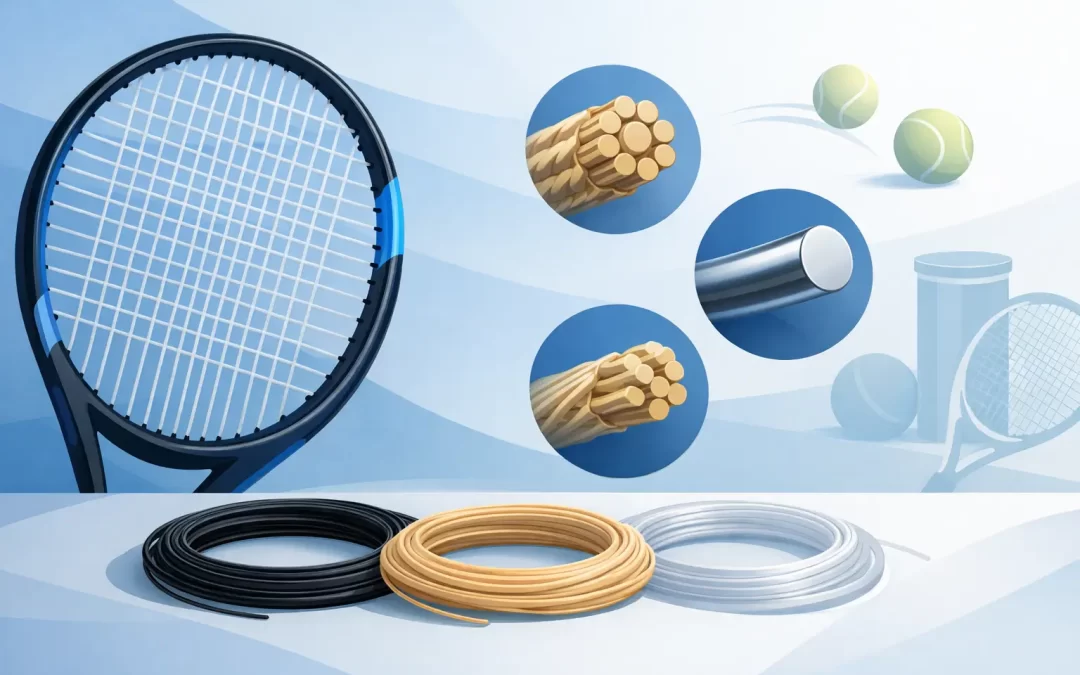
A player changes racquets and expects a different game. Often, the bigger change comes from the string bed. If you are figuring out how to choose tennis strings, start there: strings are the engine of feel, spin, comfort, and control. The right setup can sharpen your strengths. The wrong one can make a great racquet feel harsh, launch balls long, or die too quickly.
That is why experienced players and racquet techs never treat strings like an afterthought. Your string choice should match how you swing, how often you play, what your arm can tolerate, and what you want the ball to do off the court.
How to Choose Tennis Strings by Performance Goal
Most players do better when they start with the result they want, not the brand name on the package. Do you need more comfort? More control on full swings? Better durability because you break strings every two weeks? More bite on heavy topspin? Each answer points you toward a different string family.
If you want easy power and comfort, multifilament or natural gut usually makes the most sense. These strings are more elastic, which helps the ball pocket longer and launch with less effort. They are especially useful for players with compact swings, doubles players who value touch, juniors moving into a full-size frame, and anyone managing arm tenderness.
If your priority is control and spin on aggressive swings, co-polyester is the usual answer. Poly strings are firmer and lower powered, so they let advanced and high-swing-speed players take bigger cuts without losing the court. They also tend to snap back well, which supports spin. The trade-off is feel and comfort. A poly that helps one player hit a heavier ball can feel stiff and dead to another.
Synthetic gut sits in the middle. It is often the best value option for recreational players who want balanced performance without spending premium dollars. It does not dominate any one category, but it gives a lot of players a clean, playable response.
Start With String Type, Not Marketing
Polyester and co-poly
Polyester and co-poly strings are built for modern baseline tennis. They reward racquet-head speed, produce a controlled response, and hold up better against string movement than softer constructions. If you swing fast, generate your own pace, and rely on spin to shape points, poly is a strong fit.
But not every player should use it. Poly can lose playability before it actually breaks, and if you leave a dead poly in too long, your arm usually pays for it. Players with slower swings often do not get enough benefit from a full bed of poly to justify the stiffness.
Multifilament
Multifilament is made to mimic some of the comfort and liveliness of natural gut. It is a smart choice for players who want easier depth, a softer feel at contact, and better shock absorption. Club players, many juniors, and adults coming back from elbow or shoulder issues often play better with a quality multi than with a trendy poly.
The downside is durability and control under heavy pace. Big hitters can fray through it quickly, and flatter hitters who swing harder may feel the ball launches too much at lower tensions.
Natural gut
Natural gut remains the benchmark for feel, comfort, and tension maintenance. It is premium for a reason. It plays lively without feeling harsh and keeps that response longer than most strings. For touch players, all-court competitors, and anyone serious about protecting the arm, it is still one of the best options in the game.
Its drawbacks are price and durability in certain setups. Heavy topspin players who saw through strings fast may not love the cost unless they use it in a hybrid.
Synthetic gut
Synthetic gut is the reliable all-arounder. If you play once or twice a week, want straightforward performance, and are still learning your preferences, this is a smart place to begin. It is also excellent for growing juniors who need regular restringing without overcomplicating the decision.
Gauge Matters More Than Many Players Think
Once you pick a string type, gauge is the next performance lever. Thinner strings, such as 17 or 18 gauge, usually offer more feel, more bite, and a little more pop. They also break faster. Thicker strings, like 15L or 16 gauge, generally last longer and feel firmer.
If you are a frequent string breaker, start thicker. If you rarely break strings and want more responsiveness, go thinner. There is no universal best gauge. A hard-hitting junior who shreds 17 gauge multi in a week needs a different answer than a 3.5 doubles player who wants more touch at net.
Tension Changes the Response
Players often obsess over string model and ignore tension, even though tension can completely reshape the response of the same string. Higher tension usually gives a firmer, more controlled feel. Lower tension tends to add pocketing, comfort, and easier power.
That does not mean low is always better for spin or high is always better for control. It depends on the player, the string, and the racquet pattern. A stiff poly at 58 pounds can feel boardy in one frame. The same string at 48 pounds may come alive. A lively multifilament strung too low might launch on a flatter hitter, while that same setup could feel perfect for a player who needs help with depth.
A useful starting point is the middle of your racquet’s recommended range, then adjust based on what you feel. If the ball is flying, go up a little. If the string bed feels harsh or underpowered, come down a little.
How to Choose Tennis Strings for Your Playing Style
Your style of play should narrow the field fast.
If you are a baseline grinder with full swings and heavy topspin, co-poly is usually the lead candidate. Look for shaped or slick options if you want extra bite and snapback.
If you are an all-court player who mixes pace, angles, and touch, you may prefer a hybrid or a softer control string that gives cleaner feel on volleys and slices.
If you play doubles and value reaction volleys, returns, and touch, comfort and feel matter more than chasing maximum RPMs. Multifilament, natural gut, or a comfortable hybrid often performs better than a stiff full bed of poly.
If you are a beginner or improving recreational player, do not choose the string a tour pro uses just because the packaging says spin or control. Most developing players gain more from comfort, easier depth, and a forgiving response.
If you are shopping for a junior competitor, be realistic about both performance and arm health. A junior with serious racquet-head speed may benefit from poly, but many younger players are better served by softer strings or hybrids until they can truly take advantage of a firmer setup.
Hybrids Give You a Smarter Middle Ground
A hybrid combines two string types, usually one in the mains and one in the crosses, to blend strengths and reduce weaknesses. This is often the best answer for players who want more than one thing.
Poly mains with multifilament or natural gut crosses can add control and spin while softening the overall feel. Natural gut or multifilament mains with poly crosses can preserve comfort and power while tightening the response a bit. Hybrid setups are especially useful for competitive players who want customization without going to extremes.
This is also where expert string guidance really matters. The best hybrid is not just two good strings thrown together. It is a setup built around your swing speed, contact quality, durability needs, and arm tolerance.
Be Honest About Arm Comfort and Restringing Habits
Many players choose strings for the first hour of play and ignore what happens after that. That is a mistake. The best string for you has to perform well over time, not just fresh off the machine.
If you never cut strings out until they break, a full bed of firm poly may not be your best move. Poly often becomes less playable as tension drops, and that can leave the string bed feeling harsh and unresponsive. If you want lower-maintenance performance, synthetic gut, multifilament, natural gut, or a smart hybrid may be better choices.
Arm history matters too. If you have had tennis elbow, forearm tightness, wrist pain, or shoulder irritation, do not gamble with overly stiff strings at high tension. Comfort is performance. If your arm is not healthy, nothing else in your setup matters for long.
A Simple Way to Make the Right Choice
If you are still unsure how to choose tennis strings, narrow it down with four questions. Do you need more comfort or more control? Do you break strings often or rarely? Do you swing fast enough to benefit from poly? And how often will you restring?
From there, the path gets clearer. Comfort plus moderate durability usually points to multifilament or synthetic gut. Control plus fast swing speed points to co-poly. Premium feel and arm safety point to natural gut. If you want balance, look at hybrids. Serious players who want expert-curated options often do best with a lineup built by real racquet specialists, which is exactly why retailers like Profilex focus so heavily on string education and performance matching.
Your strings should help define your style of play, not fight it. Choose the setup that makes your swing more confident, your contact more predictable, and your body feel better after the match.