
A fresh can can feel fast, crisp, and predictable for the first few games. Then the bounce drops, the felt turns fuzzy, and suddenly your timing is off. If you are asking what tennis balls last longest, the right answer depends on what you mean by “last.” A ball can keep its pressure but lose its felt, or retain a decent surface while playing flat and dead.
For most players, the longest-lasting tennis ball is one that matches the court, the level of play, and the number of hours it needs to survive. Serious competitors usually need pressurized balls that maintain a consistent bounce for a match. Players feeding baskets, training with ball machines, or practicing serves may get more value from pressureless balls built for extended use. Knowing the difference helps you spend smarter and keep your practice quality high.
What Tennis Balls Last Longest for Your Game?
The most durable option on paper is usually a pressureless tennis ball. Unlike traditional balls, pressureless models do not rely on compressed air inside the core to create their bounce. Their rubber construction produces the rebound instead, so they do not go flat in the usual way.
That makes pressureless balls a strong choice for ball machines, coaching carts, serve practice, and players who hit frequently but do not need a tournament-fresh response every session. They can remain usable for months, especially when stored properly. The trade-off is feel. Pressureless balls tend to feel firmer, heavier, and less lively than a new pressurized ball. For match play, many players find that difference too noticeable.
For competitive singles, league matches, and junior tournaments, pressurized balls remain the standard. They offer the lively bounce, controlled compression, and familiar response players expect. They will not last as long as pressureless balls, but premium pressurized balls with durable felt can hold up well through a hard match and additional practice sessions.
The practical answer is simple: pressureless balls last longest in total hitting hours, while high-quality extra-duty pressurized balls last longest when you still want true match-level performance.
Pressureless vs. Pressurized Tennis Balls
Pressureless balls: built for high-volume practice
Pressureless balls are designed for longevity. Because their bounce comes from the rubber core instead of internal air pressure, they resist the classic “flat ball” problem. They are especially effective in ball machines, where repeated impact and extended use quickly wear down conventional pressurized balls.
Their weakness is that they change as the felt wears. Even though they continue to bounce, a worn pressureless ball can become rough, slow, or inconsistent through the air. They are durable training tools, not the best choice for players preparing for tournament conditions.
Pressurized balls: best for match realism
Pressurized balls feel more responsive off the strings and typically provide better feedback for touch shots, serves, and aggressive baseline exchanges. They also produce the pace and spin response most players expect from premium tennis brands.
Their limitation is pressure loss. Once a can is opened, air gradually escapes from the core. Heavy hitters and hard-court players can notice a drop in bounce within a few hours, while recreational players may get several sessions from the same set. A premium ball will not stay fresh forever, but quality construction can delay the decline.
Felt Matters as Much as Bounce
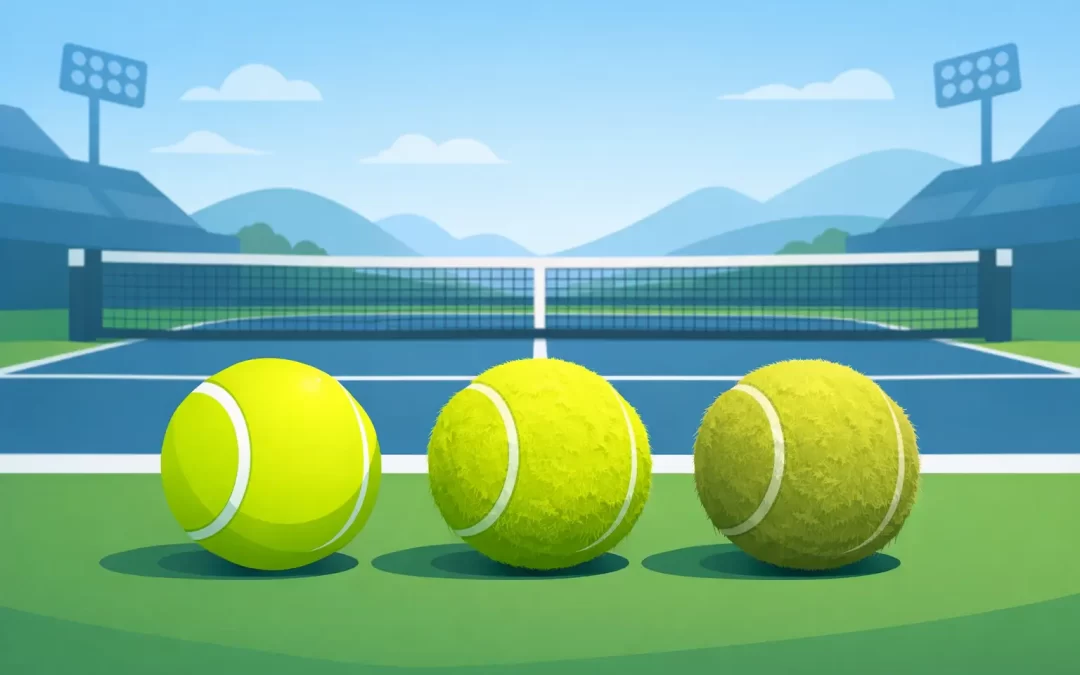
Players often judge an old tennis ball by its bounce, but the felt tells another part of the story. When the felt becomes thin, fluffy, or uneven, the ball moves differently through the air and reacts differently off the court. That affects spin, speed, and control.
Hard courts are toughest on felt. Their abrasive surface can quickly strip fibers from the ball, especially during long baseline rallies. On these courts, extra-duty felt is the smart choice. Extra-duty balls are built with thicker, more durable felt to resist wear and maintain a more consistent surface.
Regular-duty balls generally work best on clay and indoor courts, where the surface is less abrasive. They may feel slightly livelier and can offer excellent playability, but they are not designed to survive repeated hard-court friction as well as extra-duty options.
If you play mostly on outdoor hard courts, do not buy based on price alone. A cheaper regular-duty ball that needs replacing after one session is not better value than an extra-duty ball that stays playable through several practices.
Court Surface Changes Ball Life
Your home court has a major impact on how long tennis balls last. Hard courts wear down felt fastest, particularly in dry conditions where the court surface is gritty. Powerful hitters also create more friction and compression, so a heavy topspin player may wear through balls faster than a flatter hitter playing the same amount of time.
Clay courts are more forgiving on felt, though moisture and clay dust can make balls heavier over time. Indoor courts are usually the easiest environment for balls to survive because there is less abrasion, less moisture, and no sun exposure. Grass can be gentle on felt but may leave balls damp or stained depending on conditions.
Temperature matters, too. Cold weather makes pressurized balls feel firmer and less lively. Extreme heat can accelerate pressure loss and soften the felt. If you leave opened balls in a hot car or exposed to direct sun, expect their useful life to shrink.
How to Choose a Long-Lasting Tennis Ball
Start with the purpose of the session. For match play, choose premium pressurized extra-duty balls if you play on hard courts. They offer the best balance of dependable bounce, durable felt, and the predictable response needed when points matter.
For drills, feeding, and ball-machine work, pressureless balls are usually the better investment. You will sacrifice some match-like feel, but you will get far more hitting time before replacement is necessary. Coaches and parents of competitive juniors often benefit from keeping both types on hand: fresh pressurized balls for live-ball training and matches, plus pressureless balls for repetitive drilling.
Brand quality also matters. Established performance lines from Wilson, Penn, Head, Babolat, and Tecnifibre are engineered with different felt blends, core constructions, and intended court surfaces. The best choice is not always the most expensive can. It is the ball that performs consistently in your playing conditions and supports the way you train.
At Profilex, the equipment question is always tied to performance. The goal is not simply to make a can last another day. It is to use a ball that gives you reliable feedback so you can develop cleaner timing, better footwork, and more confidence in your shots.
Make Your Tennis Balls Last Longer
Storage can extend the useful life of pressurized balls. Keep unopened cans in a cool, dry space rather than a garage, trunk, or direct sunlight. After opening, collect the balls promptly after play and avoid leaving them outside overnight. Moisture, temperature swings, and long exposure to heat all work against consistent bounce.
Pressurized ball savers can help retain internal pressure between sessions. They will not restore a truly dead ball to new-can performance, but they can slow pressure loss and add useful practice time. This is especially worthwhile if you play once or twice a week and want to preserve a quality set of balls for your next session.
Rotate balls by purpose. Use your newest balls for matches, point play, and technical work where ball response matters. Move slightly used balls into your serve basket or warm-up rotation. Once their bounce or felt becomes inconsistent, retire them from tennis and use them for off-court mobility drills, chair-leg protectors, or pet play.
When Is a Ball Too Worn to Use?
A ball is finished for competitive play when its bounce is noticeably lower than a fresh ball, its felt is severely bald or fuzzy, or it responds differently from the other balls in the set. Mixed-condition balls create mixed feedback, which can hurt practice quality. You may blame your strings or racquet when the real problem is an uneven ball.
For casual hitting, the threshold is more flexible. If the ball still bounces consistently and the felt is intact, it can remain useful. But when you are training to improve, consistency is part of the equipment standard. Fresh, dependable balls allow you to evaluate your game honestly.
Before your next session, match your tennis balls to the court and the work you plan to do. A durable extra-duty pressurized ball for competition and a pressureless set for volume practice is a simple gear decision that keeps every hour on court working harder for your game.