
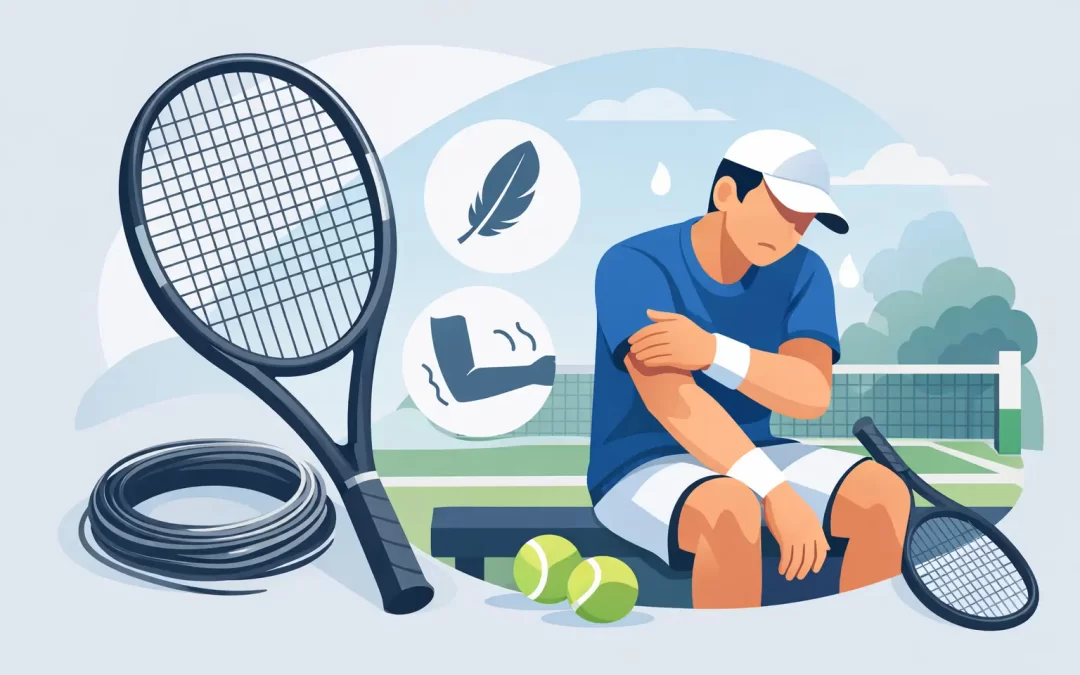
A fast-swinging player can love the control of polyester for two hours, then feel a dull ache in the elbow the next morning. That is why the question, are polyester strings comfortable, cannot be answered with a simple yes or no. Polyester can be a smart performance choice, but it is rarely the most naturally arm-friendly string type.
For players who create their own pace and attack with heavy spin, polyester offers confidence on full cuts. It resists movement, keeps the string bed predictable, and helps prevent powerful shots from flying long. The trade-off is impact feel. Most polyester strings are firmer and less elastic than multifilament, synthetic gut, or natural gut, so they return less shock-absorbing comfort at contact.
Are Polyester Strings Comfortable Compared With Other Strings?
In general, polyester is less comfortable than the main alternatives. Natural gut remains the benchmark for plush feel, power, and vibration reduction. Multifilament strings are designed to mimic much of that comfort at a lower price point. Synthetic gut sits in the middle, offering a crisp but more forgiving response than most poly.
Polyester is built for a different job: control, durability, and spin potential. Its firm construction allows hard hitters to swing aggressively without losing command of the ball. That performance advantage is real, especially for advanced baseliners and competitive juniors who break softer strings quickly.
But firmness matters. When the ball strikes the string bed, a soft and elastic string stretches and rebounds more readily. A polyester string bed deforms less, which can send more impact shock into the racquet and, ultimately, the player’s arm. That does not mean every player will find poly harsh. It means polyester demands a setup that matches the player.
Comfort Depends on More Than the String Material
Calling every polyester string uncomfortable misses the details. Modern co-polyester formulas vary widely. Some are intentionally engineered for a softer, more elastic response, while others prioritize maximum control and durability. A shaped, firm tournament poly at high tension can feel dramatically different from a smooth, softer co-poly at a sensible tension.
Tension is the biggest adjustment
High tension makes a polyester string bed firmer, lower powered, and less forgiving. A player who installs poly at the same tension used for synthetic gut often creates unnecessary stiffness. Dropping tension by several pounds is usually the first comfort adjustment worth making.
There is no universal number, because racquet head size, beam stiffness, swing speed, and player preference all matter. Still, many players find that polyester performs best in a lower tension range than softer strings. The result can be better pocketing, easier depth, and less jarring feedback without giving up the control that brought them to poly in the first place.
Gauge changes feel and durability
A thinner polyester, such as 17 gauge or 18 gauge, generally feels livelier and more comfortable than a thick 15L or 16 gauge version. It can also provide better bite on the ball. The cost is durability. Players who saw through strings quickly may need a thicker gauge, but recreational players often choose overly thick poly when they would benefit more from a thinner, more responsive option.
Racquet stiffness and pattern matter
A stiff, powerful racquet paired with a full bed of firm polyester creates one of the harshest combinations in tennis. A flexible racquet can soften the experience, while an open string pattern may add a little more launch and pocketing. Dense patterns tend to feel more controlled, but they can also feel firmer with poly.
Your string choice should never be separated from your racquet. The same string can feel controlled and comfortable in one frame, then board-like in another.
Fresh poly feels better than dead poly
Polyester loses tension and resilience over time. Even before it breaks, it can become less lively and less forgiving. Players often describe old poly as dead, stiff, or disconnected. That is not just a feel issue. Continuing to play with dead polyester may increase discomfort because the string bed is no longer responding the way it did when freshly installed.
If you use a full bed of poly, restringing should be based on playing hours, not only breakage. Frequent string breakers may naturally replace it often. Players who do not break strings need to be more proactive, particularly if they notice arm soreness, reduced depth, or a hard impact feel.
Who Can Play Polyester Comfortably?
Polyester is usually most comfortable for players with fast, long swings who generate their own power. These players benefit from its control and can keep tension lower without losing confidence. Strong intermediate, advanced, and tournament-level players often fit this profile.
It can also work for recreational players who want more spin and durability, provided they choose a softer co-poly, avoid excessive tension, and restring regularly. Profilex Performance Co-Poly strings are positioned for players seeking that modern blend of control, spin, and playable feel rather than a harsh, one-dimensional response.
Poly is less likely to be the right starting point for beginners, players with short or compact strokes, and anyone managing tennis elbow, wrist pain, or shoulder irritation. These players commonly need more free power and shock absorption, not a firmer response. A quality multifilament or synthetic gut is often the smarter performance decision because it helps them swing freely and stay on court longer.
A Hybrid Can Deliver Control Without the Harshness
For many players, the best answer is not abandoning polyester. It is using less of it.
A hybrid setup combines polyester with a softer string. Placing polyester in the mains preserves much of its control, durability, and spin-oriented response. Using multifilament or natural gut in the crosses adds power, feel, and comfort. This is a strong option for aggressive players who like the predictability of poly but do not enjoy a full bed’s firm impact.
The reverse hybrid – soft string in the mains and polyester in the crosses – can provide even more comfort and liveliness. It will usually be less durable, particularly for heavy topspin players, but it is an excellent route for players who want a softer string bed while maintaining some control from the poly crosses.
A hybrid is not automatically arm-safe. Tension, racquet stiffness, and the specific strings still matter. But it gives players more room to tune their setup than a full bed of polyester.
How to Make Polyester More Comfortable
Start by choosing a softer co-polyester instead of the firmest control string on the market. Use a thinner gauge if durability allows, lower tension from your previous setup, and avoid leaving the string in the racquet long after its playability has faded.
Pay attention to what your arm tells you. A little firmer feedback is normal with polyester. Persistent soreness, loss of confidence on contact, or a need to guide the ball instead of swinging freely are signs that your setup needs attention. Technique and workload can contribute to pain, too, but equipment should not make a preventable problem worse.
Players returning from elbow trouble should be especially conservative. A multifilament, natural gut, or soft hybrid is usually a better path back to full-speed tennis than a tight full-poly setup. Control matters, but healthy practice time matters more.
The Right String Should Support Your Swing
Polyester strings can be comfortable enough for the right player and setup, but they are not comfort strings by nature. Their value comes from controlled aggression: taking bigger cuts, creating heavier spin, and trusting the ball to stay inside the lines.
Choose poly when your swing speed and game demand it, then tune tension, gauge, and string pattern around your arm and racquet. The best setup is not the one that feels toughest or lasts the longest. It is the one that lets you swing with conviction, recover well, and keep building a game that holds up under pressure.