
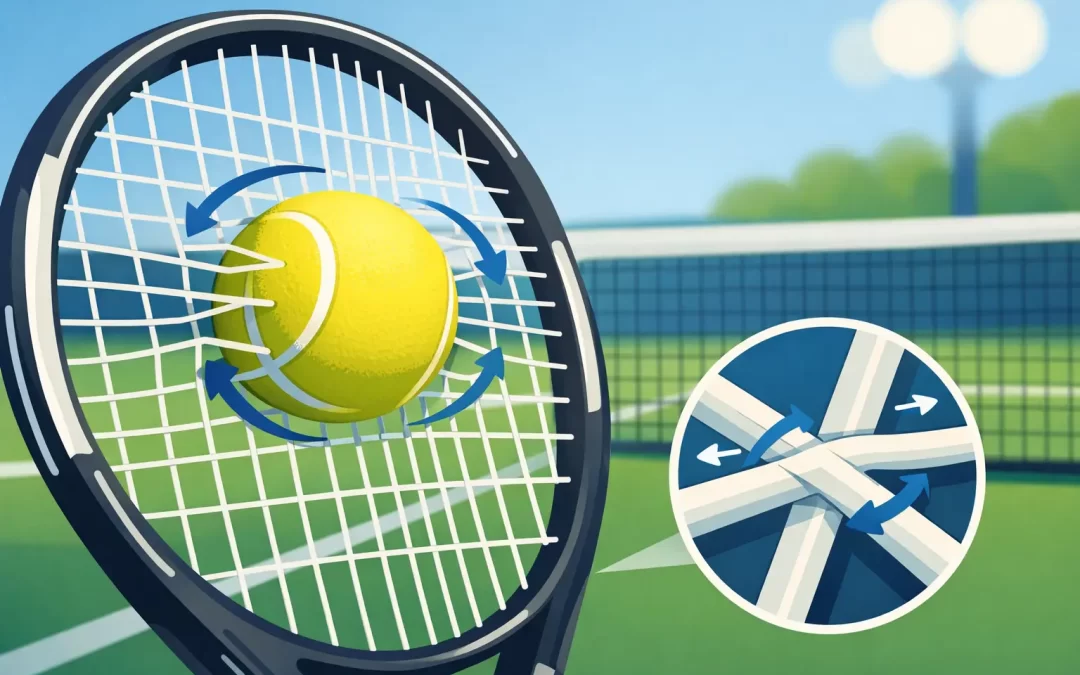
A clean string bed rarely stays perfectly straight for long. If you have ever looked down after a heavy rally and wondered, why do tennis strings move, the answer starts with impact: the ball pushes the mains and crosses out of position every time it meets the racquet face. What happens after that movement tells you a lot about your string material, tension, racquet pattern, and when it may be time for a fresh setup.
Why Do Tennis Strings Move During Play?
At contact, the ball compresses against the string bed and forces the main strings sideways. The cross strings resist that movement, creating friction where every main and cross intersects. On a slower, centered shot, the strings may shift only slightly. On a heavy topspin forehand or a ball struck near the edge of the sweet spot, they can move much more visibly.
Some strings slide back into place after impact. Others stay displaced, leaving you with the familiar task of straightening the strings between points. Neither behavior is automatically a problem. It is a result of how the strings interact with each other under force.
The modern game adds another factor: spin. When the mains can slide sideways and then snap back rapidly, they help grip and rotate the ball. That is one reason many advanced players use polyester strings. A string bed that moves a little during impact can be working exactly as intended. The key distinction is whether the strings return to their original position or remain out of line.
String Material Makes the Biggest Difference
String movement varies dramatically by construction and material. If your strings are constantly crooked, do not assume the stringer made a mistake. Your setup may simply be designed for a different blend of feel, comfort, durability, or spin.
Synthetic Gut and Multifilament Strings
Synthetic gut and multifilament strings usually move more visibly than polyester. Their surfaces can create more friction at the intersections, so once the strings are pushed out of place, they do not always slide back easily. They also tend to be softer and more elastic, which is excellent for comfort, touch, and easy power but can make the string bed look less orderly after a long set.
For recreational players, juniors, and anyone prioritizing arm comfort, visible movement is often a reasonable trade-off. A comfortable multifilament that moves is usually a better choice than a stiff string that feels harsh or causes discomfort.
Natural gut can also move noticeably. It delivers elite power, feel, and tension maintenance, but its softer construction and surface friction can allow strings to shift and stay shifted, especially as the string bed wears.
Polyester and Co-Poly Strings
Polyester strings are firmer, more durable, and generally lower-friction than synthetic gut or multifilament. That lower friction allows the mains to move sideways on contact and snap back. This snapback is a major contributor to the controlled spin potential players expect from a quality co-poly setup.
Fresh polyester often appears to move less because it returns to position efficiently. As it ages, loses tension, or develops notches, that motion can change. The strings may stop snapping back as cleanly, feel locked in place, or begin to stay out of alignment. When that happens, you may notice reduced spin, a flatter ball flight, less predictable control, or a duller response.
Profilex Performance Co-Poly strings are built for players who want a controlled, spin-friendly response, but polyester is not a set-it-and-forget-it option. Even if it does not break, dead poly eventually loses the performance characteristics that made it effective.
Hybrid String Setups
Hybrids make string movement more interesting because the mains and crosses have different surfaces and stiffness levels. A popular performance setup places polyester in the mains for spin and durability, with a softer multifilament or natural gut cross for comfort and feel. In that case, the poly mains may slide against the crosses, while the softer crosses can show wear more quickly.
A hybrid can deliver an outstanding balance, but it also requires smart maintenance. If the soft string begins fraying, notching deeply, or allowing the mains to lock up, the setup may no longer play like it did when freshly strung.
Tension, Gauge, and Racquet Pattern Also Matter
Material is only one part of the equation. The same string can behave very differently depending on how it is installed and which racquet it is installed in.
Lower string tension typically allows more ball pocketing and string deflection. That can create more movement, more comfort, and easier depth, but it may also make the strings look less tidy. Higher tension limits movement to a degree and can provide a firmer, more controlled response, though excessive tension can reduce comfort and power.
String gauge matters as well. Thinner strings, such as 17 gauge or 18 gauge, generally offer more feel and bite but can move, notch, and break faster. Thicker 15L or 16 gauge strings usually last longer and may resist movement better, although they can feel firmer and less lively.
Your racquet’s string pattern has a major effect. Open patterns, such as 16×19, create more space between strings. They are known for spin potential and easier access to power, but the strings can move and notch faster. Dense patterns, such as 18×20, hold the string bed more tightly and often keep strings aligned longer. They generally favor precision and durability, but some players find them less forgiving or less spin-friendly.
When Moving Strings Signal Wear
Straightening strings after a few points is normal, particularly with synthetic gut, multifilament, or gut. What deserves attention is a clear change in how the racquet performs.
Look closely where the mains and crosses meet. Small grooves are normal. Deep notches, however, increase friction and prevent the strings from sliding freely. With polyester, this can reduce snapback and spin. With softer strings, it often means a break is coming.
You should also pay attention to feel. If the racquet suddenly launches the ball, feels board-like, loses touch on drop shots, or stops giving you confidence on full swings, the strings may be past their best. Polyester commonly goes dead before it breaks. Players who wait only for a broken string can spend weeks competing with a lifeless string bed.
For frequent players, restringing should be based on use and performance, not just breakage. A practical starting point is to restring annually as many times as you play each week. A player on court three times per week, for example, may benefit from restringing around three times per year. Heavy hitters, tournament players, and anyone using polyester may need fresh strings more often.
How to Reduce Excessive String Movement
You cannot eliminate movement completely, and you should not try to if it means sacrificing the feel or comfort your game needs. You can, however, build a setup that stays more consistent.
First, choose the right string family for your style. Players who break strings, generate fast racquet-head speed, and rely on topspin often benefit from a shaped or slick co-poly at an appropriate tension. Players who want easy power and arm-friendly comfort may be better served by multifilament, synthetic gut, or a hybrid, accepting that some visible movement comes with the package.
Next, consider a slightly thicker gauge or a denser string pattern if strings are constantly shifting and breaking. Do not make a drastic change based on appearance alone. A thicker string may last longer, but it can also reduce feel and responsiveness. Likewise, raising tension may limit movement, but too much tension can make the racquet less comfortable and less forgiving.
String savers are another option for players using natural gut or multifilament. These small pieces sit between strings at high-wear intersections, reducing friction and potentially extending string life. They can change the feel slightly, so they are worth testing rather than installing automatically.
Finally, use a knowledgeable stringer and keep records of your setup. Note the string, gauge, tension, racquet, date strung, and how it played over time. That information is far more useful than guessing after every string job.
Do You Need to Straighten Your Strings?
For most players, straightening displaced strings between points is fine. It will not restore lost tension or reverse wear, but it can keep the string bed more uniform and prevent a badly shifted string from feeling distracting at contact. Use your fingers, not a sharp tool that could nick the string.
More importantly, do not judge your setup solely by whether it looks perfectly aligned. A fresh polyester may move during impact and snap back so quickly that you never see it. A soft multifilament may stay crooked yet provide exactly the comfort and depth a player needs. Performance comes from the whole system – racquet, string, tension, technique, and the demands of your game.
Before your next restring, pay attention to what happens after contact: do your strings return, lock up, fray, or simply lose their feel? That one observation can point you toward a smarter setup and more confidence on every swing.