
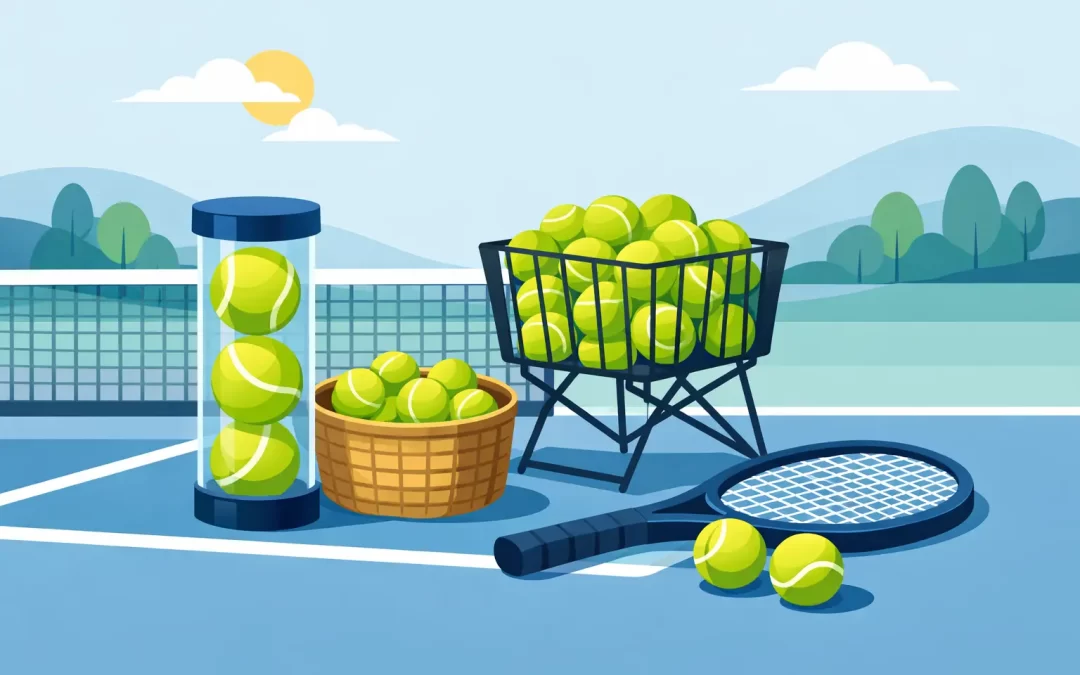
A practice ball that dies after one basket can ruin a productive session. So can a ball that feels too fast, too light, or completely different from what you use on match day. Knowing how to choose tennis balls for practice helps you train with purpose, protect your budget, and build a more reliable game.
The right choice is not always the most expensive can on the shelf. It depends on your court surface, how often you hit, whether you are drilling or playing points, and the level of player on the other side of the net. Choose the ball that matches the work you are putting in.
Start With Your Practice Goal
Before comparing felt, pressure, or packaging, decide what the session needs to accomplish. A player feeding balls for an hour of forehand repetition needs something different from a junior preparing for a weekend tournament.
For match-play practice, use the same type of ball you expect to see in competition whenever possible. Fresh, pressurized balls give you the livelier bounce, speed, and response that affect timing, footwork, and shot selection. If you train only with dead balls, the first new-ball point in a match can feel rushed.
For basket drills, coaching sessions, and high-volume repetition, durability becomes more valuable. You want a ball that holds its bounce and keeps its felt intact through hundreds of contacts. That consistency lets you focus on swing path, contact point, and movement rather than constantly replacing worn balls.
Serving practice falls somewhere in between. A fresh ball is best when you are measuring pace, dialing in placement, or preparing for competition. Slightly used balls can still work for volume serving, especially when the goal is rhythm and shoulder-friendly repetition rather than simulating a first serve under pressure.
Pressurized vs. Pressureless Tennis Balls
This is the biggest decision when choosing tennis balls for practice. Both types have a place in a serious player’s bag.
Pressurized balls feel closer to match play
Pressurized tennis balls are the familiar balls sold in sealed cans. Their internal air pressure creates a crisp, lively bounce and a responsive feel off the strings. Most league matches, tournaments, and club play use pressurized balls, so they should be your first choice for point play and competition preparation.
Their trade-off is lifespan. Once opened, they gradually lose pressure, even if the felt still looks clean. Hard hitters and frequent players will notice the ball becoming softer and slower after a few sessions. Premium pressurized balls generally maintain playability longer than entry-level options, but no pressurized ball stays fresh forever.
Choose pressurized balls if you want realistic match feedback, play organized competition, practice serves seriously, or prioritize touch and response at the net.
Pressureless balls are built for volume
Pressureless balls get their bounce from the rubber core rather than internal air pressure. They may feel firmer and heavier at first, and many experienced players do not prefer them for match simulation. However, they are exceptionally durable and continue bouncing long after standard balls have gone flat.
They are a smart option for ball machines, teaching carts, wall practice, and repetitive groundstroke drills. A pressureless ball’s felt will eventually wear down, especially on abrasive hard courts, but its bounce remains dependable for far longer.
Choose pressureless balls if your priority is maximum reps per dollar. They make particular sense for coaches, families with multiple players, and anyone who practices with a ball machine several times a week.
Match the Ball to the Court Surface
Court surface changes how quickly felt wears and how the ball moves through the court. A ball that performs well on clay may not be the best value on hard courts.
Hard courts are the toughest environment for tennis balls. The surface scuffs felt quickly, and aggressive topspin can make a ball fluff up and slow down. Look for extra-duty felt, which is designed to resist abrasion and stay playable longer on outdoor and indoor hard courts. For most US club players, extra-duty pressurized balls are the practical default.
Regular-duty felt is typically better suited to clay and softer courts. It is often a little lighter and less resistant to fluffing, which can produce a cleaner feel on less abrasive surfaces. Using regular-duty balls on a gritty hard court is possible, but expect faster wear and shorter useful life.
Indoor courts need a little context. Indoor hard courts still favor extra-duty felt. On carpet or other softer indoor surfaces, regular-duty balls may feel more natural and last well. If your club specifies a ball type for leagues or events, follow that standard in your practice sessions.
Choose the Right Ball for Your Level
A standard yellow ball is not automatically the right practice ball for every player. Junior development balls are designed to support proper mechanics and better rally tolerance at the right stage of learning.
Red, orange, and green balls are lower-compression options that bounce more slowly than a standard ball. They give young players more time to set up, track the ball, and swing with control. They are not shortcuts. They are training tools that help juniors learn efficient movement and clean contact before full-speed yellow-ball tennis.
Green-dot balls are especially useful for developing juniors transitioning to a full court. They are close enough to standard tennis to develop point patterns, but their reduced compression makes rallies more manageable. Adults returning to tennis after a long break can also benefit from green-dot practice when they need to rebuild timing and confidence without forcing the pace.
For intermediate and advanced adults, standard yellow balls are usually the correct choice. The key is selecting the right durability category and using fresh balls strategically rather than treating every practice session the same.
Buy by Use, Not Just by Price
The lowest price per can is not always the best value. A less expensive ball that loses bounce after one hard session can cost more over time than a premium ball that holds pressure and felt for several outings.
Think in terms of cost per productive hour. If you play points twice per week, a quality pressurized ball with durable felt may deliver better value because your practice stays closer to match conditions. If you feed hundreds of balls, a bulk pressureless option can reduce replacement costs dramatically.
For most players, a two-ball system works best: keep fresh pressurized balls for matches, sets, serve practice, and high-intensity live-ball sessions; reserve older pressurized balls or pressureless balls for warmups, feeding, and ball-machine work. Labeling your practice balls by condition can make this simple. A small mark for drills keeps your newest balls from disappearing into the basket.
Avoid leaving balls in a hot car, direct sun, or freezing garage for long periods. Heat and cold accelerate changes in pressure and rubber performance. Store unopened cans in a stable, dry space, and keep opened balls in a sealed container if you want to extend their useful life between sessions.
Pay Attention to Feel, Visibility, and Consistency
Once you have narrowed down ball type and felt, feel matters. Some players prefer a crisp, quick response, while others like a slightly softer ball that feels more controlled at contact. If you play with a particular ball in league or tournament competition, train with it enough to understand its bounce, fuzz, and speed as it ages.
Visibility also matters more than many players realize. Standard optic yellow remains the best choice for most conditions, especially under lights. If you practice at dusk, on a court with busy backgrounds, or with players who struggle to pick up the ball early, a bright, consistent ball can improve reaction time and reduce late contact.
Do not mix drastically different ball conditions in the same drill. A basket containing fresh pressurized balls, dead balls, and pressureless balls creates unpredictable bounce and pace. That inconsistency may be useful for a reaction drill, but it is counterproductive when you are grooving a new stroke or working on precise targets.
A Smart Practice Ball Setup
A competitive player who trains three or four days a week does not need to open a new can every time. Instead, use fresh extra-duty pressurized balls for one match-play session and one serious serve session. Move them into the drill group after they lose their match-day pop, then replace them once the felt becomes too fluffy or the bounce becomes inconsistent.
A coach or high-volume hitter should keep a larger pressureless supply for feeding and machine work, plus a separate set of fresh pressurized balls for live points. Parents of competitive juniors can use the same approach while keeping the appropriate red, orange, or green developmental balls available when needed.
Profilex curates tennis equipment with this performance-first mindset: the best ball is the one that gives your training the feedback it needs. Choose for the session in front of you, and every basket becomes a better opportunity to play like a champion.