
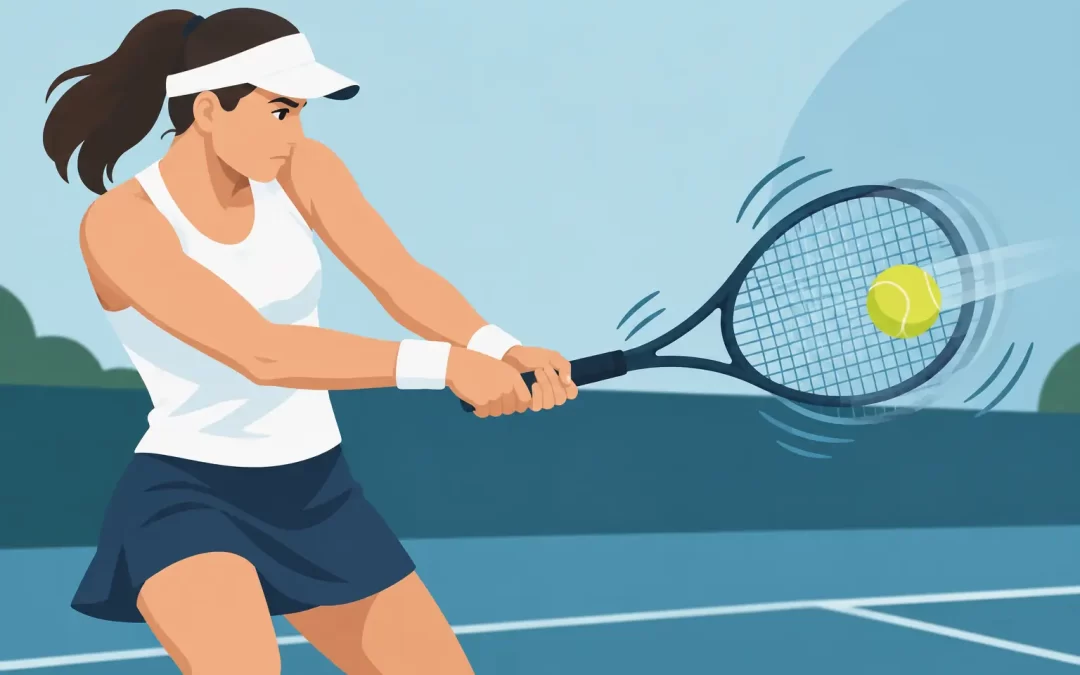
A ball catches the upper hoop on a fast return, and the racquet twists in your hand. The shot floats short, the strings feel harsh, and you lose confidence in taking a full swing on the next ball. That is why racquets feel unstable for many players – and it is rarely caused by one specification alone. Stability comes from how the frame, string bed, grip, and player’s swing work together at impact.
A stable racquet does not simply feel heavy. It stays connected to the ball when contact is fast, off-center, or late. The goal is not to chase the heaviest frame available. It is to find enough resistance to twisting and deflection without making the racquet too slow for your timing, conditioning, or style of play.
What Stability Really Means in a Tennis Racquet
Racquet stability is the frame’s ability to hold its position through impact. When the ball strikes outside the center of the string bed, it creates torque that tries to rotate the racquet head. A stable frame resists that rotation. The result is a more solid feel, a more predictable launch, and better directional control.
Players often describe instability in practical terms: the racquet gets pushed around by pace, volleys feel shaky, mishits send vibrations through the hand, or the head seems to flutter on serves. Those sensations can come from low mass, low swingweight, limited torsional resistance, an overly loose string bed, or contact that consistently happens outside the sweet spot.
The important distinction is that a racquet can feel maneuverable and still be stable enough for its intended player. A lightweight, head-light frame may be excellent for a developing junior or doubles player who needs quick reactions. Against a heavy ball, though, that same setup may not provide the plow-through and torsional control required to redirect pace.
Why Racquets Feel Unstable on Off-Center Shots
Off-center contact is where a racquet’s design becomes obvious. Near the center of the string bed, most frames feel reasonably solid. Toward the tip or sides of the hoop, the racquet must work much harder to keep the face from opening, closing, or twisting.
Static Weight Is Only Part of the Story
More overall weight usually helps stability because the racquet has more mass behind the ball. A 10.4-ounce racquet can be quick and comfortable, but it will generally absorb less incoming pace than an 11.5-ounce frame with comparable balance and construction.
Still, static weight alone can mislead players. Two racquets at the same strung weight can play very differently. One may carry more mass in the head and feel significantly more solid against a big forehand. The other may place more weight in the handle, making it faster to maneuver but less resistant to impact at the top of the hoop.
Swingweight Determines How Much the Head Gets Moved
Swingweight measures how heavy the racquet feels when you swing it. It is one of the most useful indicators of on-court stability because it reflects how much mass is positioned away from your hand.
A higher swingweight generally improves plow-through and helps the racquet stay on its intended path through contact. This is why many advanced players prefer frames with enough swingweight to handle pace, even when the racquet is balanced head light. The trade-off is clear: as swingweight rises, accelerating the racquet can become harder, especially on late returns, quick exchanges at net, and long matches.
If your racquet feels solid on slow balls but collapses against a hard hitter, insufficient swingweight is a likely factor. If it feels stable but you are late all match, the setup may have more swingweight than your game can efficiently manage.
Twistweight Protects the Sides of the String Bed
Twistweight is less commonly printed on spec sheets, but players feel it immediately. It describes resistance to twisting when the ball strikes toward the sides of the hoop. A racquet with strong torsional stability gives you more usable response outside the center.
Wider beam designs, modern carbon layups, and weight positioned around the 3 and 9 o’clock areas can improve this feeling. That does not mean every player needs a wide, powerful frame. Flexible player racquets can also feel exceptionally stable when they have enough mass and well-designed hoop construction. The right answer depends on whether you need easier power, more feel, or a blend of both.
Strings Can Make a Stable Frame Feel Unforgiving
The racquet is only half the hitting system. A string bed that is too dead, too loose, too stiff, or poorly installed can change the way impact feels.
Loose strings may produce a trampoline-like response that players mistake for instability, particularly on flatter shots or volleys. Very tight polyester can create the opposite problem: the frame may not twist much, but the impact can feel harsh and underpowered, making the racquet seem less connected to the ball. Old polyester is another frequent culprit. Once a co-poly loses resilience, control and comfort can disappear long before the strings actually break.
Gauge and pattern matter as well. An open 16×19 pattern can offer excellent spin and easy depth, but it may feel livelier than a denser pattern at the same tension. A full bed of firm polyester rewards fast, committed swings, while a hybrid or softer multifilament setup can improve pocketing and comfort for players who need more help creating depth.
Before replacing a racquet, assess the string setup honestly. Fresh strings at an appropriate tension can restore a cleaner, more predictable response. If you regularly hit with dead poly, no frame will feel as stable or controlled as it should.
Technique Can Expose or Hide a Stability Problem
Equipment should support sound mechanics, not compensate for every timing issue. Late contact, a loose wrist at impact, and a decelerating swing can all make a stable racquet feel unreliable.
On groundstrokes, contact that drifts too close to the body often sends the ball toward the side of the hoop. On volleys, players who let the racquet face collapse instead of using the shoulder and forearm structure will feel pushed around, especially against pace. On serves, a low toss or rushed swing can create contact near the tip, where nearly any racquet feels less solid.
That said, players should not dismiss every equipment issue as technique. If a technically sound player consistently feels flutter on blocked returns, defensive slices, or firm volleys, the racquet may simply lack enough stability for the level of ball they face. Competitive juniors often encounter this jump when they move from lighter junior frames into adult competition.
How to Diagnose Your Racquet Before You Replace It
Start with the pattern of the problem. If the racquet only feels unstable against hard hitters, look first at swingweight and overall mass. If the issue appears mainly on shots toward the sides of the string bed, torsional stability is more likely. If the frame feels inconsistent everywhere, especially after several weeks of play, inspect the strings and tension.
Pay attention to when you feel the problem. A racquet that is stable on baseline rallies but shaky at net may be too light in the hoop for your volley technique or reaction-based style. A frame that crushes groundstrokes but feels slow on returns may be stable enough, but poorly matched to your speed and preparation.
A controlled demo is more useful than hitting a few casual balls. Test frames against the same opponent or ball machine, using the same type of string when possible. Hit neutral rally balls, defensive shots, volleys, returns, and serves. Stability should show up under pressure, not only when you are perfectly set.
Adjusting Stability Without Starting Over
Customization can be a smart solution when you like your racquet’s feel but want more resistance at impact. Small amounts of weight at 3 and 9 o’clock can improve torsional stability on side mishits. Weight at 12 o’clock raises swingweight and can add penetration, but it also makes the head slower to accelerate. Counterweight in the handle can preserve a more head-light balance after adding weight to the hoop.
These adjustments are precise, not casual. Even a few grams can change timing, serve rhythm, and comfort. If you have arm sensitivity, be cautious with major swingweight increases. More mass can reduce shock on impact, but a setup that is too demanding can cause you to muscle the racquet and create a different problem.
For players who want a more direct route, choose a frame with a higher stock swingweight, proven hoop stability, and a weight range that matches your strength and swing speed. At Profilex, that is the performance conversation that matters most: not which racquet is popular, but which one stays dependable when the point gets fast.
The right racquet should let you swing with conviction. When it holds firm through a heavy return, an imperfect volley, or a stretched defensive forehand, you stop protecting the ball and start playing your game.