
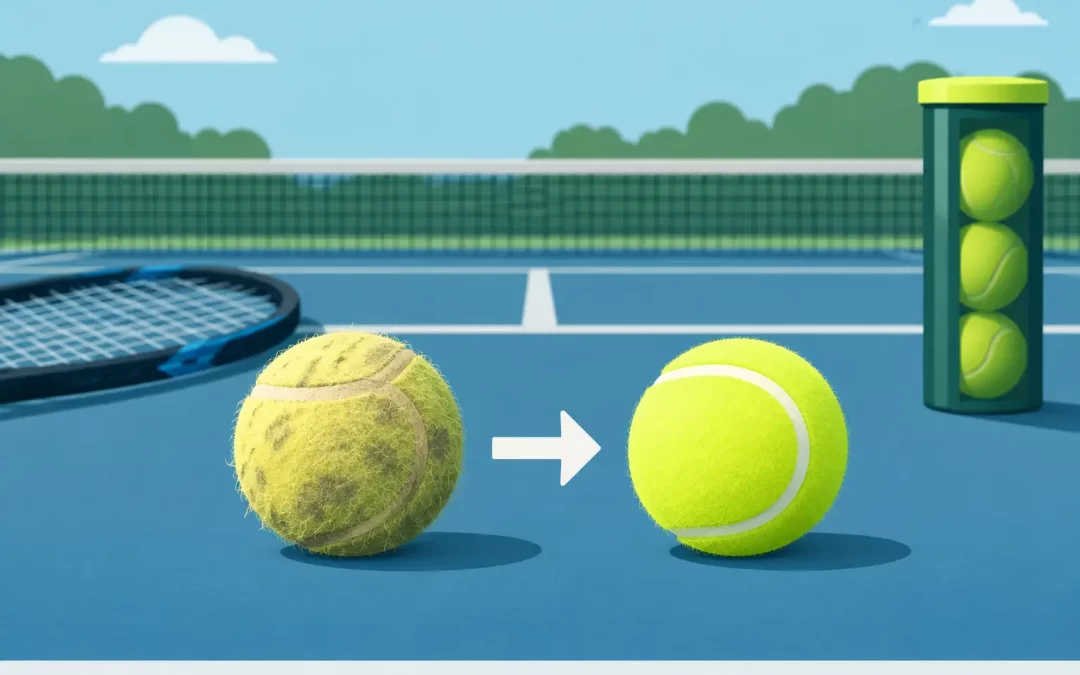
A tennis ball can look almost new and still cost you confidence. When the bounce starts dying, the felt gets thin, or the ball feels heavy off the strings, your timing changes before you consciously notice it. The question of when should tennis balls be replaced matters because worn balls affect more than rally quality – they change control, spin response, pace, and the feedback you get from every shot.
For serious players, fresh tennis balls are not a minor detail. They are part of a reliable training environment. If you are working on a bigger forehand, a more aggressive return, or better depth under pressure, you need a ball that responds consistently.
When Should Tennis Balls Be Replaced?
For a competitive match, use a fresh can of pressurized balls. Most tournament and league players expect new balls at the start, and many organized matches change them after the first seven games, then every nine games after that. That schedule is designed to maintain a predictable bounce and speed as felt wear and internal pressure begin to change the ball.
For recreational play, a fresh can can typically handle one to three sessions, depending on how hard you hit, what court you play on, and how long each session lasts. A casual doubles group playing for 60 to 90 minutes may get several solid outings from a can. A high-level singles player drilling heavy topspin and serving hard can noticeably wear the same balls out in one long session.
Practice balls can stay in rotation longer than match balls, but only when they still bounce and fly consistently. Once a ball becomes dead, overly soft, severely fuzzy, cracked, or visibly out of round, remove it from live-ball drills. Keep it for a dog, a massage tool, or a pickup game where performance does not matter.
Why Fresh Balls Change Your Game
Tennis balls lose performance in two main ways: pressure loss and felt wear. Pressurized balls are filled with air or gas at a higher internal pressure than the outside atmosphere. That pressure gives them their lively bounce. Once a can is opened, pressure gradually escapes through the rubber core. The process speeds up with hard impacts, heat, and long play sessions.
Felt wear is just as influential. As the outer covering fluffs up or gets worn down, the ball moves differently through the air and reacts differently off the court. On a hard court, balls often become fuzzy and slower through the air. On clay, they can pick up moisture and grit, becoming heavier and less predictable. A worn ball may still bounce acceptably, but its flight can make it harder to judge a swinging volley, attack a short ball, or drive a return through the court.
This is why players sometimes blame their strings or racquet when the ball is the real problem. If your shots suddenly feel inconsistent, check the balls before changing your tension or adjusting your technique. Equipment should help you identify what is happening on court, not add another variable.
Practical Replacement Timelines by Use
There is no single replacement rule for every player. Use these realistic guidelines to decide when a ball still deserves a place in your basket or match bag.
Match play and tournaments
Open a new can for every meaningful match. If you are playing a sanctioned event, follow the event’s ball-change rule. For a club ladder, USTA league match, high-stakes practice match, or junior tournament warm-up, fresh balls give both players a fair and consistent playing experience.
Do not save an opened can from last weekend for an important match just because the balls look clean. A pressurized ball can lose a meaningful amount of life even when it has spent most of its time sitting in a bag.
Lessons and structured drills
For a private lesson or focused training session, use balls that are no more than one or two sessions old. Coaches feeding aggressive patterns, transition drills, or serve-and-return work need a dependable bounce. Players are trying to build repeatable contact points, and dead balls make that harder.
If you are working on touch, feel, and net play, move your best balls into the drill first. A soft, dead ball can make a drop volley feel controlled when it is actually masking poor technique.
Ball machine and team practice
Ball-machine practice and large group sessions are a good place for lightly used balls. A ball basket can contain a mix of newer and older balls, but it should not become a collection of lifeless leftovers. Sort through the basket regularly and remove balls that are flat, cracked, or dramatically different from the rest.
For advanced juniors, academy players, and competitors, keep a separate group of fresher balls for point play and serve practice. Use older but still serviceable balls for repetitive groundstroke feeding. That simple rotation controls cost without lowering the quality of your most valuable training reps.
Casual hitting and family play
If the goal is movement, fun, and basic rallying, balls can stay in play longer. Replace them when the bounce is obviously low, the felt is coming apart, or players begin compensating for inconsistent response. Even casual players enjoy the game more when the ball clears the net cleanly and comes off the court as expected.
Court Surface, Weather, and Playing Style Matter
Hard courts are tough on felt. The abrasive surface quickly makes balls fuzzier, especially when players hit with heavy spin. If you play primarily on hard courts, expect to replace balls more often than a player who hits on a softer surface.
Clay changes balls differently. The court is easier on the felt, but moisture, clay dust, and cold conditions can make balls feel heavy. Wet tennis balls should not be treated as normal practice balls. They lose liveliness, collect debris, and can feel unpleasantly firm or heavy at contact.
Cold weather lowers bounce and makes every ball feel slower. Before throwing out a ball on a chilly day, compare it with a fresh ball from the same environment. Heat presents the opposite issue: balls may feel more lively, while high temperatures can speed up pressure loss over time.
Your game also plays a role. Flat hitters may preserve felt a little longer, while topspin-heavy players create more friction and wear. Big servers and advanced hitters compress the ball harder, accelerating pressure loss. There is a trade-off here: buying fresh balls more frequently costs more, but it protects the quality of your practice and makes match preparation more accurate.
How to Tell a Tennis Ball Is Done
You do not need a laboratory test to identify a worn-out ball. Start with the bounce. Drop it from shoulder height onto a hard, level surface next to a fresh ball. If it consistently rebounds much lower, it has lost pressure and should leave your match-ball rotation.
Then check its shape and felt. A ball that looks uneven, has a soft spot, shows a crack, or has bald patches is no longer reliable. Hold it in your hand and give it a gentle squeeze. A noticeably soft ball is usually dead, while an unusually hard or misshapen ball may have been damaged by heat, moisture, or repeated heavy impacts.
Finally, pay attention during rallies. Dead balls often produce a dull sound off the strings and require extra effort to create depth. Overly fuzzy balls can feel slow through the air and grab the court more than expected. If you are repeatedly late or early with no other change in your game, compare your current balls with a fresh can.
Pressurized vs. Pressureless Tennis Balls
Most players should choose pressurized balls for matches and performance-focused practice. They deliver the lively response, pace, and feel players expect from standard tennis. Their limitation is lifespan: once opened, they gradually lose pressure.
Pressureless balls are built with a thicker rubber core and do not rely on trapped internal pressure in the same way. They last longer and are useful for ball machines, baskets, and frequent recreational use. Their trade-off is feel. Many players find them firmer, heavier, and less responsive than a new pressurized ball.
The smart approach is not choosing one type for everything. Use pressurized balls when realistic match feedback matters. Use quality pressureless balls when durability and volume matter more. That is the kind of equipment decision that keeps your practice purposeful instead of expensive for the wrong reasons.
Store Balls to Preserve Their Life
Keep unopened cans in a cool, dry place away from direct sunlight. Do not leave them in a hot car, freezing garage, or damp trunk. Extreme temperatures affect rubber and pressure, shortening the useful life of the ball.
After opening a can, store the balls indoors when possible. A pressurized ball saver can help extend their usable life between sessions, especially if you play once or twice a week rather than every day. It will not turn old balls into new ones, but it can slow pressure loss enough to get more consistent practice from each can.
At Profilex, our equipment perspective is simple: use gear that gives you honest feedback. Fresh, consistent tennis balls let your racquet, string setup, and technique perform as intended.
The next time your shots feel strangely flat, do not immediately change your swing. Open a fresh can, hit a few clean balls, and let the difference tell you what your game has been missing.