
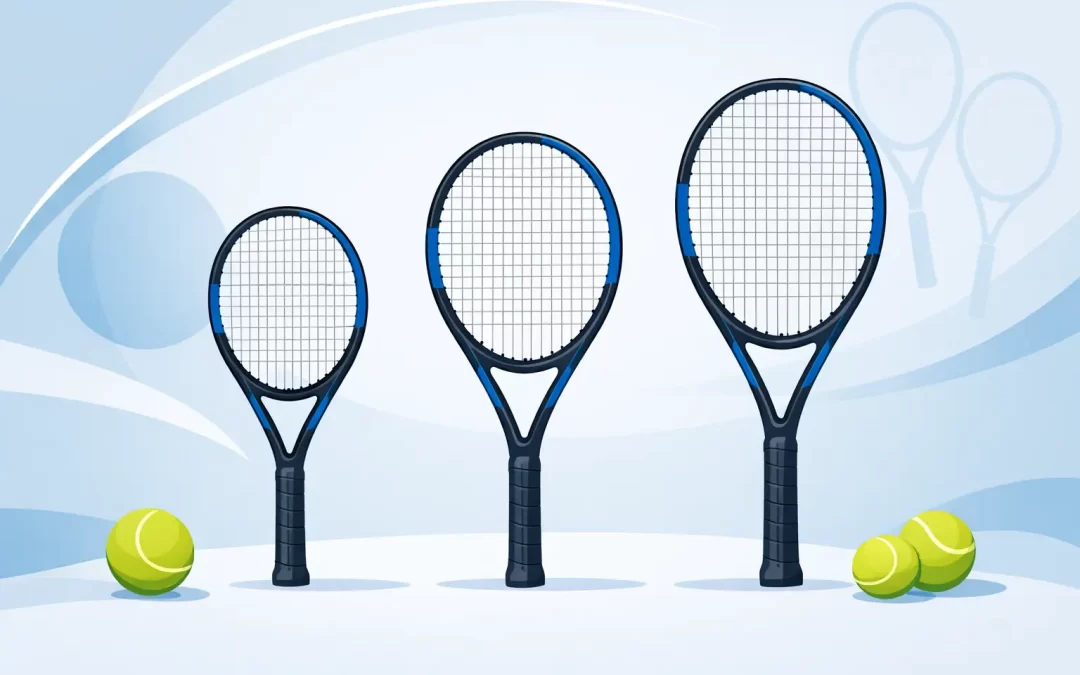
A player can love the feel of a racquet on serves and still hate it on backhand returns. Very often, the issue is not the brand, the string, or even the weight. It is the head size. This tennis racquet head size guide is built to help you choose smarter, because head size has a direct effect on power, control, forgiveness, spin potential, and comfort.
If you have ever switched frames and thought, this one feels easier, cleaner, or more demanding, you were probably feeling the difference in head size working with the string pattern, beam, and balance. There is no single best option for every player. There is a best fit for how you swing, how cleanly you make contact, and what kind of ball you want to hit.
Tennis racquet head size guide: what the numbers mean
Racquet head size is measured in square inches. Most modern tennis racquets fall somewhere between 95 and 110 square inches, with a few models sitting outside that range. Those numbers may look close on paper, but even a jump of 3 to 5 square inches can change the response of the frame in a noticeable way.
A smaller head usually gives you a more compact hitting area and a more connected, precise response. A larger head gives you a bigger string bed, a larger sweet spot, and easier depth. That sounds simple, but the real effect depends on the player.
For a strong intermediate or advanced player who generates their own pace, a smaller or midplus head can sharpen directional control and help keep aggressive swings from launching the ball long. For a newer player, a larger head can make the game easier immediately by offering more margin on off-center contact.
The main head size categories
Mid head size: about 93-97 sq in
This category is built for precision. Mid-size racquets tend to reward full swings, early preparation, and consistent contact. Players who like to drive the ball, flatten out approach shots, or feel closely connected to the ball often gravitate here.
The trade-off is forgiveness. Miss the center by a little, and you will feel it. Stability and control can be excellent, but power is usually lower and comfort can drop if the racquet is also stiff or strung too tightly. This is why mid-size heads are usually a better fit for advanced players, accomplished juniors, and strong ball strikers rather than developing beginners.
Midplus head size: about 98-105 sq in
This is where most players should start. Midplus racquets sit in the sweet spot between control and forgiveness, which is exactly why this category dominates the modern market. A 98 square inch frame can feel surgical for a high-level player, while a 100 or 102 can feel balanced and versatile for a wide range of club and tournament players.
If you want one category that covers the most styles of play, this is it. Baseliners get enough spin and margin. All-court players get enough precision to transition forward. Recreational players get more comfort and consistency than they often expect. For many players, a 100 square inch racquet is the safest performance starting point because it rarely overcommits in one direction.
Oversize head size: about 106-110+ sq in
Oversize frames are designed to make contact easier and depth more accessible. The sweet spot is larger, the string bed is more forgiving, and the ball can come off the racquet with less effort. That can be a major advantage for beginners, doubles players, seniors, or anyone looking for added comfort and easier power.
The trade-off is that some oversize racquets can feel less precise when you swing big. Control is not automatically poor, but the launch can be livelier, especially with softer strings or open string patterns. For players with compact swings or those rebuilding confidence after arm issues, an oversize head can be exactly the right call.
How head size changes performance
Head size does not work alone, but it absolutely shifts the racquet’s performance profile.
Power is the first thing most players notice. Larger heads generally create easier power because the string bed can deflect more and return more energy to the ball. You do not have to swing as hard to get depth. Smaller heads demand more from the player, but they usually give back a more predictable response when the swing speed is there.
Control is more nuanced. Smaller heads often feel more controlled because they launch the ball a little lower and respond more cleanly to aggressive swings. But a larger head can actually improve practical control for a player who does not hit the center consistently. If your contact is all over the string bed, a bigger sweet spot can produce a more repeatable ball.
Comfort also matters. In many cases, larger heads are more forgiving on mishits because they spread impact across a bigger hitting area. That can reduce the harshness players feel on off-center contact. Still, stiffness, string choice, and tension matter just as much. A large stiff racquet with a tight polyester setup can still feel demanding on the arm.
Spin is where players sometimes get confused. A larger head can help create a little more string movement and net clearance, but head size alone does not guarantee better spin. String pattern, swing path, and racquet speed play bigger roles. A 98 with an open pattern in the hands of a fast swinger can produce far more spin than an oversize frame used with a flatter stroke.
How to choose the right size for your game
Start with your level, but do not stop there. A beginner with athletic timing may outgrow a very large head quickly. An advanced doubles player may prefer more forgiveness than their rating suggests. The better question is how you actually win points.
If you rely on long, fast swings and like to attack targets, look closely at 97 to 100 square inches. That range gives you enough control to swing out while still keeping modern forgiveness. If you want balance above all else, 100 is the most versatile number in the category.
If you hit a more compact ball, need help with depth, or want a racquet that feels easy from the first session, 102 to 110 deserves a serious look. That does not mean you are sacrificing your game. It means you are choosing a frame that helps you play your best tennis more often.
If you are a strong, experienced striker who values feel, precision, and confidence on flatter drives, 95 to 98 can be a great fit. Just be honest about your contact quality over the course of a full match, not just the best 20 minutes of a warmup.
A quick player-by-player read
A junior moving into an adult-performance frame often lands well at 98 or 100 square inches because it offers room to develop without becoming too demanding. A recreational adult who plays once or twice a week will usually benefit from a forgiving 100 to 105. A tournament player who creates their own pace may prefer 98 or smaller. A doubles specialist who values reflex volleys and return consistency may love a stable 100 or a comfortable oversize.
Parents shopping for competitive juniors should pay attention here. Choosing a head size that is too small too early can make the game harder than it needs to be. Choosing one that is too large for a fast-improving player can eventually limit confidence on full swings. The best fit supports development, not just immediate comfort.
Tennis racquet head size guide for common mistakes
One of the biggest mistakes is choosing the smallest head you can handle instead of the head size that helps you compete best. Players often associate smaller heads with advanced tennis, but performance is not about looking advanced. It is about producing a better ball under pressure.
Another mistake is judging head size in isolation. A 100 square inch racquet can feel controlled or explosive depending on beam design, stiffness, balance, weight, and strings. That is why expert fitting matters. Head size points you in the right direction, but the full setup decides how the frame really plays.
A third mistake is ignoring your physical reality. If your arm is sensitive, if your contact drifts late, or if your match play gets rushed, extra forgiveness is not a compromise. It is smart equipment selection.
Where most players should begin
For most adults, the right starting range is 98 to 100 square inches. It gives you enough control to develop confidence on full swings and enough forgiveness to stay solid when timing is not perfect. That range fits a huge percentage of club players, high school competitors, league players, and improving juniors.
If comfort and easy depth are top priorities, move a little larger. If you are a proven ball striker who wants maximum precision, move a little smaller. But if you are unsure, do not overcomplicate it. Start with the range that gives you the broadest path to better tennis.
At Profilex, this is how we look at racquet selection: not as a generic spec sheet, but as a performance decision tied to your style of play. The right head size should help you swing with conviction, trust your contact, and compete with more confidence.
Choose the racquet that lets you play your real game on your average day, because that is the frame that will keep delivering when the match gets tight.