
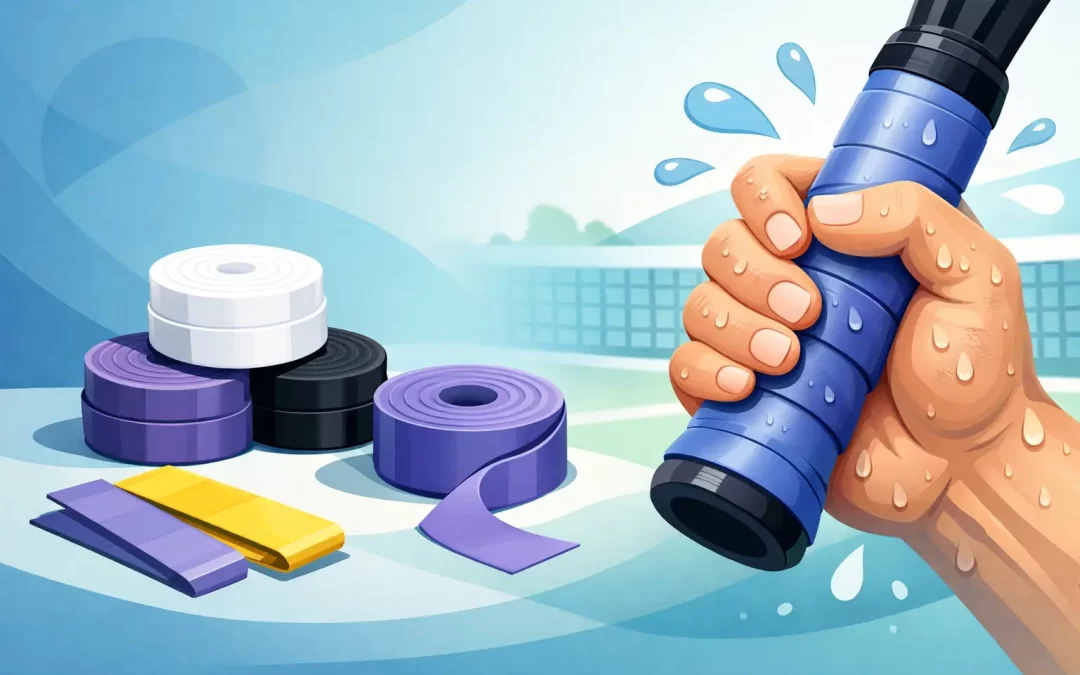
A slipping racquet handle changes more than comfort. It makes you squeeze harder, tightens your forearm, and turns a confident forehand into a stroke you guide instead of accelerate. The best overgrips for sweaty hands give you a stable connection to the racquet without forcing you to grip too tightly – a major advantage when points get long, conditions get humid, and pressure builds.
For sweat-prone players, the right overgrip is not always the tackiest one on the shelf. High-tack grips can feel outstanding for the first few games, then become slick once moisture sits on the surface. Absorbency, texture, thickness, and how often you replace the grip all matter. Choose the right feel for your hand and playing environment, and your racquet will stay secure when it matters most.
What Makes an Overgrip Work for Sweaty Hands?
An overgrip manages sweat in one of two ways: it absorbs moisture into the material, or it maintains a textured, tacky surface that helps your hand resist slipping. The strongest option depends on the amount you sweat and the climate where you play.
Players with very sweaty hands usually need a dry, absorbent grip rather than a soft, sticky grip. Absorbent grips often feel less plush at first, but they stay more dependable as the match wears on. Players with moderate perspiration may prefer a tackier grip that delivers a more connected, cushioned feel while still handling routine moisture.
Thickness is another performance decision. A thin overgrip preserves the bevel definition of your handle and gives advanced players more precise feedback on serves, volleys, and grip changes. A thicker grip adds cushioning and can reduce harsh vibration, but it also increases handle size. If your racquet already feels close to too large, avoid stacking a thick grip over the replacement grip.
Best Overgrips for Sweaty Hands
Tourna Grip Original: Best for Maximum Sweat Absorption
Tourna Grip Original remains the benchmark for players who sweat heavily. Its dry, cloth-like surface absorbs moisture instead of allowing it to pool on top of the grip. It does not provide the sticky sensation of many popular overgrips, but that is exactly why serious competitors trust it during hot outdoor matches.
This is an excellent choice for tournament players, juniors playing summer events, and anyone whose grip becomes slippery after a single set. Tourna Grip can feel firmer and less cushioned than tacky alternatives, and it wears faster for some players. That trade-off is worth making when reliable traction is your priority. If you regularly wipe your hand between points and still lose the racquet in your palm, start here.
Yonex Super Grap: Best All-Around Balance of Tack and Absorption
Yonex Super Grap is a proven all-court option for players who want more tack than a pure dry grip provides. It has a comfortable, slightly cushioned feel and enough moisture absorption for most recreational, club, and competitive players. The surface gives you a secure connection on aggressive swings without feeling overly soft or bulky.
For moderate sweaters, Super Grap is often the most balanced answer. It works across a wide range of racquet setups and playing styles, from baseline grinders to aggressive doubles players. In extreme humidity or for players with very heavy perspiration, it may eventually feel less secure than Tourna Grip Original. But if you want one overgrip that performs well in everyday practice and match play, it is hard to beat.
Wilson Pro Overgrip: Best for a Soft, Tacky Feel
Wilson Pro Overgrip is one of the most familiar grips in competitive tennis for a reason. It offers a smooth, tacky surface with a soft feel that many players find immediately comfortable. The thin profile preserves racquet handle definition, making it a strong fit for players who rely on quick grip changes and clean feel at contact.
For sweaty hands, Wilson Pro performs best for players who perspire lightly to moderately and change grips regularly. It is not the first choice for someone whose palm is soaked midway through a long third set, particularly in Florida-style humidity. Still, for players who value tack, comfort, and a classic pro-level feel, it delivers dependable performance when fresh.
Head Prime Tour: Best for Comfort Without Excess Bulk
Head Prime Tour brings a slightly more cushioned feel while maintaining a tacky, secure surface. It is a smart choice for players who want more comfort at the handle but do not want to dramatically alter grip size. The material helps manage everyday moisture and feels substantial without becoming spongy.
This grip suits club competitors, adults returning to tennis, and players who feel some hand fatigue with very thin, dry overgrips. It is also a good option for players using firmer polyester strings who want a touch more handle comfort. Like other tack-focused options, it benefits from frequent replacement if you sweat heavily.
Babolat VS Original: Best Thin Grip for Precise Handle Feel
Babolat VS Original is exceptionally thin and designed for players who want direct feedback from the racquet handle. Its tacky feel and low-profile construction appeal to players who do not want an overgrip to blur the bevels of a smaller handle. It is particularly effective for players who use continental and eastern grips frequently at the net or on serve.
The trade-off is durability and moisture capacity. Because it is thin, it can wear quickly and is not the top option for extreme sweaters. But for the player with moderate sweat who wants the least possible change in handle shape, VS Original provides a crisp, controlled feel.
How to Choose the Right Grip for Your Game
Start with your actual on-court problem, not just what your favorite player uses. If the racquet twists in your hand after extended rallies, prioritize a dry, absorbent surface. If your hand stays reasonably dry but you dislike a harsh or abrasive feel, select a tackier grip with moderate cushioning.
Your environment should influence the decision. Indoor players in climate-controlled facilities can often use tacky grips successfully for longer. Outdoor players in summer heat, high humidity, or frequent rain delays should carry absorbent options in the bag. A grip that feels perfect during a 60-minute indoor hit may become a liability during a two-hour afternoon match.
Replacement frequency matters just as much as model selection. Once an overgrip becomes smooth, darkened, stretched, or noticeably slippery, it is past its best performance window. Competitive players may replace overgrips every few sessions, while heavy sweaters may need a fresh grip before each match. This is inexpensive maintenance compared with the cost of losing confidence in your strokes.
Get More Control From Your Grip Setup
A fresh overgrip works best when the base handle is correctly sized. If you constantly squeeze the handle to keep it stable, the grip may be too small, the overgrip may be worn out, or both. If you struggle to change grips cleanly, the handle could be too large or built up with too many layers.
Wrap the overgrip with consistent tension and slight overlap. Pulling it too tightly can reduce cushioning and make the material wear faster. Wrapping it too loosely creates ridges and movement under your hand. Keep a few fresh grips in your tennis bag, along with a towel and wristbands if perspiration is a regular issue.
Profilex players should treat overgrips like strings: a performance component, not an afterthought. Your racquet can have the right frame, string pattern, and tension, but none of it performs at its best if the handle is moving in your hand.
The best choice is the grip that lets you swing freely through the last point of the match. Test one absorbent option and one tackier option during real match conditions, then commit to the feel that keeps your hand relaxed, your racquet stable, and your attention on the ball.