
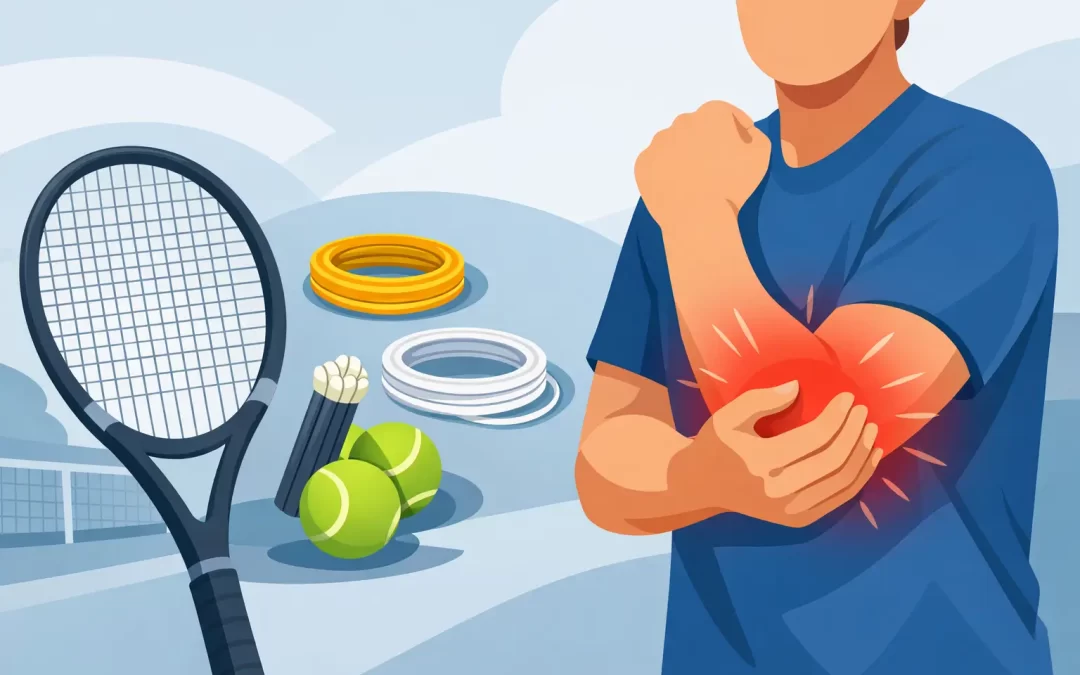
That sharp jolt on a backhand, the ache after serves, the forearm that stays tight long after the match – elbow pain changes how you swing and how much you trust your game. If you’re trying to figure out how to pick tennis strings for elbow pain, start with one truth: the wrong string setup can make a manageable issue worse, while the right one can take real stress off your arm.
Most players blame the racquet first, and sometimes they should. But strings are often the fastest, smartest adjustment because they directly affect impact feel, shock, stiffness, dwell time, and how much effort it takes to create pace and spin. A player dealing with tennis elbow does not need the harshest, most control-focused setup on the market. You need a setup that helps you swing freely again.
How to Pick Tennis Strings for Elbow Pain
The best place to start is string material. If comfort is the priority, softer strings almost always beat stiffer ones. Natural gut is the gold standard for arm-friendliness because it is elastic, powerful, and excellent at absorbing shock. Multifilament strings are usually the next best option. They are designed to mimic some of gut’s comfort and liveliness, and for many players they offer the best balance of price and feel.
Polyester is where players get into trouble. Co-poly strings can deliver excellent spin, control, and durability, but they are generally firmer and less forgiving on contact. If your elbow is irritated, a full bed of stiff poly is usually the first setup to question. That does not mean every player must avoid poly forever. It means you should be realistic about the trade-off. More control and snapback can come with more impact harshness, especially at higher tensions or after the string has gone dead.
If you are currently using full poly and your arm hurts, moving to a multifilament or natural gut setup is often the single biggest improvement you can make. For some players, a hybrid can also work well – especially gut or multifilament in the mains with a softer co-poly in the crosses. That preserves some control while keeping the stringbed more comfortable than full poly.
Why softer strings usually help
A softer string deforms more at impact and returns energy more efficiently. In practical terms, that means less shock reaching your arm and less need to swing at 100 percent just to produce depth. When you get easier power, your body tends to work less for the same ball.
That matters for elbow pain because overexertion and repeated off-center impacts add up. A comfortable string will not fix poor mechanics, but it can reduce how punishing each contact feels over two hours on court.
Tension matters as much as the string itself
Players often focus on brand and material, then ignore tension. That is a mistake. Even a comfortable string can feel boardy if it is strung too tight. Lower tension generally increases pocketing, power, and comfort. Higher tension tends to give a firmer, more controlled response, but it can also feel harsher.
If your arm is sensitive, dropping tension by a few pounds is often a smart move. For multifilament or natural gut, many players with elbow pain do well in the low-to-mid range recommended for their racquet. If you insist on using a co-poly, keeping it on the lower side becomes even more important.
There is an important nuance here. Going too low is not automatically better for everyone. Some players lose directional confidence with a very loose stringbed and start over-swinging to control the ball, which can create a different kind of strain. The right tension is the one that gives you comfort without making you fight your launch angle on every rally ball.
A practical tension starting point
If you are changing from full poly to multifilament, do not assume the same tension will produce the same result. Multifilaments are more powerful and elastic, so they may need a slightly higher tension than your old poly to keep your control where you want it. If you are staying with a soft poly or hybrid, start modestly lower than your usual setup and adjust from there.
For most players managing elbow pain, small changes beat dramatic ones. A 2 to 4 pound adjustment can be enough to noticeably improve comfort.
Gauge affects feel, power, and durability
Gauge is another part of how to pick tennis strings for elbow pain that players often overlook. Thinner strings are typically more elastic and lively. They can offer better feel, easier power, and a softer response. Thicker strings are usually more durable and a bit firmer.
If your arm is the main concern, a thinner gauge can help, especially in multifilament or natural gut. You may give up some durability, but comfort usually wins that trade if you’re trying to stay on court without aggravating the elbow.
The exception is the chronic string breaker. If you snap soft strings too quickly, you may need to balance comfort with longevity. That is where hybrid setups become useful. You can build in some durability without going all the way back to a stiff full-poly bed.
The setup matters more than the label
Players sometimes shop by category too broadly. They hear that multifilament is soft or poly is bad for elbows, then stop there. Real-world comfort depends on the full setup – material, gauge, tension, string pattern, racquet stiffness, and how often you restring.
A fresh soft co-poly at a sensible tension in the right racquet may feel better than an old, dead multifilament in a setup that no longer plays predictably. But as a general rule, comfort-first players should prioritize natural gut, multifilaments, and softer hybrids before they consider firmer control strings.
If you are a competitive player who relies on spin and wants to keep some of that shaped-poly response, the compromise is usually not full poly at high tension. It is a more arm-aware build. Think soft co-poly, lower tension, or a hybrid that lets the mains do more of the comfort work.
When a hybrid makes sense
A hybrid is useful when you want two things at once – usually comfort plus control, or comfort plus durability. Natural gut or multifilament mains paired with a smoother, softer co-poly cross can give you a more controlled launch than a full soft setup while still protecting your arm better than a full bed of polyester.
Just remember that the stiffer side of the hybrid still influences feel. If the poly cross is too firm or tensioned too high, the setup can drift away from the comfort you’re chasing.
Restringing timing is part of elbow prevention
Dead strings are a hidden problem. Polyester, in particular, loses resilience as it ages. Once it goes dead, it can feel harsher and less responsive, forcing you to swing harder while getting less back from the stringbed. That is a bad combination for an irritated elbow.
If you use any kind of poly, do not wait until it breaks to replace it. Many players do exactly that, and their arm pays the price. Softer strings like multifilament and natural gut also change over time, but they generally stay more arm-friendly through their life cycle. Still, if the stringbed feels mushy, erratic, or unusually harsh, it is time to cut it out.
Match the string to your game, not someone else’s
A hard-hitting tournament player and a 3.5 doubles player recovering from elbow pain should not make the same string choice. Neither should a junior who trains five days a week and an adult player who competes once a weekend. Your best setup has to match your swing speed, contact quality, and priorities.
If you have medium or compact swings and need easy depth, a multifilament or natural gut setup will usually help more than poly. If you take big cuts and want spin but your elbow is barking, a softer hybrid may be the better bridge. If your pain is severe or persistent, comfort should outrank durability for now. You can always tune control later once your arm calms down.
This is where expert guidance matters. A curated string recommendation based on your level, racquet, and symptoms is worth far more than copying a pro player’s setup. The modern game rewards precision, but comfort is part of performance. If your elbow hurts, you are not playing free, and you are not getting the most from your equipment.
The smartest string choice is the one that lets you swing with confidence again – not the one that looks toughest on paper. Build for comfort first, make measured adjustments, and give your arm a setup that helps you compete instead of recover from every hit.