
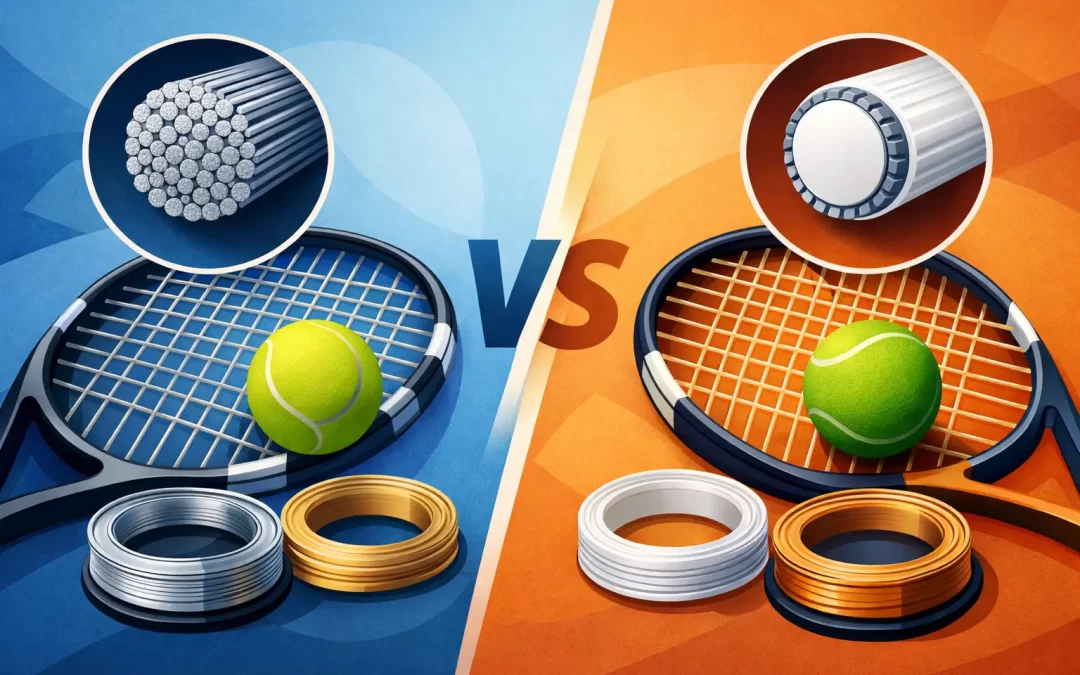
A string bed can make a control racquet feel livelier, turn a powerful frame into a more predictable weapon, or leave your elbow asking for a break. That is why the question of tennis strings vs synthetic gut needs one quick clarification: synthetic gut is a type of tennis string. For most players, the real decision is synthetic gut versus polyester, multifilament, natural gut, or a hybrid setup.
Synthetic gut remains one of the smartest places to start. It delivers a balanced blend of playability, comfort, and value that works for beginners, developing juniors, club players, and anyone who does not break strings frequently. Polyester has become the string of choice for hard-hitting, fast-swinging players who demand spin and control, but it is not automatically the better choice. Your swing speed, contact point, arm health, racquet, and restringing habits all matter.
Tennis Strings vs Synthetic Gut: Know the Difference
Every tennis string is made to manage the same collision: ball meets string bed at speed. The material and construction determine how the strings stretch, snap back, hold tension, resist movement, and transmit impact to your hand and arm.
Synthetic gut is usually built around a solid nylon core with one or more outer wraps. That straightforward construction gives it a crisp, familiar response and a well-rounded performance profile. It is more affordable than premium multifilaments and natural gut, generally softer than polyester, and easier to live with for players who want dependable performance without constant experimentation.
Polyester, often called co-poly, is a firmer monofilament string. It is designed for players who take full cuts and create racquet-head speed. A quality co-poly can help keep aggressive shots inside the lines, support heavier topspin, and stand up to frequent string breakers. Profilex Performance Co-Poly strings are built around that modern-player demand for controlled aggression and durability.
Multifilament strings use many fine fibers to create a softer, more elastic feel. They are a strong option for players chasing comfort and easy power. Natural gut remains the benchmark for feel, tension maintenance, and arm-friendly performance, though it costs more and needs greater care in wet conditions.
The label on the package matters less than how the string performs for your game.
What Synthetic Gut Does Well
Synthetic gut earns its place because it is balanced rather than specialized. It gives players enough power to avoid overswinging, enough control for reliable rally balls, and a clean response that makes it easy to understand what happened at contact.
For newer players, that predictability is valuable. A beginner using a stiff polyester at high tension may feel like they have to swing harder just to get depth. Synthetic gut supplies more rebound and a friendlier response, helping players develop a fuller, more confident stroke without fighting their equipment.
It also works well for recreational adults who play once or twice a week. If you are not breaking strings, there is little reason to choose an ultra-durable polyester simply because advanced players use it. Strings do not become better because they are firmer. They become better when they match your stroke and schedule.
Synthetic gut is also an effective hybrid partner. Installed in the crosses with a polyester main, it can soften the string bed, add feel, and reduce cost. Used in the mains with polyester crosses, it can bring extra power and comfort while retaining some directional control. Neither arrangement is universally right, but both are worth considering when a full bed feels too harsh or too lively.
When Polyester Is the Better Performance Choice
Polyester starts to make sense when you generate your own pace and regularly swing through the ball. Advanced juniors, tournament players, heavy topspin hitters, and strong all-court competitors often benefit from its low-powered, controlled response.
The biggest advantage is not free spin. Spin still comes from technique, racquet speed, and brushing up the back of the ball. Polyester’s low friction can help the mains slide and snap back more effectively, which can support spin production for players capable of activating it. It also gives big hitters confidence to accelerate instead of guiding the ball.
Durability is another reason players choose co-poly. If synthetic gut breaks every few matches, polyester may provide substantially more court time. That said, a polyester string can go dead before it breaks. As tension drops and the material loses resilience, control and feel can decline. Continuing to play with dead poly often leads players to swing harder, miss longer, or feel more arm fatigue.
Polyester is not the default answer for players with tennis elbow, shoulder irritation, or a compact swing. Its firmness can be demanding, especially at high tension in a stiff racquet. A softer co-poly at a sensible tension may work for some players, but comfort should be tested honestly, not assumed.
Compare Feel, Power, Control, and Durability
If feel is your priority, synthetic gut usually provides a more direct, connected response than a basic polyester. You may notice this on touch volleys, slices, drop shots, and return games where the ball arrives quickly. Multifilament and natural gut can offer even more comfort and pocketing, but synthetic gut remains a dependable middle ground.
For power, synthetic gut generally beats polyester. It returns more energy to the ball, making it easier to create depth from slower swings. This can be a major advantage for recreational players and juniors still building physical strength. The trade-off is that players with explosive swings may find it launches the ball too easily unless they use more spin, increase tension, or choose a more control-oriented racquet.
For control, polyester has the edge for fast, aggressive players. Its lower power lets them swing big with less fear of overhitting. But control is not just about a muted string bed. If a player cannot generate enough racquet speed or finds the string too stiff, they may lose depth and consistency. In that case, synthetic gut can produce better real-world control because the player can swing freely and find the center of the court.
For durability, polyester wins against breakage. Synthetic gut is less durable, particularly in open-pattern racquets and for players who hit with heavy topspin. Yet durability should include playability duration. Synthetic gut tends to remain more usable as it ages, while polyester may need replacement sooner than players expect to preserve its best response.
Tension Changes the Answer
The wrong tension can make a good string choice feel like a bad one. Before changing string families, look at your current tension and racquet pattern.
A synthetic gut setup around the middle of your racquet’s recommended range is a reliable baseline. Move a few pounds lower if you need easier depth and more comfort. Move a few pounds higher if you want a firmer response and more directional confidence, understanding that extra tension also reduces power and can reduce comfort.
With polyester, lower tensions are commonly more playable. Many players find co-poly performs best below the tensions they used with nylon-based strings. Starting too tight can create a board-like feel, shrink the sweet spot, and put unnecessary stress on the arm. A racquet technician can help establish a sensible starting point based on your frame, current setup, and style of play.
Gauge matters too. A thinner string, such as 17 gauge, typically offers more feel and spin potential but breaks sooner. A thicker 16 gauge lasts longer and can feel firmer. Players who rarely break strings should not automatically choose the thickest option. Feel and confidence are performance benefits.
Choose the Setup That Matches Your Game
Choose synthetic gut if you want an affordable, comfortable all-around string; you play recreationally; you are developing your mechanics; or you need more easy depth. It is also a smart reset button when your current setup feels harsh, underpowered, or unpredictable.
Choose polyester if you swing fast, break nylon strings often, create heavy spin, and need more control on aggressive groundstrokes. Be ready to restring before it breaks if the response becomes dull or uncomfortable.
Choose a hybrid if you like elements of both. Polyester mains with synthetic gut crosses are popular for players who want durable control with a touch more comfort and feel. Synthetic gut mains with polyester crosses can work for players who want a livelier response without giving up all the stability of a firmer cross string.
If arm comfort is already a concern, prioritize a softer setup. Synthetic gut, multifilament, or natural gut are usually safer starting points than a full bed of firm polyester. A lower tension and a more flexible racquet can also change the equation.
The best setup is the one that lets you take a confident swing on the biggest point of the match. Start with the string that fits your current game, pay attention to depth, comfort, and control over several sessions, then make one adjustment at a time. Smart equipment choices build better tennis.