
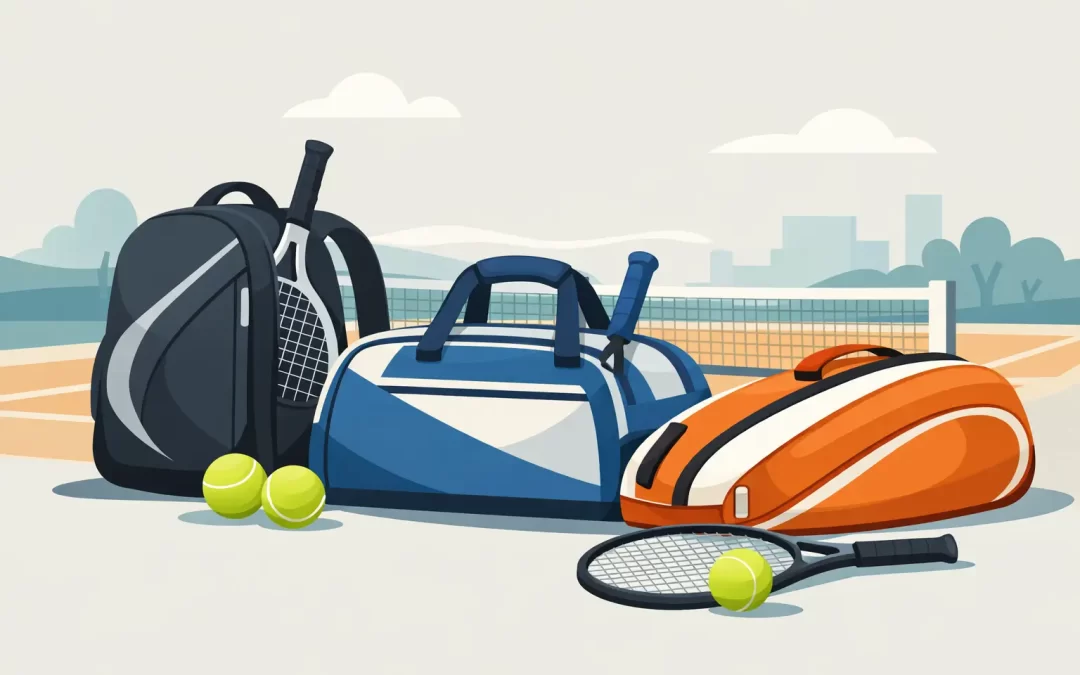
A cracked grommet from a loose racquet, a soaked change of clothes after a rain delay, or a frantic search for an overgrip five minutes before warm-up can ruin a match before the first ball is struck. The right tennis bags do more than carry equipment. They protect the tools behind your game, keep your routine organized, and let you arrive at the court prepared to compete.
For a casual player, that may mean a compact bag with room for two racquets and essentials. For a tournament junior, college athlete, coach, or serious league player, it can mean insulated racquet compartments, a dedicated shoe tunnel, and enough storage to handle a full day at the club. Your best choice depends on what you carry, how often you play, and how seriously you want to protect your gear.
Start With Your Racquet Count
The number printed on a bag is a useful starting point, but it is not the complete story. A 3-racquet bag is usually ideal for players who bring a primary frame, a backup, and basic court gear. It stays light, fits easily in a car or locker, and avoids the temptation to pack everything you own for a one-hour hit.
A 6-racquet bag is the most versatile option for committed players. It gives you room for multiple frames, a towel, apparel, balls, grips, drinks, and recovery items without becoming oversized. If you play several times each week, compete in leagues, or rotate between racquets with different string setups, this capacity hits a strong balance between mobility and preparation.
Nine-, 12-, and 15-racquet bags are built for players who need maximum capacity. Competitive juniors and tournament players often carry several matched racquets because broken strings, wet conditions, and changing match situations are real factors. Coaches also benefit from larger bags when bringing balls, teaching tools, and extra gear to the court.
Do not choose a larger bag just because it holds more. An underfilled oversized model can be awkward to carry and difficult to organize. Choose capacity around your usual match-day load, then leave a little room for the unexpected.
Why Thermal Protection Matters in Tennis Bags
Racquets and strings are performance equipment, not cargo to leave exposed in a hot trunk. Extreme heat can affect string tension and accelerate wear, especially with polyester strings that are already chosen for control, spin, and durability. Cold temperatures are also hard on strings and can make them feel less responsive.
Thermal-lined racquet compartments create a more stable environment by reducing exposure to temperature swings. They are particularly valuable if you drive to the courts, travel to tournaments, or play in regions where summer heat is serious. Players carrying premium frames and fresh string jobs should consider thermal protection a performance feature, not a luxury add-on.
That said, insulation is not a substitute for smart habits. Do not leave any bag in a hot vehicle for hours, and do not assume a thermal compartment makes equipment indestructible. It simply provides another layer of protection for the racquets and strings you rely on.
Compartments That Actually Help on Court
The best bag layout supports your routine instead of creating more clutter. Separate compartments matter because tennis gear comes with different needs. Clean clothing should not share space with sweaty shoes. Electronics and valuables should not get buried under damp towels. Loose accessories need a home or they disappear when you need them most.
Look for a ventilated shoe compartment if you play frequently or train in hot conditions. It helps isolate dirt, odor, and moisture from the rest of your equipment. A dedicated wet pocket is equally useful for towels, rain gear, or post-match apparel.
Smaller accessory pockets are where a bag earns its place. Keep grips, vibration dampeners, sunscreen, athletic tape, strings, a wristband, and a first-aid essential kit in predictable locations. A lined valuables pocket protects a phone, keys, and wallet from scratches, while an exterior pocket can provide quick access to items you use before every session.
For tournament days, organization saves mental energy. You should know exactly where your extra overgrip, electrolyte packets, and backup dampener are without emptying half the bag onto a bench. That kind of consistency helps you stay focused on points rather than equipment problems.
Backpack, Duffel, or Tournament Bag?
A tennis backpack is the right call for players who travel light. It is easy to carry on a bike, comfortable on public transit, and practical for quick practices. Most have a rear racquet compartment plus enough room for a can of balls, water bottle, shoes, and a layer. The trade-off is limited capacity. Once you add towels, extra apparel, multiple racquets, and recovery gear, a backpack can feel crowded fast.
A traditional racquet bag or duffel-style model provides more storage and better compartment separation. It is a strong fit for club players, competitors, and parents transporting gear for junior players. Many use adjustable backpack straps, so they are comfortable to carry even when fully loaded.
Tournament bags are designed for volume and preparation. They can hold several racquets, multiple outfits, footwear, nutrition, towels, and match supplies in separate zones. They are not the best choice for every player, especially if you only hit once a week, but they make sense when your tennis schedule demands a complete equipment setup.
Choose Materials and Straps for Real Use
A sharp-looking bag is great, but durability should come first. Look for sturdy zippers, reinforced handles, quality stitching, and a base that can handle being set down on hard courts, parking lots, and club walkways. Water-resistant outer materials are valuable when weather changes quickly or when your bag sits courtside during a long session.
Pay attention to the carrying system. Padded, adjustable shoulder straps make a major difference when the bag is loaded. Backpack-style straps distribute weight more evenly than a single shoulder strap, which matters if you walk long distances from parking areas or move between courts during an event.
Color also has a practical side. Darker materials often hide court dust and scuffs better, while lighter colors can stay cooler in direct sun. Neither is automatically better, but it is worth considering based on where and when you play.
Build a Bag Around Your Style of Play
Your bag should support the way you prepare. A power player who breaks strings regularly needs room for backups. A control-focused player testing different string tensions may want to separate racquets clearly so the correct frame is always ready. A player managing arm comfort may carry vibration dampeners, extra grips, hydration, and recovery tools as part of a consistent routine.
Parents of competitive juniors should prioritize durable construction, easy-access pockets, and enough capacity for food, water, extra apparel, and backup racquets. Junior events can mean long waits, schedule changes, and multiple matches. A bag that keeps everything separated is one less variable on a demanding day.
At Profilex, our equipment perspective starts with the same principle: every piece of gear should earn its spot in your setup. A bag is not just an accessory to match your racquet. It is part of how you protect your investment, maintain your routine, and show up ready to play your best tennis.
A Smart Packing Routine Before Match Day
Pack the night before rather than minutes before you leave. Put racquets in their designated compartment, confirm grips are fresh, and carry at least one backup frame if competition matters. Add water, fuel, a towel, dry socks, sun protection, and weather layers based on the forecast.
After you play, take out wet clothing and open ventilated compartments when possible. Wipe down racquet handles if they are damp, remove trash and used grip backing, and restock what you used. This small habit keeps odors down, protects your equipment, and prevents the familiar pre-match realization that your bag is missing something essential.
Choose a bag that fits your current game, but leave room for the player you are working to become. When your gear is protected, organized, and ready, you can spend more attention where it belongs: competing with confidence.