
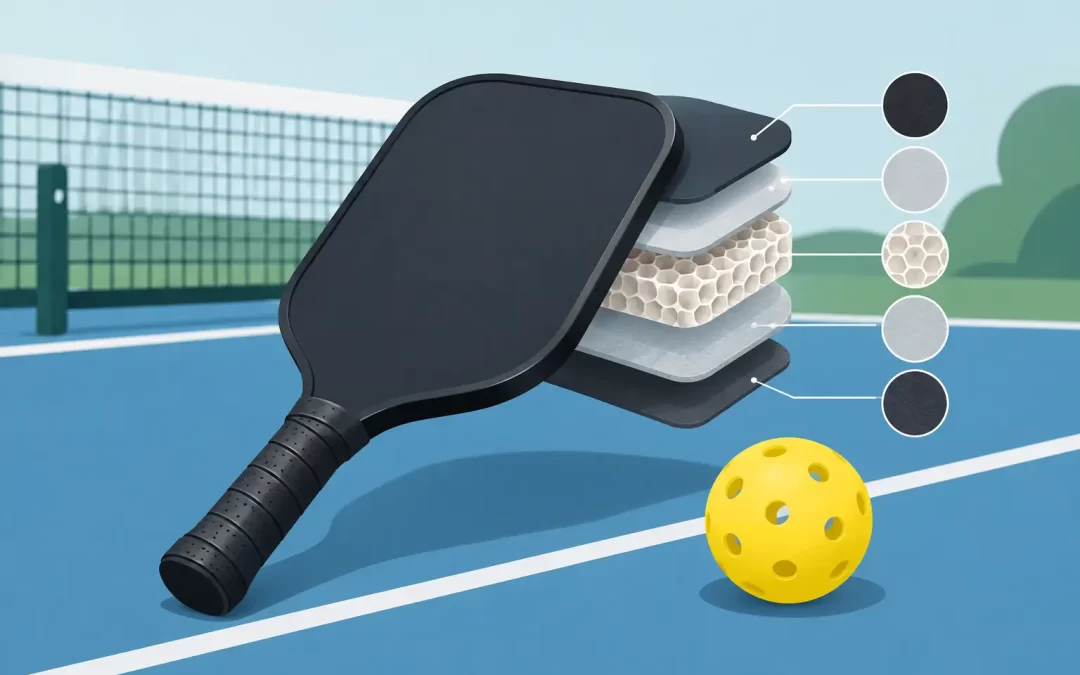
A paddle can look great in your hand and still feel wrong on the third-shot drop. That is often a core issue, not a face issue. This pickleball paddle core guide breaks down what sits inside the paddle, how it changes ball response, and how to choose a setup that supports the way you compete.

The core is the paddle’s engine. It determines how the paddle compresses at contact, manages vibration, returns energy to the ball, and holds its shape through repeated play. Face material still matters for spin and feel, but the core is where power, control, comfort, and forgiveness start to separate.

What a Pickleball Paddle Core Does

Most modern paddles are built around a cellular core sandwiched between two face layers. Those cells are commonly arranged in a honeycomb pattern, which keeps the paddle light while providing structure across the hitting surface. When the ball contacts the paddle, the core compresses and rebounds. How much it compresses, how quickly it recovers, and how stable it remains all affect the shot.

A firmer core usually creates a more direct, lively response. That can help aggressive players drive the ball and finish points, but it may also make touch shots feel less forgiving. A softer or thicker core tends to absorb more impact, giving players a more controlled response on resets, drops, and dinks.

There is no universally best core. The right choice depends on your swing speed, preferred court position, tolerance for vibration, and the shots you need most when the score gets tight.

The Main Paddle Core Materials

Polymer Honeycomb: The Modern All-Around Standard

Polymer, typically polypropylene, is the most common core material in performance pickleball paddles. It delivers a balanced feel that works for a wide range of players, from improving recreational players to serious tournament competitors.

Polymer honeycomb cores are valued for their controlled response and vibration damping. They tend to feel quieter and softer than older aluminum or Nomex designs, which makes them a strong fit for players who want reliable touch at the kitchen line without giving up usable power from the baseline.

The details matter. A polymer core can be tuned through cell size, wall thickness, density, and overall paddle thickness. Two paddles labeled polymer can play completely differently. One may feel plush and controlled, while another may feel crisp, stable, and surprisingly powerful.

For most players, a quality polymer honeycomb core is the smartest starting point. It offers the widest performance range and generally the best blend of comfort, durability, and court-friendly sound.

Foam Cores: Power, Feel, and a Different Response

Foam-core paddles have gained attention because they can deliver a more solid, responsive feel than traditional honeycomb constructions. Some use full foam cores, while others combine foam with perimeter foam or honeycomb structures to increase stability and expand the sweet spot.

A well-designed foam core can produce excellent pop, especially on counters, speed-ups, and attacking volleys. It may also provide a more connected feel at impact, which experienced players often appreciate. The trade-off is that foam-core paddles can feel more powerful than expected, requiring cleaner technique and more disciplined touch on soft shots.

Not all foam cores play the same. Density and construction determine whether a paddle feels dampened, springy, firm, or explosive. Players who generate their own pace may prefer a more controlled foam setup, while players looking for added put-away power may favor a livelier build.

Nomex Honeycomb: Crisp and Fast

Nomex is a hard, resin-treated honeycomb material associated with a crisp, punchy response. It has long been used in pickleball and remains attractive to players who like a firm feel and immediate feedback.

The advantage is speed off the face. Blocks, punch volleys, and compact counters can come off with authority. The downside is reduced softness. Nomex cores can feel louder and less forgiving on off-center contact, particularly during extended dink exchanges or defensive resets.

This is a specialized choice rather than the default recommendation. If you prefer a firm, direct paddle and want the core to do less absorbing, Nomex may suit your game. Players dealing with arm discomfort or searching for maximum touch usually find polymer or foam-based designs more comfortable.

Aluminum Honeycomb: Lightweight and Controlled

Aluminum honeycomb cores are lightweight and known for a soft, controlled response. They can help players place the ball accurately and maintain feel at lower swing speeds.

However, aluminum generally offers less power and may not feel as durable or stable as premium polymer and foam constructions. It can still be a sensible option for beginners, touch-focused players, or anyone who prefers a lighter paddle, but high-level players often outgrow its limited put-away potential.

Core Thickness Changes the Game

Material tells only part of the story. Paddle thickness has a major effect on how the core plays.

A thinner paddle, often around 13 mm to 14 mm, usually feels quicker and more powerful. The ball rebounds faster because there is less material to absorb impact. That extra pop can be valuable for players who attack off the bounce, counter hard at the kitchen line, and want easy pace on drives. Thin paddles also tend to feel more maneuverable in fast hand battles.

A thicker paddle, commonly 16 mm or more, provides more depth for the core to compress. That typically creates a softer, more controlled feel with improved stability and a more forgiving sweet spot. Players who prioritize drops, resets, dinks, and defensive blocks often benefit from the added control.

Thickness is not a shortcut to a perfect fit. A 16 mm paddle can still be powerful if its construction is lively, and a 14 mm paddle can still offer control with the right face and core design. But as a practical rule, thinner favors speed and pop, while thicker favors touch and stability.

Match Your Core to Your Style of Play

Players who win points with pressure should not automatically choose the most powerful paddle. If your game is built on drives, aggressive returns, and quick counters, a firmer polymer or responsive foam core in a 13 mm to 14 mm profile can help you attack without feeling sluggish at the net. Look for enough stability to keep your hands steady when opponents speed up the ball.

Players who construct points with patience usually perform better with a thicker polymer or hybrid core. A 16 mm profile can make drops land softer, reduce the jumpiness of defensive blocks, and give you more confidence taking pace off the ball. That control matters because an unforced error on a routine reset costs more than an extra mile per hour on a drive.

If comfort is a priority, focus on vibration damping and stability. A thicker polymer core or a foam-enhanced construction can reduce harsh feedback, particularly on mishits. Grip size, paddle weight, and swing weight also influence comfort, so do not treat the core as the only variable.

For doubles players, control and hand speed usually deserve more weight than raw power. For singles players, who cover more court and create more points from the baseline, added pace and depth can be more useful. The best choice changes with your role, not just your rating.

Do Not Confuse Core Feel With Face Performance

The face and the core work together. Carbon fiber faces often provide a textured, controlled feel that helps players shape shots and create spin. Fiberglass faces can feel livelier and may add easy pace. But the core determines what happens underneath that initial contact.

A gritty carbon face on a thin, firm core may still feel powerful and fast. The same face on a thicker, softer core can feel more controlled and plush. That is why reading only the face material rarely tells the full story.

When comparing paddles, pay attention to terms such as pop, dwell time, plushness, stability, vibration damping, and sweet spot. These words describe the playing experience more accurately than a material label alone.

How to Test a Paddle Core Before You Commit

If you can demo a paddle, start with the shots you miss under pressure, not the shots you already make. Hit third-shot drops, resets against pace, short-angle dinks, backhand counters, and overheads. A paddle that feels impressive on one hard drive may become difficult to control during a long kitchen exchange.

Notice the response on off-center contact. Does the paddle twist in your hand? Does the ball die on defensive blocks, or does it launch too high? Then assess whether the paddle gives you enough depth with a compact swing. These are the details that show whether the core actually supports your game.

Also give yourself more than a few minutes. Switching from a thin power paddle to a thicker control paddle can feel strange at first. Let your hands adjust before deciding that one feel is automatically better.

Choose the Core That Lets You Swing With Confidence

The right core should make your most demanding shots feel more repeatable. If you are constantly trying to slow down a powerful paddle, choose more control. If your clean swings lack depth and your counters sit up, a livelier core may be the missing piece.

At Profilex, we believe equipment decisions should be tied to how you want to perform, not just what is popular. Choose a paddle core that supports your patterns, protects your confidence in pressure points, and gives you a clear reason to step on court ready to compete.