
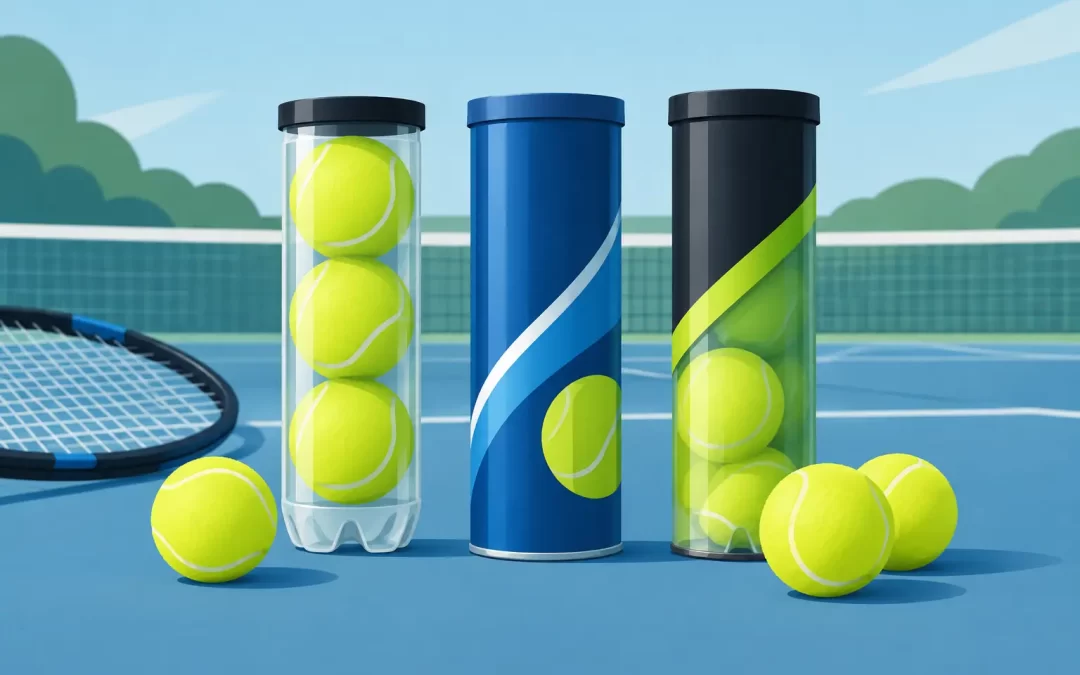
A fresh can changes the first 20 minutes of a match. The bounce is lively, the felt grips the strings cleanly, and you can trust the ball to react the way your swing expects. But tennis balls are not interchangeable. The right choice depends on your court surface, playing frequency, altitude, and whether you need peak performance for match day or long-lasting value for practice.
Players often spend serious time selecting a racquet and strings, then grab whichever ball is nearest the register. That is a missed opportunity. Your ball affects pace, spin response, feel at contact, and the consistency of every drill. Choose smarter, and your practice looks more like the tennis you want to play under pressure.
Tennis Balls Start With Pressure
Most adult players use pressurized tennis balls. These are the familiar balls sold in sealed cans, filled with internal gas pressure that helps create a crisp, energetic bounce. When the can is opened, that pressure begins to decline. A new pressurized ball feels fast and responsive, but its peak window is limited.
For league matches, tournaments, and competitive singles, pressurized balls remain the standard for good reason. They reward clean ball striking, move through the court with predictable speed, and provide the lively response players expect. If you play aggressive baseline tennis, use heavy topspin, or rely on a sharp first serve, a fresh pressurized ball lets your equipment and technique perform as intended.
Pressureless balls use a thicker rubber core rather than internal pressure to produce their bounce. They generally feel firmer and heavier off the strings, especially when new, but they hold their bounce far longer. They are a strong option for ball machines, basket drills, coaching sessions, and players who hit frequently without needing a new can every time.
The trade-off is simple: pressurized balls deliver better match feel, while pressureless balls deliver maximum lifespan. Neither is automatically better. Match the ball to the job.
When a Pressurized Ball Is the Right Call
Open a new can for a competitive match, a serious practice set, or a lesson where you want to measure your game accurately. Old balls can make a racquet feel underpowered and can tempt players to overhit. That extra effort often changes swing mechanics, especially for juniors and developing players.
A new can also matters when you are testing strings or a new racquet. If you are evaluating whether a co-polyester string gives you more control, or whether a frame has enough power, worn-out balls add an unnecessary variable. Use fresh balls so the feedback is real.
When Pressureless Balls Make More Sense
For repetitive drilling, pressureless balls are hard to beat on value. A coach feeding hundreds of forehands does not need tournament-level feel on every ball. The same is true for a player working through serve targets, footwork patterns, or ball-machine sessions.
Expect a different contact sensation. Some players find pressureless balls harsh, while others appreciate their durability and stable bounce over many sessions. If comfort is a priority, particularly for younger players or anyone managing arm sensitivity, test a small quantity before committing to a large case.
Choose Felt for Your Court Surface
The cover matters as much as the core. Tennis ball felt affects durability, speed, visibility, and how quickly the ball becomes fuzzy. The court you play on should guide your decision.
Regular-duty balls are designed primarily for clay and indoor courts. Their lighter, less dense felt helps them move cleanly over softer surfaces without collecting as much debris. On clay, they tend to preserve a more natural feel and avoid becoming excessively heavy as the match progresses.
Extra-duty balls use a tougher woven felt built for hard courts. Hard courts are abrasive, and standard felt can wear down quickly under repeated impact. An extra-duty ball resists premature bald spots and maintains a more playable surface during long practices and matches. For most US public courts, club hard courts, and high school facilities, extra-duty is the practical default.
That does not mean extra-duty is always the best ball. The denser felt can make the ball feel slightly heavier and slower, particularly once it becomes fluffy. Players on clay or indoor courts may prefer regular-duty balls for a cleaner, more responsive flight.
At high altitude, use balls made specifically for high-altitude play when available. Standard pressurized balls can bounce too high and fly too fast at elevation, making control difficult. High-altitude balls are engineered with lower internal pressure to bring the game back into a more normal range.
Match the Ball to Your Level and Goal
A ball that helps a beginner rally may not help an advanced player prepare for competition. The best choice starts with an honest look at the session ahead.
For beginner adults and recreational families, regular adult balls are appropriate once players can rally with reasonable control. Focus on consistent quality rather than chasing the most expensive can. A reliable ball from a major tennis brand offers predictable bounce, visible felt, and enough durability for normal play.
For juniors, low-compression developmental balls can be a major advantage. Red, orange, and green balls are designed to slow the game down and create a bounce that fits the player’s age, court size, and swing speed. They are not simply softer tennis balls. They are training tools that allow young players to build spacing, timing, and confidence before the full-speed yellow ball demands too much.
For high-performance juniors and adults, choose the ball used by your league, tournament, or training program whenever possible. Familiarity matters. If every important match is played with a particular style of extra-duty pressurized ball, train with something comparable. You want the bounce, weight, and felt response on match day to feel familiar from the first return.
Players who hit with heavy topspin should pay close attention to felt durability. Spin creates friction between the strings and ball cover, and a thin or worn felt can change how the ball grabs and launches. Big hitters on hard courts usually benefit from a premium extra-duty option, even if the initial cost is higher.
How Long Do Tennis Balls Last?
There is no universal number because court surface, weather, pace of play, and player level all matter. A hard-hitting doubles group on rough courts can wear down a new can in one match. A casual group playing doubles on a smooth court may get several sessions from the same balls.
For serious match play, replace pressurized balls when the bounce noticeably drops, the felt becomes excessively fuzzy, or the balls begin to feel hard and inconsistent. If one ball in the set is significantly softer than the others, retire the set. Uneven balls disrupt timing and turn practice into guesswork.
For practice, move older balls down the line rather than throwing them away immediately. A fresh can can become your match set, a lightly used set can handle point play or drills, and older balls can be used for serves, basket feeding, or ball-machine work. This approach gets full value from every can without compromising your highest-quality sessions.
Avoid storing unopened cans in extreme heat, cold, or direct sunlight. Temperature swings can affect pressure and felt condition. Keep cans indoors in a dry area, and do not leave them in a hot car for days between matches.
Can a Ball Saver Extend Their Life?
A pressurized ball saver can help preserve balls between sessions by maintaining higher external pressure around them. It will not turn a worn-out ball into a new one, and it cannot repair flattened felt. Still, for players who use a can across multiple practice sessions, it can slow the loss of pressure and stretch usable life.
Think of it as a value tool, not a performance miracle. If you are preparing for a tournament, use new balls. If you are managing weekly practice costs, a ball saver may be worth adding to your bag.
Build a Smarter Ball Routine
Keep fresh pressurized cans reserved for matches, competitive sets, and equipment testing. Use durable balls for routine drilling, and select felt based on the court surface you play most often. If you coach, train frequently, or support a junior player’s schedule, buying by the case is usually the most efficient way to stay prepared.
At Profilex, the same principle applies to every piece of gear: use equipment that supports the way you actually play. The right tennis ball will not replace training, but it will give every swing more honest feedback. Bring the right can to the court, trust the bounce, and make your next practice count.