
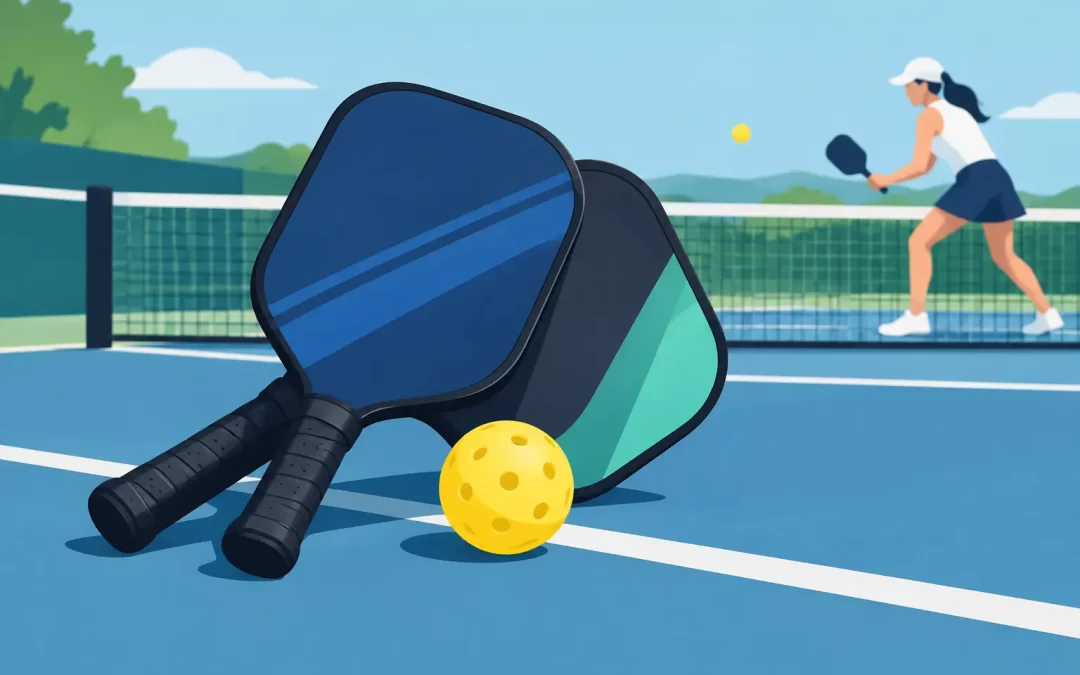
A paddle can make a clean third-shot drop feel repeatable or make it launch too deep. It can help you reload quickly at the kitchen line or leave your arm feeling beaten up after two games. The best pickleball paddles are not simply the most expensive models on the shelf. They are the paddles that match your swing, court position, and competitive priorities.
Players moving over from tennis often shop for the most powerful option because they are used to generating pace from the baseline. That can work, but pickleball rewards precision under pressure. Your paddle needs to give you enough speed to finish balls while helping you control dinks, resets, blocks, and serve returns. Choosing that balance is where better equipment decisions begin.
Start With How You Actually Play
Before comparing carbon faces, core thicknesses, and handle shapes, take an honest look at your game. Are you trying to speed up more balls from the kitchen, or are you losing points because your touch shots float high? Do you play fast hands in doubles, grind from the baseline, or use heavy topspin to create openings?
An aggressive player who attacks off the bounce may prefer a more responsive paddle with a firmer feel and an elongated profile. A player building consistency may perform better with a forgiving, wider paddle that offers a larger sweet spot and a more controlled response. Neither choice is universally better. A paddle that rewards a full, confident swing may feel outstanding for one player and overly lively for another.
Your level matters, but your patterns matter more. A newer player with a fast athletic swing may need control more than added pop. An experienced player who can consistently soften the ball may choose extra power to make attacks more dangerous. Define the weakness you want your paddle to solve, then shop with purpose.
Pickleball Paddles: Shape Changes the Sweet Spot
Paddle shape affects reach, swing speed, balance, and the portion of the face that feels most stable at contact. Standard and widebody shapes typically place a generous sweet spot close to the hand. They are a smart choice for players who value forgiveness on blocks, returns, and off-center dinks.
Elongated paddles are longer and narrower. The added reach is valuable when you are stretching for a passing shot or defending a ball at your feet. Their longer lever can also help produce more pace and spin, especially for players with developed mechanics. The trade-off is that the sweet spot may sit higher on the face and feel less forgiving near the edges.
Hybrid shapes sit between those two categories. They often give players a useful blend of reach and a stable hitting area, making them a strong option for all-court competitors who do not want to commit fully to an elongated design.
Handle length should be part of the same decision. Tennis players who use a two-handed backhand or generate spin with a larger swing often appreciate an extended handle. Players who prioritize quick exchanges may prefer a shorter handle that keeps the paddle compact and maneuverable.
Weight Determines More Than Power
Paddle weight is one of the fastest ways to change the way a paddle performs. A lighter paddle, often around 7.3 to 7.7 ounces, is easier to maneuver in rapid kitchen exchanges. It can reduce fatigue and make hand battles feel quicker, but it may get pushed around when you block hard drives.
Midweight options, commonly in the high-7-ounce to low-8-ounce range, give many players the best all-around blend. They offer enough mass for solid put-aways and stable counters without becoming cumbersome during fast defensive exchanges.
Heavier paddles can add plow-through, helping the paddle stay firm through contact and produce a more penetrating ball. The cost is swing speed and, for some players, added stress on the wrist, elbow, or shoulder. More weight does not automatically mean more usable power. If you arrive late to contact, a heavy paddle can take power away from your game.
Balance matters as much as the number on the scale. A head-heavy paddle can feel powerful but slower through the air. A more head-light design may feel exceptionally quick even at a similar static weight. If you have a history of tennis elbow or shoulder discomfort, prioritize a setup you can swing freely for an entire session, not just one impressive forehand.
Core Thickness Sets the Feel
The core is where much of a paddle’s personality lives. Thicker cores, often around 16 mm, generally offer a softer, more controlled feel. They can absorb pace effectively, making resets, dinks, and blocks easier to manage. Players who want a more connected feel at the kitchen line frequently start here.
Thinner cores, often 13 mm or 14 mm, usually feel crisper and more explosive. They can provide immediate feedback and extra pop on counters, overheads, and speed-ups. For aggressive players, that response can be a weapon. For players still refining touch, it can make delicate shots harder to keep below net height.
Do not assume a thick paddle has no power or that a thin paddle has no control. Face material, construction, swing weight, and your own technique all contribute. Still, core thickness is a reliable first filter: thicker for a more forgiving control-oriented response, thinner for a livelier and faster feel.
Face Material Affects Spin and Response
Raw carbon fiber faces have become popular because they can create strong friction at contact, helping players shape topspin drives, dipping returns, and cut dinks. They also tend to offer a controlled, consistent feel that appeals to tournament-minded players.
Fiberglass faces are often livelier and can help create easy power. They suit players who want the paddle to supply more pace without a huge swing. Composite constructions can balance responsiveness and comfort, while graphite-style faces are often valued for their light, quick feel.
Spin is useful only when you can control it. A high-friction face will not replace sound mechanics, but it can reward a player who brushes up the back of the ball or uses a confident slice. Look for a face that supports the shots you already want to hit rather than chasing a material trend.
Match the Paddle to Your Most Common Court Problems
If your drives routinely sail long, choose a control-focused paddle with a thicker core or a less explosive response. If your dinks are solid but your counters lack pace, a more responsive face or slightly thinner core may give you the finish you need.
If opponents target your body at the kitchen line, prioritize maneuverability and a forgiving sweet spot. If you struggle to reset hard drives, stability and vibration control should move higher on your list. Players who rely on two-handed backhands should confirm that the handle gives both hands enough room before committing.
At Profilex, equipment selection starts with the same standard used for tennis gear: performance comes from fit, not from hype. The right paddle should support your style of play while leaving room for your game to develop.
Test for Feel, Not Just Specifications
Specifications narrow the field, but on-court feel makes the final call. If you can demo a paddle, test it in the situations that decide your matches. Hit third-shot drops, defend body shots, exchange quick volleys, return serves, and finish overheads. A paddle that feels great only on full forehands is not necessarily the paddle you need.
Pay close attention to mishits. Every paddle has an edge of the sweet spot, but some remain stable when contact is less than perfect. That forgiveness matters late in a long game, when your feet slow down and clean contact becomes harder to find.
Also listen to your arm. A paddle may produce impressive pace but feel harsh after repeated sessions. Comfort is performance equipment. When you can practice longer without discomfort, you give yourself more opportunities to improve.
Choose With a Competitive Plan
There is no single best paddle for every player, matchup, or stage of development. A control paddle can build the confidence to attack smarter. A power paddle can turn a reliable counter into a point-ending shot. The key is choosing intentionally and giving yourself enough court time to adapt.
Bring your new paddle into practice before you judge it in a tournament. Learn how it responds on soft hands, how much margin you have on drives, and how quickly it moves in a firefight. When your paddle becomes an extension of your decisions instead of something you have to manage, you are ready to play more freely and compete with purpose.