
A paddle can feel excellent during a few casual warm-up swings and completely different when the score reaches 9-9. That is why the elongated vs widebody pickleball paddle decision should start with how you actually win points: through reach at the kitchen, fast hands in firefights, heavy drives, reliable resets, or a balanced mix of all four.
Paddle shape changes more than appearance. It affects where the sweet spot sits, how easily the paddle moves through the air, how much reach you have on stretched balls, and how stable the face feels when an opponent speeds up a volley at your body. Neither shape is automatically better. The right choice is the one that supports your style of play and gives you more confidence under pressure.
Elongated vs Widebody Pickleball Paddle: The Core Difference
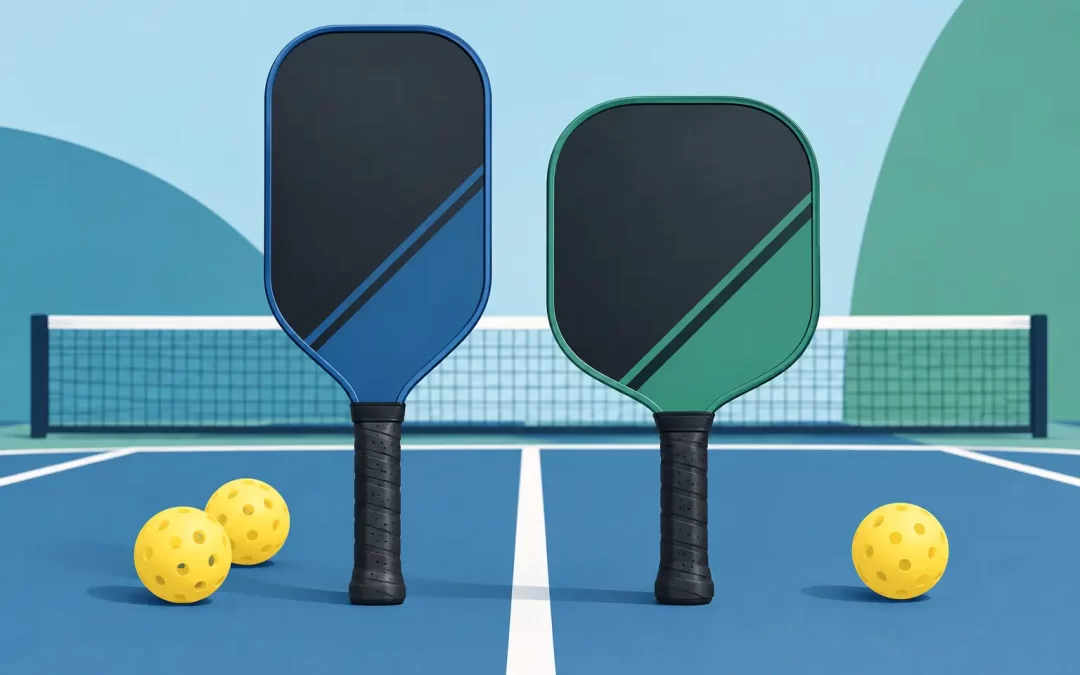
An elongated paddle uses a longer, narrower face. Most are approximately 16.5 inches long, with a face width around 7.5 inches. A widebody paddle stays closer to the traditional 16-inch overall length but uses a broader face, commonly near 8 inches wide.
That half-inch difference in overall length can matter at the kitchen line. An elongated paddle extends your contact range, helping you reach a sharp dink, pick up a low ball on the run, or intercept a speed-up that is just outside your normal strike zone. The trade-off is a narrower hitting area and, in many models, a sweet spot that sits slightly higher on the face.
A widebody paddle gives you more width across the face. That added real estate generally produces a more forgiving response, especially on off-center contact. It can also feel quicker and easier to maneuver because its mass is distributed over a shorter shape. Players who value fast exchanges, dependable resets, and a stable feel at the non-volley zone often gravitate toward widebody designs.
What an Elongated Paddle Does Best
Elongated paddles are built for players who want reach, leverage, and a more aggressive attacking profile. The longer face can create extra whip through contact, particularly on drives, overheads, and passing shots. For former tennis players, the shape often feels familiar because it rewards full extension and confident groundstroke mechanics.
Reach is the obvious benefit. At the kitchen, a longer paddle can turn a ball you would normally block into a ball you can attack. On a deep return or a wide drive, it gives you a little more margin before you have to take an emergency step. A small advantage in reach can be meaningful when opponents are targeting your outside shoulder or trying to pull you off the court.
Many elongated models also appeal to players who generate topspin. The longer face can support a more extended brushing path, while modern carbon faces and textured surfaces help the ball grip and rotate. Shape alone does not create spin, but an elongated paddle can complement a player who already swings with purpose.
The limitation is forgiveness. Because the face is narrower, contact toward the edges may feel less stable or launch differently than a centered strike. Some players also notice that elongated paddles feel a little slower in rapid hand battles, especially if the paddle has a higher swing weight. A long, head-heavy model can deliver serious pace, but it demands clean preparation.
Choose an elongated paddle if you want:
More reach at the kitchen and on defensive pickups, added leverage on drives and overheads, and a shape that favors an aggressive all-court game. It is a strong fit for players who already strike the ball consistently and want to pressure opponents with depth, pace, and spin.
Why Widebody Paddles Feel So Forgiving
A widebody paddle concentrates its surface area into a broader, shorter face. That design often makes the sweet spot feel larger and easier to find. When you are defending a hard drive, resetting a low ball into the kitchen, or absorbing pace during a fast exchange, that forgiveness can keep more balls in play.
The wider face also provides confidence at the net. Many players find it easier to square the paddle to the ball during quick volley exchanges. Instead of needing perfect contact near the centerline, you have more usable face from side to side. That can be especially valuable for developing players, doubles specialists, and anyone working to reduce unforced errors.
Maneuverability is another major advantage. A widebody paddle is not always lighter, but its shorter dimensions can make it feel faster in the hand. That matters when the point becomes a reaction contest: countering a body shot, switching from backhand to forehand, or handling repeated speed-ups without over-swinging.
Widebody does not mean weak. A quality widebody paddle can still produce excellent power and spin, particularly when paired with the right core thickness, face material, and weight. But compared with a similarly built elongated model, it may offer slightly less reach and less leverage on fully extended groundstrokes.
Choose a widebody paddle if you want:
A larger margin for error, quicker-feeling hands at the kitchen, and reliable control on blocks, dinks, and resets. It is often the smarter starting point for newer players, but experienced competitors use widebody paddles too when consistency and hand speed are priorities.
Shape Is Only One Part of the Performance Equation
Do not choose a paddle based on shape alone. Two elongated paddles can play dramatically differently, just as two widebody paddles can. Core thickness, paddle weight, balance point, face material, and handle length all affect the final result.
A 14 mm paddle generally feels more direct and lively, which can favor hand speed and put-away power. A 16 mm paddle typically offers more dwell time, a softer response, and better control on resets and dinks. Those are general tendencies, not fixed rules. Construction quality and balance can shift the feel substantially.
Weight matters, too. A lighter paddle is easier to accelerate and can reduce fatigue, but it may get pushed around against heavy hitters. A heavier paddle offers more plow-through and stability, yet can feel slower at the kitchen. If you are choosing an elongated paddle, pay particular attention to swing weight. Added length can make a paddle feel more head-heavy than its static weight suggests.
Handle length deserves consideration for tennis converts. A longer handle gives two-handed backhand players more room and can make the transition from tennis more natural. Many elongated paddles use longer handles for this reason. A shorter handle can keep the hitting surface broad and may suit players who prefer a compact, quick grip at the net.
Match the Shape to Your Court Role
If you are the player who looks to attack from the baseline, roll aggressive dinks, and cover extra court with long strides, an elongated paddle can strengthen your natural game. It rewards extension and proactive shot-making. Just make sure you can control it during fast kitchen exchanges.
If you build points with patient dinks, dependable blocks, and sharp counterattacks, a widebody paddle may give you a better platform. The broader face helps when the ball is moving too fast for a perfect swing. That stability can free you up to make smarter decisions instead of trying to manufacture a clean strike every time.
Doubles players should also consider their partner and preferred side. A right-side player who spends more time resetting and defending may prefer the forgiveness of a widebody. A left-side player who takes more forehands through the middle and looks to finish points may appreciate the reach and attacking potential of an elongated shape. These are tendencies, not rules. Strong players can succeed with either profile.
Test for the Shots That Decide Your Matches
When comparing paddles, do not judge them only by a few easy forehand drives. Hit third-shot drops, backhand resets, defensive blocks, speed-up counters, overheads, and crosscourt dinks. Those shots reveal whether the paddle truly fits your game.
With an elongated paddle, notice how it handles a rushed backhand volley and contact near the upper corners. With a widebody, test whether you miss the extra reach on wide balls and whether the power level matches your attacking game. Pay attention to fatigue after 20 minutes, not just the first five swings.
At Profilex, our approach to performance equipment is simple: choose gear that helps your best patterns show up more often. The right paddle should not force you to reinvent your game. It should make your strengths more dangerous and your weaker shots more dependable.
The best choice may come down to one question: do you need more reach or more forgiveness? Answer it honestly, test the shots that create pressure in your matches, and choose the paddle that lets you play with conviction when the point matters most.