
A racquet can feel completely different without changing frames, simply by changing the string bed. That is why the multifilament versus polyester strings decision matters more than many players realize. One choice can make your racquet feel lively, comfortable, and easy to use. The other can give a big-hitting player the confidence to swing faster, shape heavier shots, and keep the ball inside the lines.
Neither material is automatically better. The right answer depends on your swing speed, how often you break strings, your preferred feel, and whether your arm is asking for relief. Choose strings for the shots you actually hit, not for what the pros happen to use.
Multifilament vs. Polyester Strings: The Core Difference
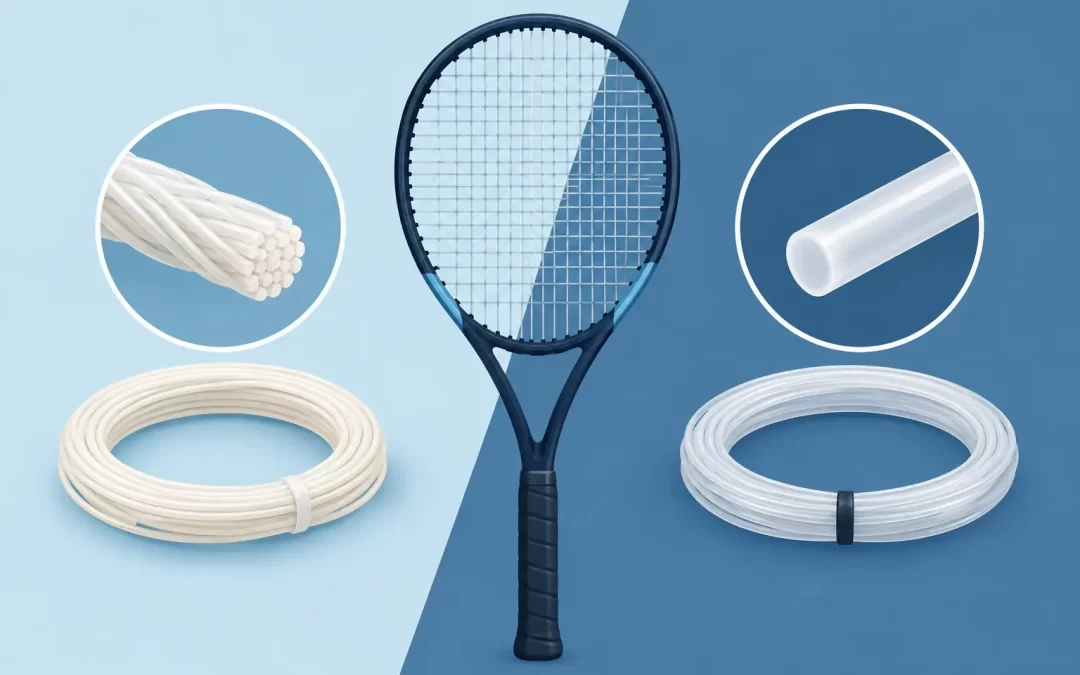
Multifilament strings are built from thousands of fine fibers bonded together. Their construction is designed to mimic the soft, elastic response of natural gut at a more accessible price. On contact, a multifilament string bed stretches and rebounds efficiently, helping the ball leave the racquet with depth and a cushioned feel.
Polyester strings, often called poly or co-poly, use a firmer monofilament construction. They are made for players who create fast racquet-head speed and need the string bed to stay controlled through a full, aggressive swing. Modern co-polys also come in shaped profiles, slick finishes, and formulations that support snapback, which can help produce heavy topspin.
The simplest distinction is this: multifilament prioritizes comfort and easy power, while polyester prioritizes control, spin potential, and durability. But the best choice is rarely that simple, because tension, gauge, racquet pattern, and technique all affect the final result.
Why Multifilament Works for So Many Players
A quality multifilament is an excellent option for recreational players, developing juniors, doubles specialists, and anyone managing arm discomfort. It supplies power without demanding a violent swing. If your shots regularly land short, or your racquet feels harsh on off-center contact, a multifilament can make the game feel more forgiving immediately.
Comfort is the headline benefit. The fibers absorb more impact than polyester, reducing the sharp feedback that can travel into the wrist, elbow, and shoulder. Players returning from tennis elbow or simply playing several times per week often benefit from this softer response.
Multifilament also holds playable tension better than many polyester strings. Polyester may stay intact for a long time, but its performance can fade as it loses tension and elasticity. A multifilament generally remains livelier and more responsive until it breaks, although it will fray over time.
There is a trade-off. Big hitters can overpower a full bed of multifilament, particularly in a powerful, open-pattern racquet. The string may move more, break sooner, and launch the ball higher than expected. If you take long, fast cuts from the baseline, you may want more control than a full multifilament can provide.
When Polyester Is the Better Competitive Choice
Polyester earns its place when your swing creates enough force to activate it. Strong intermediate, advanced, and tournament players often prefer poly because it lets them swing freely. The firmer response keeps the ball from jumping off the strings too quickly, creating a more predictable launch on aggressive forehands and backhands.
Spin is another major reason to choose it. Polyester does not create spin by itself, but its low-friction surface allows the main strings to slide and snap back more effectively. Pair that characteristic with a fast, upward swing path, and you can hit a heavier ball that drops sharply inside the baseline.
Durability is a clear advantage for frequent string breakers. A player who cuts through multifilament every few hours may get much more life from a co-poly such as the Profilex Performance Co-Poly line. That can make poly the more practical choice, even if its initial feel is firmer.
Still, polyester asks more from the player. Slow or compact swings often cannot bend the string enough to access its control and spin benefits. The result can be a dead, underpowered response that forces the player to work too hard for depth. Poly is also less arm-friendly, especially when strung too tight or left in the racquet long after it has gone flat.
Power, Control, and Feel on Court
Multifilament produces easier depth. It stores and returns more energy at impact, so moderate swings can send the ball deep with less effort. This is useful for players who rely on placement, touch, and consistent rally tolerance rather than all-out pace.
Polyester is lower powered, which is exactly what many fast swingers need. It gives you more room to accelerate through contact without fearing that every clean strike will fly long. That controlled response can improve confidence on big serves, attacking forehands, and high-pace returns.
Feel is more personal. Multifilament tends to feel plush, connected, and springy. It is often preferred by players who value touch on volleys, slices, and drop shots. Polyester feels firmer and more direct. Some competitors love that crisp, controlled feedback; others find it boardy or uncomfortable.
Do not assume that a softer string always gives better touch. At the net, a firm polyester can offer very precise directional control for an experienced player. But for most club players, multifilament makes delicate shots easier because the string bed provides more pocketing and forgiveness.
Durability Is More Than Whether the String Breaks
Polyester typically wins the break-resistance contest, but durability has two parts: physical life and playability life. A poly string can remain unbroken while losing tension, elasticity, and responsiveness. When that happens, the racquet may feel stiff yet unpredictable. Players may start overhitting, lose depth, or feel extra stress in the arm.
A practical rule for frequent players is to replace polyester about as many times per year as you play per week. A player on court three times per week should usually restring poly around three times per year, often more frequently for serious competitors. If the racquet suddenly feels dead or your control disappears, do not wait for a break.
Multifilament generally breaks before it becomes severely unplayable, which makes replacement timing easier to recognize. Players who do not break strings often should still restring regularly, especially if they play weekly. Old strings lose performance no matter what material they are made from.
Tension Changes the Answer
String type is only half the setup. Tension can either sharpen or soften the characteristics you want. A multifilament at a higher tension gives more control and reduces excessive launch, while a lower tension adds comfort and power. Small adjustments of two to four pounds can be meaningful.
With polyester, lower tension is often the smarter starting point. Many players string poly too tight because they assume tighter always means more control. In reality, an overly tight poly bed can feel harsh, dead, and difficult to use. Starting in the lower-to-middle portion of your racquet’s recommended range is usually a better path, then adjusting based on ball flight and comfort.
Gauge matters as well. Thinner strings offer more feel, spin potential, and bite, but they break sooner. Thicker gauges increase durability and may slightly lower power. If you are a junior competitor or a heavy topspin hitter, gauge selection deserves as much attention as the material itself.
The Hybrid Setup: A Smart Middle Ground
Players who want poly control without a full bed’s firmness should consider a hybrid. The most common setup uses polyester in the mains and multifilament in the crosses. Since the mains influence the majority of the string bed’s feel and performance, this arrangement preserves much of poly’s control and spin while improving comfort and power.
For players with sensitive elbows, reversing the layout can work: multifilament mains with polyester crosses. This setup provides a softer, more powerful foundation while the poly crosses add some directional stability. It is not as durable as poly mains, but it can be an excellent bridge for players who are not ready for full polyester.
A hybrid is especially useful if you are caught between two needs. Maybe you break multifilament too quickly but find full poly uncomfortable. Maybe you want a more controlled response in a powerful frame without giving up touch. Hybrid stringing gives you room to tune the racquet rather than settling for an all-or-nothing choice.
Match Your String to Your Style of Play
If you are a recreational player, doubles player, or developing junior who wants easier power and comfort, begin with multifilament. It helps you enjoy longer hitting sessions and rewards clean technique without punishing imperfect contact.
If you are an advanced baseliner with fast strokes, regular string breakage, and a topspin-heavy game, polyester is likely the better fit. Use a fresh, properly tensioned co-poly and pay attention to how your arm feels over time.
If you are an improving intermediate player, do not choose polyester just because it is popular on tour. Build your strokes first. A multifilament or hybrid can deliver better depth, better comfort, and more confidence while your racquet-head speed develops.
Your best string setup should make your preferred swing feel more reliable. Test one material at a time, keep notes on tension and gauge, and let your ball flight, comfort, and consistency make the decision. The right string bed gives you permission to swing with conviction – and that is where better tennis starts.