
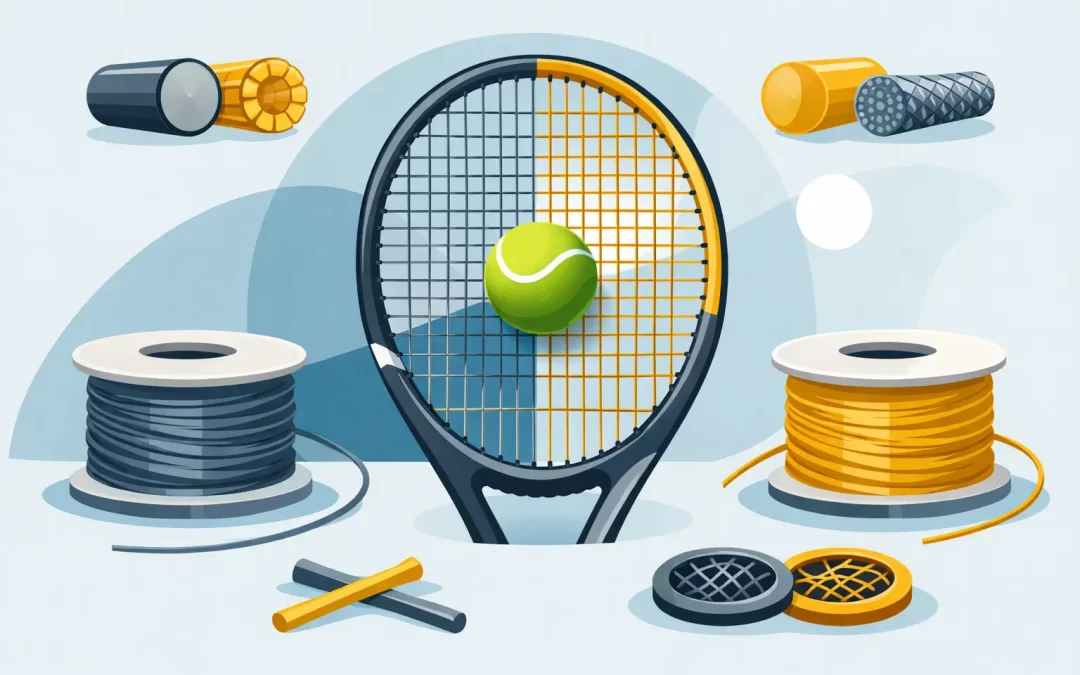
A good hybrid tennis string setup can make a racquet feel more precise, more forgiving, or more dangerous from the baseline without changing the frame at all. If your current string bed feels too harsh, too lively, or dead after only a few sessions, hybriding is often the smartest adjustment because it lets you tune performance instead of starting over.
For many players, full polyester is the first stop when they want more spin and control. Then reality shows up. The ball leaves the strings well, but the feel can get firm, tension can drop fast, and comfort may not hold up for long practices or match-heavy weeks. On the other side, a full bed of multifilament or natural gut can feel excellent at contact, but some players lose the directional confidence they want on bigger swings. A hybrid sits in the middle and, when chosen well, gives you the best parts of both.
What a hybrid tennis string setup actually means
A hybrid tennis string setup uses one string in the mains and a different string in the crosses. Since the mains do more of the work in ball pocketing, spin production, and overall response, the string you place there has the biggest influence on how the racquet plays. The crosses matter too, especially for comfort, launch angle, snapback, and how the string bed settles over time.
That distinction is where a lot of players go wrong. They think hybriding is just mixing two popular strings. It is not. The order matters. A firm co-poly in the mains with a softer cross usually plays very different from a soft main with a poly cross, even if the same two strings are used.
Why players switch to hybrids
The biggest reason is balance. Most players are not asking for maximum anything. They do not need the firmest string bed on the market or the softest possible feel. They need a setup that fits their swing speed, contact quality, match volume, and tolerance for impact shock.
A hybrid can help a heavy topspin player keep the control and bite of polyester while adding feel and comfort. It can help an all-court player get a cleaner response on volleys without giving up too much baseline spin. It can also help juniors and frequent players bridge the gap between performance and arm safety.
There is also a practical side. Hybrids let you make smaller changes. If you like most of what your current setup does but want more comfort, you may not need a full reset. Changing only the crosses can be enough. That kind of precision matters when you are trying to define your style of play instead of chasing random equipment changes.
The most common hybrid tennis string setup options
The classic performance hybrid is polyester mains with multifilament or natural gut crosses. This is the setup many modern players land on because it preserves spin and control while softening the ride. You still get the shaped or slick poly response in the mains, but the softer cross adds pocketing and can make the string bed feel less boardy.
Poly mains with synthetic gut crosses are another smart option, especially for players who want value and a slightly crisper response. It is usually less plush than a multi cross, but it can be more predictable and more budget-friendly for frequent restringing.
Then there is the reverse hybrid, with multifilament or natural gut in the mains and polyester in the crosses. This direction leans toward comfort, power, and feel. It can work beautifully for flatter hitters, doubles players, and anyone who wants easier depth and a livelier pocket. The trade-off is that some big hitters will find it too powerful unless tension and gauge are chosen carefully.
How mains and crosses change the result
If you want more spin and firmer directional control, start by looking at the mains. That is where a co-poly usually earns its place. A shaped or textured poly main can help the ball jump off the court, but the cross will influence whether the setup feels crisp, muted, or comfortable.
If you want better feel and a more forgiving response, a softer main makes more sense. A multi or gut main tends to produce more power and a friendlier impact sensation. Add a poly cross and you can still keep some string-bed discipline, but the overall feel is driven more by the soft main.
This is why copying a pro-inspired setup rarely works without context. Two players can use a hybrid with the same materials and still get very different results depending on string gauge, tension, racquet pattern, and swing speed.
How to choose the right setup for your game
Start with the problem you are trying to solve. If your full poly setup gives you the control you want but starts feeling too stiff after a few hours, keep poly in the mains and soften the crosses. If your current multi setup feels great but launches too high when you swing big, try a poly cross or move to a firmer main.
Your playing style should lead the decision. Baseliners with fast racket-head speed usually benefit from poly mains because they create their own pace and need the string bed to hold up under pressure. All-around players may prefer a hybrid that gives them easier touch on shorter balls and volleys. Competitive juniors often need controlled spin and durability, but comfort still matters because they train often and hit a lot of balls.
Arm history matters too. If you have dealt with tennis elbow, wrist soreness, or shoulder irritation, treat hybriding as a performance and health choice. A stiff poly at high tension is not automatically the right answer just because it is popular. In many cases, dropping tension or moving to a softer cross can keep you on court longer and hitting better.
Tension matters more than many players think
The wrong tension can ruin a good string combination. Poly mains are often strung a few pounds lower than softer strings because polyester is firmer and does not need as much tension to control the ball. If you pair poly mains with a multi or gut cross, many players start with the crosses at the same tension or slightly higher, then adjust based on feel.
There is no universal rule, but there is a useful principle. If the setup feels too launchy, increase control with a small tension change or a firmer cross before abandoning the hybrid idea altogether. If it feels harsh or underpowered, lower the tension or choose a softer gauge. Good stringing decisions are usually built on small moves, not dramatic ones.
Durability, maintenance, and real-world trade-offs
Every hybrid comes with trade-offs. A soft cross can improve comfort and feel, but it may notch faster and break sooner under a firm poly main. A reverse hybrid can feel outstanding at first contact, but heavy hitters may see the mains fray quickly or lose control as the string bed moves more.
Tension maintenance is another factor. Polyester tends to lose tension faster than many softer strings. That does not mean it is a bad choice. It means the setup needs to match how often you play and how sensitive you are to changes in response. Some players can use a hybrid for weeks and stay happy. Others notice the drop after a few sessions and need more frequent restringing.
If you break strings regularly, durability belongs near the top of your decision tree. If you rarely break strings but play often, playability duration may matter more than outright lifespan.
A few reliable player profiles
A strong 4.0 or 4.5 baseliner who swings fast and wants spin without the punishment of a full poly often does well with a shaped co-poly main and a softer multifilament cross. A doubles player who values touch and easy depth may prefer a multi main with a smooth poly cross for added control. A junior competitor who practices four or five days a week may need a firmer, more durable poly hybrid but at a sensible tension to protect comfort.
This is where expert curation matters. Not every popular string belongs in every racquet, and not every good string becomes a good hybrid partner. Profilex focuses on this part of the game for a reason. The best setup is not the one with the most hype. It is the one that helps you swing confidently on the shots that decide points.
When a hybrid is not the right answer
Sometimes the cleanest answer is a full bed. If you love the exact response of your current poly and have no comfort issues, adding a second string may only introduce variables you do not need. If you need maximum comfort because of a current arm issue, a full bed of a softer string can be the better short-term move.
But if your setup is close and not quite there, hybriding is one of the most effective equipment changes you can make. It gives you room to sharpen control, add comfort, improve feel, or extend durability with more precision than most racquet changes ever will.
The right string bed should help you commit to your game, not second-guess it. Build your hybrid around what happens in your matches, trust the adjustments that fit your swing, and let your strings work as hard as you do.