
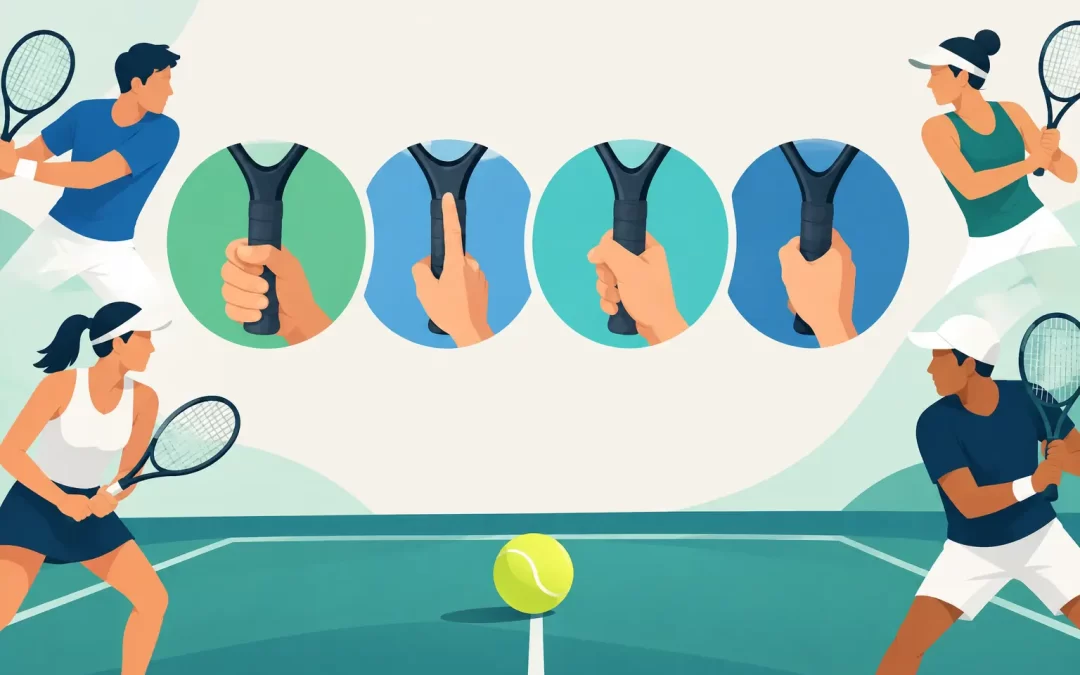
A racquet can have the right head size, weight, balance, and string setup, then still feel wrong the moment it reaches your hand. That is why asking which tennis grip fits is more than a comfort question. The right handle size and grip build affect how freely you accelerate the racquet, how confidently you change grips, and how well you manage impact on every ball.
For most players, the answer is not simply the grip size printed on an old racquet. Your ideal setup depends on hand size, playing style, injury history, preferred overgrip, and the type of feedback you want from the handle. A competitive baseliner who uses a thick cushioned overgrip may need a different starting size than a player who values fast grip changes at the net.
Which Tennis Grip Fits Your Hand?
A tennis grip should let you hold the racquet securely without forcing your hand to squeeze. The classic test is simple: hold the racquet in a continental grip, as if you are shaking hands with the handle. There should be enough room to place the index finger of your non-hitting hand between the tips of your fingers and the base of your palm.
If there is no room, the grip is likely too small. If there is a large gap, it is likely too big. This test is useful, but it is a starting point rather than a final verdict. Players with long fingers, smaller palms, or a strong preference for overgrips can land between standard measurements.
Tennis grip sizes are typically measured in inches:
- 4 1/8 inches, or grip size 1
- 4 1/4 inches, or grip size 2
- 4 3/8 inches, or grip size 3
- 4 1/2 inches, or grip size 4
- 4 5/8 inches, or grip size 5
Many adult players fall between 4 1/4 and 4 1/2 inches, but do not choose by age, gender, or general assumptions. Measure your own hand and, if possible, swing a racquet with your usual overgrip before making the final call.
Use the Ruler Method as a Baseline
Open your hitting hand with the fingers together. Measure from the middle crease in your palm to the tip of your ring finger. That measurement, in inches, offers a practical estimate of your grip size. For example, a 4 3/8-inch measurement points toward a size 3 handle.
Still, the ruler method does not account for how you actually play. A player who hits heavy topspin and uses a tacky, thicker overgrip may prefer a slightly smaller bare handle. The added material builds the circumference back up while preserving a connected, athletic feel.
Too Small vs. Too Large: What You Feel on Court
A grip that is too small often feels quick and maneuverable at first. You may enjoy easier wrist movement on serves, forehands, and last-second defensive shots. But the downside is that your hand may work too hard to stabilize the racquet. That can lead to over-squeezing, twisting on off-center contact, blisters, and unnecessary stress through the wrist and forearm.
A grip that is too large can make the racquet feel secure, but it can limit your ability to make clean grip changes. Players may struggle to release the racquet head naturally on serves or create racquet-head speed on topspin groundstrokes. A large handle can also make touch shots feel less precise because your fingers cannot respond as freely around the bevels.
The best fit sits in the middle: stable through contact, relaxed in the hand, and fast enough for the modern game. You should be able to hold the racquet firmly at impact without maintaining a death grip between shots.
Start Slightly Smaller When You Are Between Sizes
If you are genuinely between two sizes, a slightly smaller handle is usually the smarter choice. Building up a small grip is easy. One overgrip generally adds about one-sixteenth of an inch, depending on its thickness and how tightly it is applied. A heat-shrink sleeve can increase the handle more substantially, though it also adds weight to the butt end of the racquet.
Reducing a grip size is much harder and can alter the handle shape if done improperly. That matters because tennis handles are not round. Their bevels help you identify eastern, semi-western, continental, and other grip positions without looking down.
Starting smaller is not a universal rule. If you have a history of hand pain, arthritis, tennis elbow, or a tendency to grip too tightly, a larger and more cushioned setup may provide better comfort. The goal is not to chase the smallest possible handle. It is to create a setup that lets you play aggressively without fighting your equipment.
Grip Size Is Different From Your Stroke Grip
There are two meanings behind the question of which tennis grip fits. One is handle circumference. The other is the grip position you use to hit the ball. Both influence performance, but they solve different problems.
Your handle size should support the grip positions your game requires. For example, a player who moves quickly from a semi-western forehand to a continental grip for volleys and serves needs clear bevel definition and manageable circumference. If the handle is oversized or heavily wrapped, those transitions can feel slow and vague.
Your stroke grip depends more on swing path, contact point, and tactical intent:
Continental Grip
The continental grip is essential for serves, volleys, overheads, slices, and many defensive shots. It supports clean racquet-face control and is the foundation of an all-court game. A properly sized handle helps you make small adjustments at net without overworking your wrist.
Eastern and Semi-Western Forehands
An eastern forehand grip offers a more direct path through the ball and suits players who like flatter drives, attacking returns, and quick transitions forward. The semi-western grip is common among modern baseline players because it supports heavier topspin while still allowing strong pace.
Neither is automatically better. The right choice depends on your natural contact point and the ball shape you want. Avoid changing your forehand grip solely because a professional player uses it. A grip that looks explosive on television may be a poor match for your mobility, swing mechanics, or preferred court position.
Eastern and Two-Handed Backhands
A one-handed backhand commonly uses an eastern backhand grip, which promotes reach, slice variety, and a clean extension through the ball. Two-handed players typically use the dominant hand in a continental or eastern forehand position, with the top hand supplying much of the drive and spin.
In both cases, handle fit matters. If your grip is too large, it can be harder to set the racquet quickly and create a stable backhand contact. If it is too small, the racquet can shift during heavy returns and high-pace exchanges.
Build the Right Feel With Replacement Grips and Overgrips
The handle underneath your hand is not just a number. A firm replacement grip gives direct bevel feedback and a more connected response. A cushioned replacement grip reduces vibration and can make a stiff racquet feel more forgiving. Overgrips add tack, absorb sweat, and allow you to fine-tune size without changing racquets.
Players who sweat heavily may prioritize absorption and replace overgrips often. Players who want a locked-in feel may prefer tackier options. If comfort is your first priority, a softer replacement grip paired with a thin overgrip can reduce harshness while keeping the handle from becoming excessively large.
Do not ignore grip wear. A slick or compressed grip forces the hand to squeeze harder, which can create the same problems as choosing the wrong size. Fresh grip material is one of the simplest equipment upgrades for better control and confidence.
Test Your Setup Under Real Tennis Pressure
The final test happens during actual points, not while standing in a store. Hit serves, return fast balls, volley, defend wide, and play a practice tiebreak. Notice whether the racquet twists on contact, whether your fingers feel cramped, and whether you can switch grips without hesitation.
Pay attention after the session too. Hand fatigue, finger soreness, blisters in unusual spots, or forearm tightness are useful signals. They do not always mean your grip size is wrong, but they deserve attention before they become a bigger issue.
A well-fitted grip lets your hand stay quieter while the racquet does more work. At Profilex, that is the standard worth chasing: equipment that feels like an extension of your game, so every swing can be committed, confident, and built for the next point.